Skip to content

AEP Blog

Australian Energy Producers' Executive team is based in office locations across Australia.

Minister King’s rebuke of EDO reinforces need for action on activist lawfare

Resources Minister Madeleine King’s serious concerns about the conduct of the Environmental Defenders Office after another failed legal challenge reinforces the need to crack down on activist lawfare and increase transparency around how the EDO is funded. The Minister said community legal centres “are not political campaign vehicles – they are there to provide legal services to the community, nothing more,” and expressed deep concern about Federal Court’s findings in a 2024 decision “in relation to the conduct of the EDO, which included allegations of witness tampering and confecting evidence.” Australian Energy Producers Chief Executive Samantha McCulloch said Minister King’s comments go to the heart of community expectations — that publicly funded legal services exist to provide legal assistance to the community, not to misuse the courts in ideological-driven attempts to disrupt and delay critical energy projects. “There must be greater transparency and accountability around the funding, coordination and objectives of organisations engaged in activist litigation, including stronger disclosure of the interests behind such campaigns,” Ms McCulloch said. “Australia’s oil and gas industry supports growing calls to stop taxpayer funding of organisations engaged in activist lawfare,” she said. “There must be stronger disclosure of who is funding these organisations and the interests driving these legal campaigns, which are aimed at delaying and stopping major projects that are critical to Australia’s energy security. “If activist organisations expect companies to meet the highest standards of disclosure and accountability, they should also be held to the same standard.” The Minister’s comments follow the Federal Court’s outright dismissal of proceedings brought by the Australasian Centre for Corporate Responsibility against Santos, represented by the EDO. The court rejected the ACCR’s claim that alleged Santos had misled shareholders about the company’s net zero plans and the role of natural gas and carbon capture and storage in reducing emissions. The EDO was also involved in a failed legal challenge to stop Santos’ Barossa project. In a 2024 decision the Federal Court found the EDO’s evidence amounted to “confection” and was “so lacking in integrity that no weight can be placed on them”.
Read more

Court dismissal reinforces need for greater transparency around activist lawfare

The Federal Court’s outright dismissal of the Australasian Centre for Corporate Responsibility’s (ACCR) case against Santos exposes the need to crack down on activist groups misusing the courts to target essential energy projects and companies. Australian Energy Producers Chief Executive Samantha McCulloch said the court’s findings published today shone a light on the tactics used by activist groups and underscored the need for increased transparency around how these groups are funded and the impact of their lawfare on Australia’s economic and energy security interests. “This outcome is welcome and reinforces the need for far greater transparency and accountability around the funding and coordination of activist litigation,” Ms McCulloch said. “There must be stronger disclosure of who is funding these organisations and the interests driving these legal campaigns.” The court ordered ACCR to pay Santos’ costs, rejecting the claims that Santos had engaged in misleading or deceptive conduct in relation to its net zero roadmap, use of the term “clean energy” and future hydrogen ambitions. The court recognised that net zero roadmaps are, by their nature, forward-looking and subject to technological progress, market development and policy settings, and that Santos had a “clear and credible plan” to reduce Scope 1 and 2 emissions by 26-30% by 2030 and reach net zero by 2040. “When groups pursue high-profile legal action designed to influence public debate and investment confidence, transparency is essential,” Ms McCulloch said. “If activist organisations expect companies to meet the highest standards of disclosure and accountability, they should also be held to the same standard.”
Read more

Gas agreement confirms critical role of gas in Australia’s manufacturing future

Today’s agreement between Santos and the South Australian Government to supply 200 petajoules of gas over 10 years to underpin the Whyalla Steelworks transformation underscores the critical role of natural gas in powering Australian industry and enabling large-scale decarbonisation. Australian Energy Producers Chief Executive Samantha McCulloch said the deal demonstrates that reliable, long-term gas supply is essential for a strong Australian manufacturing sector and securing regional jobs. “Natural gas is a major source of energy for industry, providing almost 40% of the energy used by Australian manufacturers to make essential products like steel, cement, bricks and glass,” Ms McCulloch said. “It is also a practical pathway for many heavy industries to achieve real emissions reductions while maintaining their global competitiveness. “Australian manufacturing will continue to need natural gas for reliable, affordable energy. However, meeting that long-term demand reinforces the need for investment in new gas supply.” “Projects like the Whyalla Steelworks transformation highlight real industrial demand for natural gas, and policy settings must support timely exploration and development of gas to ensure supply keeps pace.” Ms McCulloch said the announcement builds on South Australia’s record of encouraging investment in gas exploration and development. “The South Australian Government’s pragmatic approach to energy policy acknowledges that gas is fundamental to strengthening the state’s long-term energy security and delivering real emissions reductions,” Ms McCulloch said. “It reflects a clear understanding of the vital role natural gas plays in powering the state’s economy and supporting heavy industry.” Australian Energy Producers’policy platformfor the upcoming South Australian election highlights the opportunity for natural gas to drive growth in the state’s manufacturing industries.
Read more

Australian oil and gas sector congratulates Opposition Leader Angus Taylor

Australia’s oil and gas industry congratulates Angus Taylor on his appointment as Leader of the Opposition and looks forward to working constructively with him and Deputy Leader Jane Hume on policies that support Australia’s energy security and economic prosperity. Australian Energy Producers Chief Executive Samantha McCulloch said the industry stood ready to work with the Coalition on policies to deliver new gas supply and investment to ensure Australian households and businesses continue to have reliable and affordable energy. “Angus Taylor understands the critical role natural gas plays in supporting Australia’s energy security, powering industry and providing reliable electricity,” Ms McCulloch said. “Continued investment in new gas supply is essential to avoid forecast shortfalls, ease cost-of-living pressures and maintain Australia’s competitiveness as a destination for global energy investment.” The industry thanked outgoing Opposition Leader Sussan Ley and Deputy Leader Ted O’Brien for their engagement during their time in the roles. “We thank Sussan Ley for her constructive engagement with our industry and her recognition of the importance of balanced, pragmatic energy policy in supporting jobs, investment and energy security,” Ms McCulloch said.
Read more

Taroom Trough exploration a boost for Qld energy security and regional investment

The Queensland Government’s decision to award exploration rights in the Taroom Trough marks a significant step toward unlocking a new frontier for domestic oil and gas development and reinforcing Australia’s long-term energy security. The appointment of Omega TN Pty Ltd, Tri-Star Stonecroft Pty Ltd and Drillsearch Energy Pty Ltd (a subsidiary of Beach Energy) as preferred tenderers signals the start of exploration activity in a region widely recognised as having the potential to become Australia’s first major new oil province in a generation. Australian Energy Producers Queensland Director Keld Knudsen said the announcement underscored the critical role of exploration in delivering future supply. “Opening up new basins like the Taroom Trough is essential to securing Australia’s next wave of oil and gas supply,” he said. “It sends a strong signal Queensland is open for business and serious about attracting the investment needed to support regional jobs and future energy security. “The scale of the opportunity is significant, with the potential to establish Australia’s first major new oil province since the 1970s. “New supply is key to putting downward pressure on prices and ensuring reliable, affordable energy for households and industry — with domestic supply protections ensuring Australians come first.” Mr Knudsen said expanding exploration acreage was critical to offset natural field decline and sustain supply to key sectors including transport, agriculture, mining and manufacturing. “New development in the Taroom Trough also had the potential to deliver long-term economic benefits for regional Queensland through jobs, local procurement and infrastructure investment,” he said.
Read more

Queensland gas exploration approvals boost supply and investment confidence

The Queensland Government’s appointment of preferred tenderers for new gas exploration areas is an important step towards strengthening future gas supply and easing energy market pressures. Australian Energy Producers Queensland Director Keld Knudsen said opening new exploration acreage in the Cooper-Eromanga Basin will boost Queensland’s long-term energy security and send a positive signal to investors. “Bringing new exploration opportunities to market is critical to securing the next generation of gas supply and maintaining Queensland’s role as a national energy powerhouse,” Mr Knudsen said. “New supply is the most effective and sustainable way to put downward pressure on energy prices, support industrial growth and ensure households and businesses continue to have access to reliable and affordable energy.” Mr Knudsen said gas remains essential to Queensland’s electricity system, manufacturing base and regional economies, supporting thousands of jobs and billions of dollars in economic activity each year. “Importantly, it’s this sort of investment into regional Queensland that creates new jobs, supports local businesses and strengthens regional communities.” Australian Energy Producers also welcomed the Government’s work to improve the land release process, including measures to streamline approvals and increase transparency. “A faster, clearer and more predictable approvals framework will help accelerate responsible development and ensure Queensland remains an attractive destination for energy investment,” Mr Knudsen concluded.
Read more

Brisbane to host global LNG2029 Conference and Exhibition

Brisbane has been chosen as the 2029 host city for the world’s largest liquefied natural gas event, bringing thousands of participants from over 80 countries to the Brisbane Convention and Exhibition Centre for LNG2029. Held every three years, the International Conference and Exhibition on Liquefied Natural Gas is the premier forum for the global LNG industry, combining a world-class conference and international exhibition that attracts industry leaders, government representatives, and energy innovators from around the world. The successful Australian bid was led by the Australian Gas Industry Trust (AGIT) in partnership with Australian Energy Producers, supported by industry and governments across Australia. Professor Andrew Garnett, Executive Chair of AGIT, said LNG2029 would highlight Australia’s international leadership as the world’s third largest LNG-producing nation and its role in a regionally and globally integrated system. “LNG will remain a cornerstone of Australian jobs, regional development and energy security. The conference will bring together governments, industry and customers from around the world to examine how collaboration and innovation can deliver a more secure, affordable and lower-emissions energy future,” he said Australian Energy Producers Chief Executive Samantha McCulloch said hosting LNG2029 in Brisbane will showcase Australia’s world-class LNG operations and the critical role our LNG plays in the region. “LNG is Australia’s third largest export, delivering billions of dollars to the Australian economy each year while supporting energy security and emissions reductions at home and abroad. Hosting LNG2029 will be a significant opportunity to highlight the innovation and expertise of our world-leading LNG industry and to reinforce Australia’s role as a trusted and reliable energy partner.” Queensland Minister for Natural Resources and Mines Dale Last said Queensland’s world-class LNG industry delivers energy to the world and supports thousands of regional jobs. “Hosting LNG2029 sends a clear message that Queensland is open for business and is a global endorsement of our commitment to making clear decisions, cutting red tape and backing the gas industry with real intent. We’re serious about growing our gas sector, creating more high-skilled jobs and working with industry to deliver long-term energy security for Australia and the world.” Brisbane will be officially unveiled as the host city for LNG2029 during LNG2026, which will be held in Doha, Qatar, 2-5 February.
Read more

Australian Energy Producers Board elects Cecile Wake as Chair

The Australian Energy Producers Board has appointed Shell Country Chair Cecile Wake as Board Chair. Chief Executive Samantha McCulloch said Ms Wake’s appointment comes at a pivotal time for Australia’s energy sector. “Cecile is a highly respected industry leader with extensive experience across Australia’s gas and LNG sector, and she brings a clear strategic focus and proven leadership to the role,” Ms McCulloch said. “She has a strong track record of constructive engagement with governments, regulators and stakeholders, and her leadership will be invaluable as the industry works to strengthen Australia’s energy security and support economic growth.” Ms Wake became Shell’s Country Chair in 2023 and is also Executive Vice President, Integrated Gas Australia. She has more than 25 years of international experience across LNG, oil and gas project development and operations, as well as mergers and acquisitions. She has served on the Australian Energy Producers Board since 2023. Prior to her current role, Ms Wake served as Chief Executive Officer of Arrow Energy, Shell’s joint venture with PetroChina, from 2020. She has also held senior commercial leadership roles with Shell and BG Group prior to its acquisition, including Vice President Commercial & New Business Development for Shell Australia and Growth Director at BG Group. Ms McCulloch said Ms Wake’s appointment reflects the Board’s commitment to experienced leadership and strong governance. “On behalf of the Board and our members, I am delighted to welcome Cecile as Chair and look forward to working closely with her in this role,” she said. Ms Wake succeeds outgoing Chair Meg O’Neill, whom Ms McCulloch thanked for her service and contribution to the organisation. “Meg has provided strong leadership during a period of significant change for Australia’s energy sector, and we thank her for her dedication and contribution to Australian Energy Producers,” she said. Woodside Acting Chief Executive Officer Liz Westcott has also been appointed to the Australian Energy Producers Board to fill the vacancy created by Ms O’Neill’s departure. . Media contact: 0434 631 511 Share This
Read more

The Australian Oil & Gas Industry’s Tax and Royalties Contribution

The Australian oil and gas industry is one of the biggest tax-paying sectors, contributing a record $21.9 billion in taxes and royalties in 2024–25 to state and federal governments – equivalent to the annual cost of the Pharmaceutical Benefits Scheme (PBS). This takes the industry’s tax and royalties contribution over the past three years alone to almost $60 billion, reaffirming the industry’s substantial and ongoing contribution to the Australian economy and dispelling the myth that Australia’s oil and gas sector does not pay its fair share. The facts are: The industry is the second-biggest corporate taxpayer, accounting for one in every ten company tax dollars paid. The Australian Taxation Office has confirmed that “some oil and gas companies [are] now amongst the largest taxpayers in Australia”. Commonwealth taxes paid by the oil and gas sector have increased more than tenfold from $1.5 billion in 2021–22 to $18.7 billion in 2024–25. In addition to the oil and gas industry’s significant tax and royalties contribution, the sector is also a key driver of Australia’s productivity and economic growth, representing 3.7 per cent of Australia’s GDP. Economic analysis by KPMG found that as well as having a critical role in Australia’s energy mix, natural gas is powering the Australian economy through high levels of employment and productivity, contributing $105 billion a year to the national economy and supporting 215,000 jobs. MYTH: “AUSTRALIAN GAS COMPANIES DON’T PAY ENOUGH TAX” FACTS • The oil and gas industry is one of the biggest tax-paying sectors in Australia, contributing $21.9 billion in taxes and royalties in 2024–25¹ to state and federal governments—equivalent to the annual cost of the Pharmaceutical Benefits Scheme.² • The Australian Taxation Office confirms that “some oil and gas companies [are] now amongst the largest taxpayers in Australia”,³ accounting for 1 in every 10 dollars of company tax paid.² • Commonwealth taxes paid by the oil and gas sector have increased more than tenfold from $1.5 billion in 2021–22 to $18.7 billion in 2024–25, reflecting major projects moving further into their production cycles.³ MYTH: “AUSTRALIAN GAS IS GIVEN AWAY FOR FREE” FACTS • Australia’s LNG sector has invested more than $400 billion in Australia since 2010,⁴ and accounts for much of the gas sector’s $105 billion annual contribution to the Australian economy.⁵ • Around 70% of gas produced in Australia is from Commonwealth waters where the Australian Government’s Petroleum Resources Rent Tax (PRRT) applies in place of a royalty regime, with Treasury estimating gas companies will pay $8.3 billion in PRRT over the next five years.⁶ • Onshore gas projects around Australia paid $2.1 billion in 2024–25 in state royalties and licence fees. MYTH: “OTHER COUNTRIES GET MORE TAX FROM OIL AND GAS COMPANIES” FACTS • Countries like Norway and Qatar have significant direct government ownership and/or investment in their oil and gas sector, which means the government take on more of the risks and share more in the returns. • These same countries also provide generous support and tax breaks to the sector. For example, Norway provides an annual cash refund up to the value of 71.8% for exploration costs to reduce investor risk and encourage oil and gas exploration and development.⁷ • In contrast, countries like Australia and the United States require private companies to assume the considerable financial risk of oil and gas development. CITATIONS Australian Energy Producers Financial Survey, July 2025. 2025–26 Federal Budget. Corporate Tax Transparency, Australian Taxation Office, November 2024. LNG Taxation Estimates and Review, Wood Mackenzie, April 2023. Economic contribution of the gas industry, KPMG, Dec 2024. Budget 2025–26, Department of Treasury, March 2025. The Petroleum Tax System, Norwegian Petroleum, October 2024. Download fact sheet
Read more

Gas reservation policy needs to be backed by new supply

Today’s release of the Gas Market Review recognises the need for fundamental reform of the east coast gas market to ensure Australian households and industry have access to reliable and affordable gas. Australian Energy Producers Chief Executive Samantha McCulloch confirmed that gas producers support the introduction of a prospective domestic gas reservation scheme linked to new supply, but emphasised that the design and implementation needed careful consideration. “As we said from the outset of this review, a well-designed, prospective reservation policy can provide certainty for gas producers and users to invest with confidence,” she said. “However, a reservation policy alone will not fix the east coast gas market. Bringing new supply online sooner, including in the southern states that are facing shortfalls, is the only sustainable way to put downward pressure on prices and keep the market well supplied for the long-term.” Ms McCulloch cautioned against proposed elements of the reservation policy, including requiring producers to sell rather than offer reserved gas to the market on reasonable terms. “The risk of artificially oversupplying the market will impact new investment decisions and ultimately damage long-term supply prospects. “The ACCC has confirmed that past market interventions have increased the risk of shortfalls by delaying and disincentivising investment. That’s why it is vital that we get these reforms right.” Ms McCulloch reiterated calls for actions to fast-track new supply, including streamlining approvals and competitive policy settings for investment in new gas exploration and development. “Australia has more than enough undeveloped gas to meet our long-term energy needs while remaining a reliable energy partner in our region. Recent announcements by the Federal and Victorian Governments to open new areas for exploration are a positive step, but more needs to be done to secure the pipeline of new projects needed to meet future demand. “As the Future Gas Strategy confirmed, natural gas will remain critical to Australia’s energy security to 2050 and beyond. That requires a strong, stable and competitive east coast gas market. “Industry will continue to engage constructively on the design and implementation of the reforms to ensure they deliver on the Review’s objectives of a competitive, well-functioning gas market for the long-term,” Ms McCulloch said. Media contact: 0434 631 511 Share This
Read more

New gas supply and investment essential to WA’s long-term energy security

Western Australia’s long-term energy security will depend on bringing new gas supply online sooner, with the Australian Energy Market Operator (AEMO) warning that supply shortfalls will worsen from 2030 without continued new supply and investment. AEMO’s 2025 Western Australian Gas Statement of Opportunities (GSOO) confirms natural gas will remain critical to the state’s long-term economic growth and energy security – powering mining, mineral processing and industry, and as the main source of WA’s electricity. Australian Energy Producers WA Director Richard Ellis said the WA GSOO reinforced the importance of timely investment decisions and policy certainty to ensure reliable and affordable energy for the state’s households and industry. “The GSOO confirms natural gas will remain critical to Western Australia’s energy mix and a key driver of the state’s economy for decades, powering homes, businesses and industry,” Mr Ellis said. “However, AEMO forecasts supply gaps from 2030 unless new supply enters the market. The only way to avoid those shortfalls is to bring new gas supply online sooner and maintain a stable regulatory environment that supports long-term investment in gas exploration and development.” The WA GSOO forecasts potential annual supply gaps of around 11 terajoules per day (TJ/day) from 2030, widening to 82 TJ/day by 2035, driven primarily by declining output from existing and committed gas fields. Mr Ellis said the findings underlined the need to fast-track new gas developments and replace depleting fields to support the state’s economy and energy system. They also highlighted emerging risks from pipeline constraints and more variable gas demand for electricity generation. “Western Australia’s long-standing policy settings have underpinned decades of energy security and economic growth, but sustaining this into the future will depend on decisions made now. “The message from AEMO is clear: continued investment in new gas supply and infrastructure is essential to maintain system adequacy beyond 2030,” he said. Media contact: 0434 631 511 Share This
Read more

Australian Energy Producers thanks outgoing Chair Meg O’Neill

Australian Energy Producers thanks outgoing Chair Meg O’Neill for her leadership and contribution to the organisation and broader industry, following her resignation as Chief Executive Officer and Managing Director of Woodside Energy and from the AEP Board. Ms O’Neill was elected to the Board in 2019, serving as Vice-Chair for a year before assuming the role of Chair in 2022. Chief Executive Samantha McCulloch said Ms O’Neill had guided the organisation and industry through a period of significant change as Australia navigates the transformation of the energy sector. “Meg has been a strong and highly effective Chair, bringing deep industry experience, clear strategic insight and a constructive approach to engagement across government, industry and the community,” Ms McCulloch said. “Her outstanding leadership has helped build consensus across a diverse membership, strengthening the voice of Australian Energy Producers in national energy policy discussions, and advancing recognition of our sector’s critical role in Australia’s economy and energy security. “On behalf of the Board, our members and the industry, I thank Meg for her service and dedication and congratulate her on her appointment as global CEO of bp. We wish her every success in the future.” Media contact: 0434 631 511 Share This
Read more

New gas exploration acreage a welcome boost to Australia’s energy security

Australian Energy Producers welcomes Federal Resources Minister Madeleine King’s announcement today to open five new areas in the Otway Basin for offshore petroleum exploration, which will help ensure Australia’s long-term supply of reliable and affordable gas. Chief Executive Samantha McCulloch said the decision reaffirms the essential role of natural gas to Australia’s energy security, and the need for continued investment in new gas supply. “Exploration is a critical first step in the discovery and development of new oil and gas resources needed to ensure Australia’s long-term energy security,” Ms McCulloch said. “Natural gas provides reliable electricity, fuel for heating and cooking in more than five million Australian homes, and is the main source of energy for Australian manufacturing.” With the east coast gas market facing shortfalls by the end of the decade, Ms McCulloch said measures to boost supply were critical to ensuring Australia’s future energy security. “As the Future Gas Strategy confirmed, Australia will need continued investment in new gas exploration and development to meet our energy needs to 2050 and beyond. “Bringing new gas supply online sooner is the only sustainable solution to put downward pressure on prices.” The announcement follows yesterday’s welcome move by the Victorian Government to release petroleum exploration permits in the Otway and Gippsland basins. “This week we’ve seen welcome recognition from the Victorian and Federal Government that continued exploration is critical to maintaining the pipeline of gas supply projects to meet our long-term energy needs. “With the outcome of the gas market review expected to be announced shortly, we will continue to work with governments on measures to increase gas supply and ensure Australian homes and businesses have reliable and affordable energy. Media contact: 0434 631 511 Share This
Read more

Victorian acreage release a timely step to secure future gas supply

Australian Energy Producers has welcomed the Victorian Government’s decision to release petroleum exploration permits in the Otway and Gippsland basins — the first acreage release since 2018. “Victoria is forecast to experience gas shortfalls as soon as 2027,” Australian Energy Producers Victoria Director Peter Kos said. “Today’s announcement is an essential first step in unlocking new domestic natural gas resources and demonstrates that the Government is taking steps to address future energy challenges. “Natural gas from the Bass Strait has reliably powered Victorian homes and industry since the 1960s, but those legacy fields are now in decline. New discoveries are essential to replace that supply and ensure the state’s energy security. “The Victorian Government has rightly recognised the need to bring on new gas supply for the millions of homes and businesses that rely on natural gas every day.” Natural gas plays a critical role in Victoria’s energy system, with more than two million households connected to gas and around one-third of the state’s manufacturing energy needs met by gas. Mr Kos said the government should commit to regular — preferably annual — acreage releases to rebuild investment confidence and secure ongoing gas supply. “This process is crucial to developing Victoria’s energy resources, strengthening investor confidence and generating increased exploration activity. “The gas industry stands ready to work with the Government to bring new supply online and deliver affordable, reliable and cleaner energy for Victorians.” Media contact: 0434 631 511 Share This
Read more

Opinion article by Samantha McCulloch in the Sydney Morning Herald on the Gas Market Review

Opinion article in the Sydney Morning Herald by Samantha McCulloch, Chief Executive of Australian Energy Producers, December 8 2025. The Federal Government is expected to shortly announce the biggest shake-up of the east coast market in years. Ordinarily, gas producers would be alarmed at the prospect of such an overhaul, and for good reason. The past decade of gas market policy has been marked by rushed reforms, heavy-handed market interventions, and more regulation. This time, there is a degree of optimism that change can be for the better. The Government’s Gas Market Review was set up earlier this year with an aim to “improve and streamline” the complex regulatory framework that currently governs the east coast gas market, and “ensure sufficient affordable gas supply in the longer term”. Reform is necessary and long overdue. A well-supplied and affordable gas market is essential for Australia’s economic and energy security. Natural gas provides reliable electricity, fuel for heating and cooking in more than five million Australian homes, and is the main source of energy for Australian manufacturing. Australian gas producers and users agree that the current gas market arrangements are not working for anyone. As the Australian Competition and Consumer Commission (ACCC) recently found, the regulations that are meant to ensure a well-supplied and functioning market have not only failed to add any material volumes of new gas, or lower prices, they “appear to have had the unintended consequence of exacerbating the risk of domestic supply shortfalls.” The Government’s response is likely to introduce a gas reservation policy for the east coast. The Government, from the Prime Minister down, has reassured our trade partners including Japan and Korea that the long-term gas export contracts so critical to their energy security will not be impacted. This assurance is important because Australia’s gas exports continue to underpin investment in new gas supply for both the domestic and export market, and investment appetite remains subdued from past interventions. Our trade partners are closely watching the Government’s next move. Australian Energy Producers supports a prospective reservation policy that is linked to new supply. A well-designed reservation policy can provide long-term certainty for gas producers and users – particularly large manufacturers – to invest with confidence in major projects and infrastructure. However, a reservation policy alone will not fix the east coast gas market. Bringing new gas supply online sooner is the only sustainable solution to put downward pressure on prices and ensure a well-supplied and functioning market. Reforms that fail to recognise this will simply prolong the cycle of looming shortfalls and higher prices. Tangible action is urgently needed to address the regulatory barriers to new supply, including slow approvals and activist lawfare. The Government’s recent deal with the Greens to exclude gas projects from streamlined environmental assessment pathways was a missed opportunity to cut unnecessary costs and delays in delivering gas to Australian consumers. Australia holds an enviable advantage: abundant energy resources at a time of record global demand, rising geopolitical uncertainty, and increasing pressure to balance the transition to cleaner energy with reliability and affordability. We have enough undeveloped gas reserves to meet our long-term domestic energy needs and remain a reliable energy partner in our region. Australian Energy Producers’ analysis found there is up to 140 petajoules per year of additional east coast gas supply that could be brought to market by 2030 – more than three times the volumes need to avert the annual shortfalls the Australian Energy Market Operator forecasts for southern states from 2029. That includes the Santos Narrabri project, which could meet half of New South Wales’ gas needs, but has been tied up in regulatory delays and court challenges for more than a decade. Australian gas producers stand ready to work with governments and energy users to ensure we don’t squander the opportunity to break the cycle of failed reforms and restore certainty and stability to the gas market. While the political stakes of getting these reforms right are high, the economic consequences of getting them wrong are far greater.
Read more

Media Statement: Environmental Law Reform

Statement attributable to Australian Energy Producers Chief Executive Samantha McCulloch Today’s decision by the Albanese Government to strike an agreement with the Greens on environmental law reform is a squandered opportunity to address the significant costs and delays in delivering gas to Australian consumers. Carving gas out of streamlined reforms is simply not in the national interest. The deal will entrench slow approvals which will drive up energy costs, deter investment and further delay the new gas supply Australia urgently needs. More than 5 million Australian households rely on natural gas, it is an essential input to manufacturing and is the reliable back-up that helps to keep the lights on as our electricity system transforms. By conceding to the Greens, the Government has chosen more red tape and uncertainty instead of enabling new gas supply. This approach ignores the expert advice of the ACCC and the Australian Energy Market Operator to remove barriers to new supply, undermines investor confidence, and risks higher energy costs for households and businesses. It is also at odds with the Prime Minister’s welcome remarks at the G20 Summit on the important role for gas in the energy transition, as well as the Future Gas Strategy’s recognition of the urgent need for new gas investment to meet demand and avoid projected shortfalls. Australia deserves evidence-based policy made in the national interest — not short-sighted political compromises that stall critical projects and jeopardise the new gas supply essential to our future energy needs. Media contact: 0434 631 511 Share This
Read more

Greens’ EPBC demands threaten Australia’s energy security

Australian Energy Producers has called on the Albanese Government to secure a balanced agreement on its environmental law reforms by working with the Coalition, warning the Greens’ reckless demands will delay critical new gas supply needed to secure Australia’s future energy needs. Australian Energy Producers Chief Executive Samantha McCulloch said the proposals reported this morning to secure a deal with the Greens would add unnecessary duplication, red tape and uncertainty. “Embedding extra layers of assessment, restricting streamlined pathways, and creating exemptions simply to secure a deal with the Greens will drive up energy costs, deter investment, and undermine the integrity of the reform process,” Ms McCulloch said. “For investors, this means greater uncertainty, reduced clarity, and higher costs — with inevitable impacts on jobs, competitiveness, and energy affordability. “The gas industry supports environmental laws that are clear, consistent, and workable. That requires a balanced approach, and a negotiated outcome with the Coalition is the most reliable way to deliver long-term certainty for industry, communities, and the environment. “These measures run counter to the Graeme Samuel review, which called for clear, simple environmental rules to reduce legal uncertainty, not create more of it.” “They are also at odds with the Prime Minister’s welcome remarks at the G20 Summit on the important role for gas in the energy transition, as well as the Future Gas Strategy’s recognition of the urgent need for new gas investment to meet demand and avoid projected shortfalls. “Australia’s natural gas sector is essential to our energy security and economic prosperity. Gas provides more than a quarter of our primary energy needs, contributes over $100 billion annually to the economy, and supports 215,000 jobs. We need a system that reflects those realities, not one distorted by political trade-offs.” “With targeted amendments that remove duplication and support timely decision-making, this legislation can achieve the right balance.” Media contact: 0434 631 511 Share This
Read more

Australian Energy Producers Chair Meg O’Neill address to the 2025 AGM

Welcome Good afternoon members, fellow Australian Energy Producers directors, and secretariat. Year in review This year has been a significant one for our industry. In Australia, and around the world, we are seeing a marked shift in the public narrative in support of more gas production to meet increasing energy demand and growing consensus on the essential and long-term role of natural gas in our energy future. As we know, natural gas is a source of high heat for industry and manufacturing, feedstock for fertiliser and a stabiliser for energy grids moving from coal and towards renewable generation. To ensure our customers at home and abroad have the energy they need for decades to come, our industry continues to advance major gas projects. In particular, we are heading towards some promising milestones in Western Australia, the Northern Territory and the Otway Basin. Our industry remains a key pillar of the Australian economy, contributing more than $100 billion a year to the nation’s GDP, supporting around 215,000 jobs across Australia, and is forecast to pay an estimated $22 billion in taxes and royalties to state and federal governments in 2024-25 to help fund essential services and infrastructure. Meanwhile, our LNG exports continue to support the energy security and decarbonisation goals of our valued trade partners, while strengthening Australia’s strategic role in the region. We can be proud of this enormous contribution, which underscores the fact that when our industry does well, all Australians benefit. Queensland’s LNG industry, which in August celebrated a decade since first cargo, is a prime example of how the whole community benefits from a strong gas industry. Over the decade, Queensland’s gas industry added $127 billion to the state economy and supported almost 60,000 jobs. It also unlocked gas supply for the domestic market that was only made possible by access to export markets. To put this return on investment in context, every LNG cargo that leaves Gladstone represents around $11.2 million spent with local businesses and $4.5 million in royalties paid to the Queensland Government. Gas Market Review The 2025 Federal Election delivered Prime Minister Anthony Albanese a clear mandate for his government’s agenda. Our industry is working constructively with the Government on reforms that have the potential to address some of the biggest barriers to new gas supply and investment. Key among them is the Gas Market Review, which presents an opportunity to future-proof the east coast gas market and break the cycle of short-term fixes, market interventions and looming shortfalls. As the ACCC confirmed in its last Gas Inquiry report, the market is currently not working for gas producers, large gas users, or households. The report found regulations that are meant to ensure a well-supplied and functioning market have not only failed to add any material volumes of new gas, they have in fact increased the risk of shortfalls “despite there being sufficient reserves and resources for at least the next decade.” I commend Minister King and Minister Bowen for their constructive and pragmatic approach to the Gas Market Review, which aims to “improve and streamline” the gas market regulations “to ensure sufficient affordable gas supply in the longer term”. This requires a considered package of reforms that address barriers to new supply, support continued investment in new gas supply and infrastructure, and provide long-term certainty to all market participants as well as our trade partners. As Australian Energy Producers’ submission to the review said, a well-designed, prospective reservation policy for the east coast that is linked to new supply can be part of the solution. However, it must be backed by immediate actions to address near-term supply challenges, because the most effective way to put downward pressure on prices and ensure a well-supplied gas market is to increase supply. EPBC Reforms The Albanese Government’s commitment to overhaul national environmental laws to deliver faster and simpler approvals is another important reform, and a welcome step towards fixing a system that is delaying projects, increasing costs and litigation, and driving away investment. Industry has long called for a system that delivers faster, simpler and more certain project assessments while maintaining strong environmental standards. With appropriate amendments to the legislation currently before the Parliament, we have an opportunity to achieve this, and our industry will continue to work with the Government and Opposition to ensure these reforms deliver on their objectives. I acknowledge Western Australian Premier Roger Cook’s ongoing advocacy on this issue to ensure WA’s resources sector is not disadvantaged by these reforms. Other states must also do their part to bring on new gas supply, especially Victoria and New South Wales – which are most at risk of gas shortfalls. There have been encouraging signals in both states. The Victorian Government is poised to release petroleum exploration acreage for the first time in years. And in New South Wales, Premier Chris Minns has committed to doing more to expedite the Narrabri Gas Project, which has been hampered by approval delays and legal challenges for over a decade, yet could supply half of the state’s annual gas demand. All this and more will be needed if Australia is to meet our long-term gas needs. Restoring Australia’s competitiveness We are at a critical juncture in Australia’s energy transformation. While the growing recognition from policymakers about the importance of gas is welcome, it must be backed by tangible actions. The decisions made in the near term will determine whether Australia can continue to provide reliable and affordable energy for all Australians and remain a world-leading energy producer. As it stands, Australia’s lagging competitiveness means we are not attracting the necessary investment in new gas projects. Australia is losing out to countries like the US, Canada and Qatar. To restore confidence, Australia must recommit to being a trusted partner and competitive destination for energy investment. We must accelerate and streamline project approvals, ensuring our regulatory system reflects the urgency of our energy and climate goals. We must also foster an investment environment that encourages innovation. Because one thing is clear – in the decades ahead, the world will need more energy, not less. Artificial intelligence is turbo-charging global energy demand in ways few would have predicted a decade ago. Data centres already account for 1.5% of global consumption, and usage is growing at a rate of 12 per cent annually. The International Energy Agency predicts global electricity consumption from data centres could double by 2030. Looking at LNG demand specifically, according to Wood Mackenzie, global LNG demand is forecast to rise by 58 per cent by 2050, with the Asia Pacific region accounting for three quarters of total LNG demand by the middle of the century, driven by population growth and industrialisation. Australia can lead this next wave of energy growth — leveraging our expertise, our proximity, and our reputation for reliability. If we don’t, others will fill the gap. Net Zero and CCUS As world leaders gather in Brazil this week for COP30, climate change remains, rightly, a key focus for Australia. The Australian Government has set an ambitious 2035 climate target that will require increased action and investment across the economy. As we at Australian Energy Producers see it, Australia’s climate targets must be backed by policies that recognise and support the critical role of natural gas and of carbon capture, utilisation and storage. The International Energy Agency, Intergovernmental Panel on Climate Change, and Australia’s recently released Net Zero Plan all recognise the role of CCS in achieving net zero emissions. It’s why our industry continues to advance CCUS in Australia. Last month, the Moomba CCS project marked its first year of operation and has now safely stored more than 1.3 million tonnes of CO₂. Along with the Gorgon CCS project, Australia is now host to two of the largest CO2 storage projects in the world. Combined, these projects are storing emissions estimated to be equivalent to taking one million cars off the road each year. With more CCS projects in the pipeline around Australia – including the proposed Bonaparte CCS Project, which in July was conferred ‘Major Project Status’ by the Australian Government – Australia is well-placed to be a global leader in this essential technology. Conclusion The energy transition presents opportunities and challenges for our industry, which has a track record of being pioneers and of forging new frontiers. We are optimistic and ambitious for our future, and for Australia’s potential in the new energy economy. As we look ahead, collaboration between industry, government, and the community will be crucial. Through our national advocacy campaign, Australian Energy Producers continues to improve understanding in the community about the essential role of natural gas in our everyday lives. The campaign is also reinforcing our industry’s significant tax and economic contribution, and countering disinformation from our opponents. As the lead voice of our industry, Australian Energy Producers continues to advocate strongly for the clarity and certainty our members need to ensure Australians have reliable and affordable energy for today, tomorrow, and the decades ahead. The work of Australian Energy Producers is only possible with the support and unity of our members. Thank you for your continued support. New Board Following today’s meeting we will welcome new Directors to the Australian Energy Producers Board. I thank the Directors for their efforts this year, and I thank them in advance for an even bigger year ahead. Finally, I would like to acknowledge the work of the Australian Energy Producers Secretariat team. Our industry would not have the strong voice it needs in Canberra, in our states and territories, or in communities around Australia, without them. Thank you.
Read more

Building a smarter tax system for Australia’s resource economy in focus at the Energy & Minerals Tax Conference 2025

The Energy & Minerals Tax Conference 2025 opening in Brisbane today will examine the evolving tax, investment and regulatory landscape shaping Australia’s economic and energy future. Co-hosted by Australian Energy Producers and the Minerals Council of Australia, the two-day conference brings together leading tax professionals, policymakers and industry leaders to discuss the national tax reform and productivity agenda, and what it means for investment, growth and competitiveness in Australia’s oil, gas and minerals sectors. Australian Energy Producers Chief Executive Samantha McCulloch said the conference provided a timely opportunity to consider how Australia’s resources sector can continue to drive Australia’s economic growth and energy security. “The natural gas and minerals sectors are the engine room of the Australian economy, accounting for 10 per cent of Australia’s GDP and more than half of all company tax paid in 2023–24,” Ms McCulloch said. “This conference is about looking ahead to ensure Australia’s tax system and broader regulatory landscape continue to encourage investment and innovation in our most productive industries — supporting a strong and internationally competitive resources sector.” Minerals Council of Australia Chief Executive Officer Tania Constable said the conference comes at a critical time for ensuring Australia’s tax system continues to attract investment and support the industries that underpin national prosperity. “Higher tax is not the path to higher investment. Policy settings which support higher productivity and greater certainty for business will encourage Australia’s world-class minerals industry to invest and create more jobs and economic growth, especially in our regions,” Ms Constable said. Former Westpac Chief Economist Bill Evans will deliver the opening keynote address today, with Assistant Minister for Productivity, Competition, Charities and Treasury Andrew Leigh providing the government address tomorrow. Shadow Minister for Trade and Tourism Kevin Hogan MP will also join a discussion on the economic impacts of great-power competition, conflict and protectionism — and how Australia can promote regional stability and freer trade. Media contact: 0434 631 511 Share This
Read more

EPBC reforms an opportunity to fix Australia’s broken environmental laws

The Federal Government’s proposed reforms to the Environment Protection and Biodiversity Conservation (EPBC) Act present an opportunity to fix the broken environmental approvals system that is delaying critical energy projects, deterring investment in new gas supply and putting Australia’s energy security at risk. Australia’s oil and gas industry supports the government’s commitment to deliver faster and simpler environmental approvals and will work with the Government and Coalition to ensure the proposed reforms deliver on these objectives. “It is essential that we get these reforms right to end the delays and duplication in our current system, and ensure Australians continue to have reliable and affordable energy,” Australian Energy Producers Chief Executive Samantha McCulloch said. “Australia has some of the most stringent environmental laws in the world, but the current system is no longer fit for purpose. It has become increasingly complex, duplicative and subject to activist lawfare.” Ms McCulloch said industry will need time to examine the detail to ensure the legislation delivers the intended outcomes and does not create ambiguity or unintended regulatory burden. “These reforms present a once in a generation opportunity to fix our broken environmental laws, remove duplication and provide more certainty for business. “I urge the Government and Coalition to work with industry to ensure the reforms support timely and sustainable development while upholding strong environmental safeguards.” Media contact: 0434 631 511 Share This
Read more

Gas grants a critical step to ensure South Australia’s energy security

The South Australian Government’s Gas Initiative grants announced today are an important step towards securing investment in new gas supply critical to South Australia’s energy security. Australian Energy Producers South Australia Director David Slama said the support for new gas exploration, development and infrastructure recognised the critical role of gas in the state’s energy mix and sent an important signal to incentivise investment. “The SA Gas Initiative is an important step towards ensuring our state has reliable and affordable gas supply that is essential for keeping the lights on and powering homes, businesses and industry,” Mr Slama said. “Driving more investment in new gas supply and infrastructure will help South Australia realise its full potential for economic growth, job creation and energy security.” Mr Slama said the South Australian Government’s pragmatic approach to energy policy recognised the role for government to support more gas exploration and development. “South Australia has one of the highest shares of variable renewables in the world, which is made possible by gas-fired generation providing reliable electricity to keep the lights on. “By planning for future gas supply and recognising its enduring role in the energy system, South Australia is ensuring our state has reliable and affordable energy into the future,” Mr Slama said. The announcement builds on South Australia’s record of encouraging gas exploration and development through its regular acreage releases, pre-competitive geoscience program, and Firm Energy Reliability Mechanism. Media Contact: 0434 631 511 Share This
Read more

Queensland Energy Roadmap confirms gas essential in powering state’s future

Australian Energy Producers has welcomed the Queensland Government’s five-year Energy Roadmap, which recognises the critical role of natural gas in delivering reliable and affordable energy for Queensland homes and businesses. Queensland Director Keld Knudsen said the roadmap confirms natural gas will be increasingly important in powering the state with reliable and affordable energy. “This roadmap sends a clear signal that gas will continue to be essential to Queensland’s energy reliability and economic strength,” Mr Knudsen said. “It also reaffirms that Queensland will need continued investment in new gas supply and infrastructure to underpin Queensland’s domestic energy security and export strength.” Economic analysis commissioned by Australian Energy Producers earlier this year showed that between 2014 and 2024, the sector contributed $127 billion to the state economy, and supported around 60,000 jobs and 3,000 local businesses, community groups and charities. “The gas industry continues to play a vital role in supporting regional jobs and investment, powering communities across the state, and underpinning local jobs, businesses and services,” Mr Knudsen said. The roadmap forecasts Queensland will need to double its gas generation capacity over the next decade — from 3.5 gigawatts today to as much as 8.3 gigawatts by 2035 – to back up growing shares of renewables. It also outlines plans for the Queensland Investment Corporation to partner with private investors to deliver an additional 400 megawatts of gas-fired electricity in central Queensland by 2033 to ensure reliable and affordable electricity. “Driving more investment in new gas supply and infrastructure will help Queensland realise its full potential for economic growth, job creation and energy security,” Mr Knudsen said. “We look forward to working with the Queensland Government and industry partners to deliver the investment and infrastructure needed to secure Queensland’s position as an energy leader through the transition.” Share This
Read more

Chief Executive Samantha McCulloch on the east coast Gas Market Review (Australian Financial Review)

Opinion article in The Australian by Samantha McCulloch, Chief Executive of Australian Energy Producers, October 8 2025. Last week, the Australian Competition and Consumer Commission (ACCC) confirmed what gas producers and users have known for years – the complex patchwork of regulations governing the east coast gas market is actually making things worse. The regulations that are meant to ensure a well-supplied and functioning market have not only failed to add any material volumes of new gas, they “appear to have had the unintended consequence of exacerbating the risk of domestic supply shortfalls,” the ACCC concluded. It also warned the east coast faces gas shortfalls from 2028, “despite there being sufficient reserves and resources for at least the next decade.” Australian gas producers and users agree that the status quo is not working for anyone. The Federal Government has also recognised this, taking the important step of establishing the Gas Market Review with an aim to “improve and streamline these instruments to ensure sufficient affordable gas supply in the longer term”. The review presents an opportunity to future-proof the gas market and break the cycle of short-term fixes, market interventions and looming shortfalls. This requires a return to a strong, stable and competitive gas market that delivers more gas when and where it’s needed, while providing certainty for existing and future investment. Delivering reforms that strike the right balance – between gas producers and gas users, and between near-term and longer-term solutions – won’t be easy. Natural gas is essential for providing reliable and affordable electricity, for heating and cooking in more than five million Australian homes, and as the main source of energy for manufacturers. The Government is acutely aware that its Future Made in Australia is contingent on ensuring reliable and affordable gas supply – natural gas provides almost 40 per cent of energy used in Australian manufacturing, and it is the only viable energy source for many industries. Self-serving calls from some large manufacturers for more government intervention and price controls in the gas market are not the answer. As the ACCC confirmed, past gas market interventions have done more harm than good, and “There are limits to what the gas policy measures can achieve on their own if the underlying causes of inadequate supply and ineffective competition are not addressed.” What is needed is a considered package of reforms that address barriers to new supply, support continued investment in new gas supply and infrastructure, and provide long-term certainty to all market participants. The simple truth is that the only sustainable way to put downward pressure on prices and ensure a well-supplied gas market is to increase supply. A well-designed, prospective reservation policy for the east coast that is linked to new supply can be part of the solution. However, it must be backed by immediate actions to address near-term challenges. Key among these is fixing environmental approvals that are delaying projects, increasing costs and driving away investment. The Federal Government’s commitment to overhaul the national environmental laws to deliver faster and simpler approvals is a welcome first step. The states must also do their part, especially Victoria and NSW – the states most at risk of gas shortfalls and which have done the least to support new gas development. Santos’ Narrabri gas project, for example, which could supply half of NSW’s annual gas demand, remains mired in regulatory approvals and legal challenges after more than a decade. Queensland’s gas exports have become a convenient scapegoat, with calls for government intervention to force uncontracted gas to be diverted to the domestic market. But this myopic focus on exports ignores more than a decade of unheeded warnings and inaction on the need for new gas supply and infrastructure to avoid future shortfalls. It also ignores the fact that access to export markets was essential to the development of Queensland’s gas industry, and remains essential today. Without continued investment in Queensland gas supply, underpinned by access to international markets, the east coast faces an even worse supply outlook. Australia doesn’t have to choose between the domestic market and exports. We have enough undeveloped gas to meet our long-term energy needs and remain a reliable energy partner in our region. What is needed is policy certainty and stability for gas producers and users alike. Australian gas producers, as much as their customers, want and need a well-supplied, affordable gas market. The Gas Market Review has provided the opportunity to work together to address the causes, not just the symptoms, and fix the gas market once and for all. Share This
Read more

ATO confirms gas companies are among nation’s largest corporate taxpayers

The Australian Taxation Office’s latest corporate tax report confirms the oil and gas sector remains one of Australia’s largest corporate taxpayers, contributing $10.4 billion in company tax in 2023–24. Australian Energy Producers Chief Executive Samantha McCulloch said the ATO’s figures showed Australia’s oil and gas sector accounted for around 1 in 10 dollars of company tax paid in Australia in 2023–24. “The ATO’s results are consistent with Australian Energy Producers’ recent member survey that found the sector is forecast to pay $21.9 billion in taxes and royalties to state and federal governments in 2024–25, representing the highest annual tax contribution from the industry to date,” Ms McCulloch said. “The results dispel the myth that Australia’s oil and gas sector does not pay its fair share. The fact is that the oil and gas sector is Australia’s second largest corporate taxpayer, which helps pay for essential services and infrastructure for all Australians.” The ATO also noted that “Australia has some of the highest levels of tax compliance of large business in the world”, and that 2023–24 was the third year in a row that the resources sector (which includes oil and gas) paid more tax than all other sectors combined. Ms McCulloch said the results reinforced the importance of Australia’s oil and gas sector to the nation’s economic prosperity and energy security. “In addition to the oil and gas industry’s significant tax and royalties contribution, which total approximately $55 billion over the past three years, the sector is a key driver of Australia’s productivity and economic growth, contributing $105 billion a year to the national economy and supporting 215,000 jobs around Australia,” Ms McCulloch said. Share This
Read more

ACCC report highlights urgent need for enduring gas market reforms

The ACCC’s latest Gas Inquiry report has found the complex patchwork of east coast gas market regulations has exacerbated the risk of domestic shortfalls and deterred new investment, underscoring the important opportunity for the Gas Market Review to deliver enduring reforms that support new gas supply. Australian Energy Producers Chief Executive Samantha McCulloch said the ACCC has reaffirmed what gas producers have long argued, that the existing framework needs to be overhauled to address barriers to new gas supply and support a return to a competitive and functioning gas market that delivers for producers and users. “The ACCC has confirmed the east coast gas market is not working for anyone, and eastern Australia faces increased risk of shortfalls and higher energy prices if these concerns are not addressed,” Ms McCulloch said. The ACCC’s review of the Gas Market Code, the Australian Domestic Gas Security Mechanism (ADGSM) and Heads of Agreement (HoAs) with Queensland LNG exporters found that “the instruments have not addressed underlying constraints” in the gas market. It found that the 2023 reforms to the ADGSM “appear to have had the unintended consequence of exacerbating the risk of domestic supply shortfalls.” Ms McCulloch said the Gas Market Review presented an opportunity to end the cycle of reactive market interventions and perpetual shortfall forecasts, and deliver enduring reforms that encourage investment in new supply and restore confidence in the market. “The priority must be addressing approval delays to unlock new gas supply close to where it is needed, and to work with gas producers and users on the design of a prospective gas reservation framework linked to new supply that provides longer term supply certainty.” Australian Energy Producers’ submission to the Gas Market Review proposed a prospective reservation policy linked to new supply as part of a suite of actions to deliver more gas supply to the domestic market and provide certainty to gas producers and users. This includes reforms to streamline approvals, remove reporting duplication, and facilitate expanded gas pipeline and storage capacity. The ACCC forecasts a surplus of 2–24 PJ in Q1 2026, but shortfalls are still forecast from 2028. It also found that while long-term supply deals for 2026–27 have increased they remain below 2022 levels. “Industry stands ready to work with governments and gas users to ensure we have a well-supplied gas market to provide Australians with reliable and affordable energy,” Ms McCulloch said. Share This
Read more

Net Zero Australia reaffirms critical role of gas & CCUS in transition

A new report from Net Zero Australia confirms natural gas and carbon capture, utilisation and storage (CCUS) are essential to Australia’s net zero ambitions. The Topical Report #1: Updated Net Zero Pathways for Australia highlights the scale of the decarbonisation challenge and the central role that gas and CCUS will continue to play in powering Australia’s economy, supporting industry, and cutting emissions through to 2050 and beyond. The report underscores that renewables, electrification and natural gas are all needed to reach net zero and that CCUS has “an important role in all decarbonised futures.” The results also highlight the need for policies to support the scale up of CCUS to address emissions in hard-to-abate industry and to deliver carbon removals at scale. Australian Energy Producers Chief Executive Samantha McCulloch said the report reaffirms that gas is critical for Australia’s net zero transition — both as a partner to renewables and as a long-term energy solution for industry. “The findings make clear that continued investment in new gas supply is needed to meet Australia’s long-term energy demand while ensuring reliable, affordable energy,” Ms McCulloch said. “Natural gas is powering industry, providing almost 40% of the energy used by Australian manufacturing to make things like steel, cement, bricks and glass.” Ms McCulloch said Australia’s ambitious 2035 climate target will require all technologies, including CCUS, to be deployed at scale and backed by policies to encourage more investment. “This study reaffirms the advice from the International Energy Agency, the Intergovernmental Panel on Climate Change and CSIRO that there is no pathway to net zero without CCUS. “Australia has a comparative advantage in CCUS, with world class geology, industry experience, and strong links with regional trading partners looking to collaborate on CCUS. “Our industry is ready to work with governments and other sectors to deliver climate goals while keeping energy secure and affordable for all Australians.” Share This
Read more

Chief Executive Samantha McCulloch on natural gas powering Australia's energy future (The Australian)

Opinion article in The Australian by Samantha McCulloch, Chief Executive of Australian Energy Producers The national spotlight on Australia’s lagging productivity and slow and complex approvals processes has highlighted the challenges we face in transforming our energy system. The nation’s stagnant productivity growth over the past decade is well documented. In the past 10 years, productivity grew by less than a quarter of its 60-year average and our modest economic growth is increasingly being driven by government-dependent sectors, masking sluggish private sector growth. PM Anthony Albanese has zeroed in on this problem, pledging to facilitate more private sector investment so business can resume its “rightful place as the primary source of growth in our economy”. Australia’s gas industry is the most productive sector in the economy and a prime example of how private investment can deliver long-term economic returns for all Australians. In its first decade to 2024, Queensland’s LNG industry contributed $127bn to the state economy and supported nearly 60,000 jobs, while unlocking new gas supply that is delivering essential energy for millions of Australian homes and businesses. Nationally, Australia’s natural gas industry has invested more than $400bn in the past 15 years, but future investment cannot be taken for granted. A recent report from Wood Mackenzie found Australia is at risk of losing its competitive edge in attracting investment in natural gas exploration and production. While global investment in gas exploration has grown nearly 30 per cent in the past five years, Australia has recorded only 15 per cent. Australia’s shifting policy and regulatory landscape is a major factor in this declining competitiveness, with a CEO survey of Australian gas producers revealing that 95 per cent had had a project directly impacted by regulatory interventions in the past five years. Of these impacted projects, one in five was cancelled or relocated offshore, and almost half were significantly delayed. This should set alarm bells ringing, because Australia’s manufacturing, mining, electricity and construction sectors all depend on reliable, affordable gas supply. The Australian government’s Future Gas Strategy confirmed that natural gas will play a critical role in Australia’s energy mix to 2050 and beyond, and is essential for Australia to reach net zero. However, the east coast gas market is facing shortfalls from 2028 as a result of years of project approval delays, market interventions and declining investment in new gas supply. The Australian government’s review of the east coast gas market presents an opportunity to address barriers to new gas supply and investment, and end the cycle of crisis-driven market interventions and temporary fixes. Australia has enough undeveloped gas to meet our long-term energy needs and remain a reliable energy partner in our region. What is needed is policy certainty and stability for gas producers and users alike. A well-designed, prospective reservation policy for the east coast that is linked to new supply can be part of the solution. However, it must be backed by actions to address near-term challenges. Key among these is fixing the broken environmental approvals system that is delaying projects, increasing costs and driving away investment. Australia doesn’t have to choose between the domestic market and exports. Both are needed for a strong economy and a well-supplied domestic gas market. Productivity, economic growth and energy security are intrinsically connected. Australia’s gas industry is ready to play its part in Australia’s economic recovery. Share This
Read more

Natural gas essential to achieving ambitious 2035 climate target

The Federal Government’s ambitious 2035 climate target will need to be backed by policies that recognise the critical role of natural gas in reducing emissions while ensuring Australians continue to have reliable and affordable energy. Australian Energy Producers Chief Executive Samantha McCulloch said Australia’s oil and gas sector is already doing a lot of the heavy lifting to cut emissions under the Safeguard Mechanism and through the deployment of carbon capture, utilisation and storage technologies. “Natural gas provides the reliable back up for growing shares of wind and solar in our energy mix,” Ms McCulloch said. “Gas will need to play an even greater role if Australia is to achieve the ambitious targets announced today, which will require increased action and investment across the economy.” The government’s Net Zero Plan and sector plans released today recognise the critical role of natural gas in Australia’s energy mix and in achieving net zero by 2050. “Continued investment in new gas supply is needed to meet Australia’s long-term energy demand, because without gas the energy transition becomes harder, more expensive and less reliable. “Australia’s policies should also recognise the growing opportunity for our LNG exports to deliver energy security and emissions reductions in our region.” Ms McCulloch said Australia’s ambitious climate goals means all technologies must be on the table, and CCUS will need to play a major role in cutting industrial emissions. “The International Energy Agency, Intergovernmental Panel on Climate Change, and CSIRO have all found that there is no pathway to net zero without CCUS. “The oil and gas industry stands ready to work with governments and other sectors to ensure we can achieve Australia’s climate goals while keeping energy secure and affordable for all Australians,” Ms McCulloch said. Share This
Read more

North West Shelf extension approval will ensure long-term gas supply for WA

Australian Energy Producers welcomes the Federal Government’s approval of the North West Shelf extension, a decision that will safeguard reliable and affordable gas supply for Western Australians. Australian Energy Producers Chief Executive Samantha McCulloch said the extension of the North West Shelf project is critical to Western Australia’s long-term energy security and economic strength. “The North West Shelf has been powering Western Australian homes and industry for 40 years, and today’s decision will ensure it continues to play a critical role in the state’s future energy security and economic prosperity,” Ms McCulloch said. “The project’s extension is essential to avoid forecast gas shortfalls from 2030 and ensure reliable and affordable supply for households, businesses and manufacturers.” Natural gas provides more than half of WA’s primary energy needs and 60 per cent of the state’s electricity, with the industry contributing $35 billion annually to the state economy and supporting more than 73,000 jobs. Ms McCulloch said after six years of state-based approvals and delays, today’s decision provides much-needed clarity for industry and investors, reinforces and secures the state’s role as a global energy leader. The project also supports Australia’s net zero pathway by ensuring reliable gas supply to back-up growing shares of renewables in power generation, while continuing to provide lower-emissions energy to major trading partners in Asia. “WA gas is not only vital to local communities and industry – it strengthens our international role as a reliable energy supplier, supports decarbonisation in the region, and delivers long-term benefits to regional communities and workers across the state,” Ms McCulloch said. Share This
Read more

Streamlined approvals key to unlocking critical new gas investment in WA

Australian Energy Producers welcomes the Cook Government’s move to streamline approvals through the State Development Bill 2025 as a critical step towards unlocking new gas supply and investment to meet the state’s growing energy needs. Australian Energy Producers WA Director Richard Ellis said the reforms could help facilitate new gas projects that are critical to Western Australia’s energy security, industrial strength and economic diversification. “The gas industry commends the Cook Government for recognising the need for faster approvals for projects of strategic significance,” Mr Ellis said. “These reforms will give investors greater certainty and reduce costly delays, helping to unlock new gas supply that will power manufacturing, minerals processing and electricity generation across the state. “Natural gas underpins Western Australia’s energy and economic security — supplying around 60 per cent of the State’s electricity and more than half the energy used by the mining and minerals sector. “Natural gas is not only critical for WA’s domestic energy needs – it also helps our key trading partners across Asia reduce emissions while meeting growing energy demand.” The reforms come as the Australian Energy Market Operator warns of a steep rise in gas demand alongside looming supply shortfalls. Its 2024 WA Gas Statement of Opportunities forecasts daily gas consumption in WA will increase by 25 per cent by 2034, driven by industrial and minerals processing growth. Without new supply beyond committed projects, WA faces structural shortfalls from 2030 and a 14 per cent supply gap by 2034. Mr Ellis said approval processes for complex gas projects had too often taken years, putting WA at risk of missing out on investment. “It took six years for the North West Shelf Joint Venture to receive state approval for its project extension. While the industry supports strong regulatory standards, we need a system that is agile enough to deliver timely outcomes,” he said. “The new statutory powers created under the State Development Bill can help strike this balance — maintaining environmental and cultural protections while ensuring WA secures the investment needed to meet long-term energy demand.” Share This
Read more

Chief Executive Samantha McCulloch on how natural gas is powering the Territory - and Australia’s future (NT News)

Opinion article in the NT News by Samantha McCulloch, Chief Executive of Australian Energy Producers The Northern Territory’s natural gas industry is on the cusp of some major milestones that have the potential to transform the Territory and the nation’s economic and energy security. This is good news for Territorians because, more than any other Australian state or territory, the NT runs on natural gas. Beyond the sector’s enormous economic output, natural gas literally keeps the lights on, providing 83 per cent of the Territory’s electricity to power homes, businesses and local industries. Meanwhile, the NT Government forecasts LNG exports will underpin a 7 per cent boost to the economy this year “as Santos’ Barossa project comes online”. The Territory’s gas industry is also spearheading Australia’s role as a global leader in carbon capture, utilisation and storage (CCUS) technologies. The Australian Government’s recent awarding of Major Project Status to the INPEX-led Bonaparte project acknowledges the potential of CCUS to advance Australia’s low-carbon future. The strength of the NT gas sector is also welcome and timely news for eastern Australia, which faces gas supply shortfalls from 2028 unless new sources of gas come online. Key among the potential sources of new gas supply is the Beetaloo Sub-basin. After more than a decade of investment, promising exploration results, and the all-clear from countless environmental reviews and legal challenges, the Beetaloo is on track to deliver first gas from next year. The NT Government says the Beetaloo “has enough gas to meet this country’s energy needs for the next 200 years”, while creating thousands of new jobs and deliver billions to the local economy. Whether Beetaloo gas can flow east in time to ease supply pressures will depend on the collective will of governments to support the necessary approvals and infrastructure needed. The Australian Government’s Gas Market Review presents an opportunity to address these barriers to new gas supply and investment. Australia has enough undeveloped gas resources to sustain our long-term energy needs and remain a reliable energy partner in our region. What is needed is a collaborative approach to deliver enduring and sustainable solutions to future-proof the gas market and break the cycle of short-term fixes and looming shortfalls. A prospective reservation policy for the east coast that is linked to new supply can be part of the solution, but it must be backed by actions to address near-term challenges. This should include reforms to encourage more investment, streamline approvals, remove reporting duplication, and facilitate expanded gas pipeline and storage capacity. Actions must also support a robust LNG sector, which as the NT has shown, goes hand-in-hand with a well-supplied domestic market. The Territory is leading by example on how to get this done – and the gas industry stands ready to deliver. Share This
Read more

A decade of natural gas delivers $127 billion boost to Qld economy

Queensland’s natural gas industry contributed $127 billion to the state economy while supporting nearly 60,000 jobs in its first decade of LNG exports, economic analysis commissioned by Australian Energy Producers has found. The Economic Impact of Queensland Natural Gas and LNG 2014–24 report, by Lawrence Consulting, found the industry directly spent $58.6 billion in Queensland over the last decade, including $42.5 billion with more than 3,000 local businesses, community groups and charities. Australian Energy Producers Queensland Director Keld Knudsen said the findings reaffirmed the gas industry is a key driver of Queensland’s economic prosperity and energy security. “As Queensland’s natural gas industry celebrates the significant milestone of a decade of LNG exports, it is worth reflecting how the industry has transformed Queensland’s economic and energy future,” Mr Knudsen said. “This investment is paying dividends for all Queenslanders, delivering reliable and affordable energy for millions of homes and businesses, while unlocking billions of dollars each year in economic activity and government revenue to help fund the essential services and infrastructure our communities rely on.”. Key findings of the sector’s contribution in the period 2014-24 include: $127 billion added to Queensland’s Gross State Product $58.6 billion spent across Queensland over the decade which comprised: $42.5 billion in spending with 3,178 businesses and 307 community groups $7.2 billion in payments to the Queensland Government $695 million paid to local councils $8.2 billion in wages to Queensland workers Mr Knudsen said Queensland’s LNG export industry is an integral part of regional communities across the state, underpinning local jobs, businesses and services. “Every LNG tanker that departs Gladstone represents around $4.5 million in royalties paid to the state, $11.2 million in spending with local businesses, and millions more in salaries, community contributions and taxes.” “Long-term policy certainty is key to driving more investment in new gas supply and realising Queensland’s full potential for economic growth, job creation and energy security – this presents a significant opportunity for the Queensland Government as it finalises its energy roadmap in coming months,” Mr Knudsen said. Beyond its state impact, Queensland’s gas industry is also a major contributor to the national economy, providing reliable energy for the east coast gas market and a large share of the $21.9 billion the Australian gas industry paid in Commonwealth and state taxes in 2024–25. Media contact: 0434 631 511 Share This
Read more

Gas industry proposes reforms to deliver domestic gas certainty

Australian Energy Producers will recommend a prospective reservation policy as part of a suite of actions to deliver more gas supply to the domestic market and provide certainty to gas producers and users. In a submission to the Gas Market Review, Australian Energy Producers said a collaborative approach is needed to deliver enduring and sustainable solutions to future-proof the gas market and break the cycle of short-term fixes, market interventions and looming shortfalls. “The Government’s Future Gas Strategy makes it clear that natural gas will remain critical to Australia’s energy security through to 2050 and beyond,” Australian Energy Producers Chief Executive Samantha McCulloch said. “This requires a strong, stable and competitive east coast gas market that delivers more gas when and where it’s needed, while providing certainty for existing and future investment. Ms McCulloch said a well-designed, prospective reservation policy linked to new supply could support a competitive and well-supplied domestic gas market but must be backed by actions to increase supply and address near-term market pressures. “This should include reforms to encourage more investment, streamline approvals, remove reporting duplication, and facilitate expanded gas pipeline and storage capacity. Actions must also support a robust LNG sector which goes hand-in-hand with a well-supplied domestic market.” Ms McCulloch said a strong LNG sector was critical for Australia’s energy security, as Queensland’s gas exports will continue to underpin investment in new gas supply and provide flexibility for the domestic market. “Australia’s abundant natural gas resources have underpinned decades of economic growth, providing generations of Australians with reliable and affordable energy. “With the right policy settings, we can encourage the investment needed to grow the market and ensure ample gas is available to meet Australia’s long-term energy demand and remain a reliable energy partner in our region. “Industry stands ready to work with governments and energy users to safeguard Australia’s future energy needs, put downward pressure on prices and ensure Australia’s vast energy resources remain a major competitive advantage for our economy,” Ms McCulloch concluded. Recommendations to deliver reliable and affordable gas Australian Energy Producers recommends a three-track approach to ensuring reliable and affordable natural gas supply today and over the long-term. Gas market reform to ensure reliable and affordable gas for the long-term. Establish a prospective east coast gas reservation, that is: Prospective and linked to new supply Accompanied by immediate action to support new gas supply Aligned to future domestic gas demand Allows the market to determine prices Flexible Minimises sovereign risk and ensures Australia remains a reliable energy partner to the region Sunset the Gas Market Code, Heads of Agreement and Australian Domestic Gas Security Mechanism in parallel with gas market reforms Establish a sustainable gas exploration program Ensure the importance of natural gas and carbon capture, utilisation and storage is reflected across energy and climate policies Actions to accelerate additional gas supply and streamline approvals Fast-track ‘development ready’ gas supply Streamline and strengthen approvals for new and expanded gas projects Facilitate an increase in pipeline and storage capacity Immediate steps to improve market functioning and efficiency as the market transitions Streamline short-term market operations Remove duplication and harmonise gas market reporting Australian Energy Producers is committed to working with Federal, state and territory governments, gas users and stakeholders on robust and enduring east coast gas market reforms, including the design of a prospective east coast reservation policy linked to new supply. Submission: Australian-Energy-Producers-Gas-Market-Review-Submission.pdf Media Contact: 0434 631 511 Share This
Read more

Australian oil & gas industry delivers record $22 billion in taxes and royalties to government revenues in 2024-25

The Australian oil and gas industry is expected to pay a record $21.9 billion in taxes and royalties to federal, state and territory governments in 2024-25, reaffirming the industry’s substantial and ongoing contribution to the Australian economy. Australian Energy Producers’ latest financial survey reveals that Australian oil and gas companies are forecast to pay $21.9 billion in taxes and royalties in 2024-25, up from $21.5 billion in 2023-24. The payments include company income tax, Petroleum Resource Rent Tax (PRRT), state royalties and excise. Australian Energy Producers Chief Executive Samantha McCulloch said the results represented the highest annual tax contribution from the industry to date and dispelled the myth that Australia’s oil and gas sector does not pay its fair share. “The oil and gas industry remains the second-highest corporate taxpayer in Australia, accounting for one in every ten company tax dollars paid,” Ms McCulloch said. “$22 billion in tax revenue helps fund essential services for all Australians and is equivalent to the total annual cost of the Pharmaceutical Benefits Scheme.” In addition to the oil and gas industry’s significant tax and royalties contribution, which total almost $60 billion over the past three years, the sector is a key driver of Australia’s productivity and economic growth, representing 3.7 per cent of Australia’s GDP. Economic analysis by KPMG found that the oil and gas industry is the most productive in Australia, with each worker producing $2.8 million of gross value-added in 2021-22 (16 times the Australian average). “As well as having a critical role in Australia’s energy mix, natural gas is powering the Australian economy through high levels of employment and productivity, contributing $105 billion a year to the national economy and supporting 215,000 jobs. “For an industry characterised by long lead times, high upfront costs, and intense international competition for capital, sound and stable tax and regulatory settings are essential to provide investors and operators with confidence to invest in large-scale projects that can span several decades,” Ms McCulloch said. Taxes and royalties paid by the Australian oil and gas industry   2023-24 actual ($m) 2024-25 forecast ($m) Company tax 12,992 13,484 PRRT 1,425 1,347 Royalties, excise & fees 6,530 6,620 All other taxes 591 492 Total 21,538 21,943 Source: Australian Energy Producers financial survey 2025 Share This
Read more

Major Project Status for Bonaparte project recognises important role of CCS

The Federal Government’s awarding of Major Project Status to the INPEX-led Bonaparte Carbon Capture and Storage (CCS) project acknowledges the potential of CCS to advance Australia’s low-carbon future. Australian Energy Producers Chief Executive Samantha McCulloch said Industry and Innovation Minister Tim Ayres’ announcement was welcome recognition of the essential role of CCS in driving large-scale emissions reductions in Australia and the region. “The granting of Major Project Status to the Bonaparte CCS project recognises CCS is a key technology in driving progress to net zero, and of Australia’s role as a global leader in this proven technology,” Ms McCulloch said. “Australia has a comparative advantage in CCS, with world class geology, industry experience, and strong links with regional trading partners looking to collaborate on CCS.” Australia already hosts two of the world’s largest operational CCS projects, Chevron’s Gorgon and Santos–Beach Energy’s Moomba projects, which together store the equivalent of taking one million cars off the road every year. According to a Net Zero Australia study, Australia will need between two and 20 Moomba-scale CCS projects to be built each year between now and 2050 to reach net zero. “CCS is essential for achieving climate goals, with the International Energy Agency, the Intergovernmental Panel on Climate Change and CSIRO all clear that there is no pathway to net zero without CCS,” Ms McCulloch said. “CCS is particularly important for manufacturing, because without it industries like fertiliser and chemical production, steel, bricks and cement will find it harder and more expensive to reach net zero.” “CCS is delivering significant emissions reductions in Australia today, and the oil and gas sector stands ready to work with other industries to deliver real emissions reductions.” Australian Energy Producers NT Director David Slama said the announcement is a major win for the Territory. “This proposed project has the potential to be a game-changer for the Northern Territory, bringing new jobs, investment, and emissions reduction opportunities,” Mr Slama said. “It underscores the importance of the oil and gas industry to the Territory’s long-term economic growth and energy security.” Media contact: 0434 631 511 Share This
Read more

East coast gas market review an opportunity to strengthen investment and increase supply

Australian Energy Producers welcomes the Federal Government’s review of the east coast gas market to deliver the natural gas needed to power the economy, put downward pressure on prices, and remain a reliable export partner. Australian Energy Producers Chief Executive Samantha McCulloch said industry supported the Government’s commitment to consolidating and streamlining regulations and creating a long-term stable regulatory environment to facilitate investment in new supply. “The review is an opportunity to future-proof the east coast gas market and ensure reliable and affordable gas supply for Australian households and manufacturers,” Ms McCulloch said. “Natural gas will play a critical role in Australia’s energy mix for decades to come. The east coast gas market needs to be fit-for-purpose to support continued investment in our abundant gas resources and avoid projected shortfalls. Ms McCulloch said the review should focus on delivering new gas supply by streamlining regulation, restoring market signals, and eliminating duplicative and onerous reporting requirements. “The Government’s Future Gas Strategy makes clear that natural gas will remain critical to Australia’s energy security through to 2050 and beyond. This requires a strong, stable and competitive east coast gas market that encourages investment and timely supply.” The ACCC’s latest report on the east coast gas market released today underscores the urgent need to remove barriers to new gas supply to avoid forecast gas shortfalls. It found “the east coast has sufficient gas reserves and resources to meet projected domestic demand for at least the next decade”, but “a combination of policy, technical and commercial factors over the past 15 years has impeded their development”. “Australian gas producers are committed to delivering the reliable and affordable gas supply Australians need, and we look forward to working constructively with government, gas users and stakeholders throughout the review,” Ms McCulloch said. Media Contact: 0434 631 511 Share This
Read more

Vic Government’s rethink on gas ban recognises Victorians want choice

The Victorian Government’s partial backdown on its proposed ban on new gas appliances is welcome acknowledgment that Victorians want choice for their homes and businesses, but more needs to be done to address gas shortfalls facing the state, Australian Energy Producers Victorian Director Peter Kos said. “This is a welcome and pragmatic shift from the wider gas appliance ban the Victorian Government proposed earlier this year, which would have increased costs for households and businesses, stifled crucial gas investment and left Victorians facing higher energy bills and reduced energy security,” Mr Kos said. “It shows the Government has heard the clear message from households and industry that gas remains vital to Victoria’s energy security and that Victorians want to keep using gas. “However, the plan to force homes off gas hot water and banning gas connections in new commercial developments further adds to the Government’s mixed messages on gas and does not address the urgent need for more gas supply to avoid structural shortfalls forecast for Victoria from 2029.” Mr Kos said Victoria’s gas industry is committed to bringing new supply to market, but needs evidence-based energy policy that recognises the long-term role of gas in Victoria’s energy mix to encourage investment in new gas exploration and development. “Victoria has vast untapped gas reserves in Gippsland and the Otway Basin. The Government should work with industry to unlock this opportunity and ensure Victorians continue to have reliable and affordable energy,” Mr Kos said. Australian Energy Producers’ submission to the draft Regulatory Impact Statement highlighted the critical role of gas in Victoria’s energy mix, with over 2 million homes and businesses connected to the gas network. The natural gas industry employs over 40,000 Victorians and contributes $22 billion to the Victorian economy each year. Share This
Read more

Pioneering marine turtle conservation project takes out top prize at energy industry awards

A decade-long environmental initiative led by Queensland’s LNG operators has taken out the top honour at the 2025 Australian Energy Producers Excellence Awards, held last night as part of the annual Conference and Exhibition in Brisbane. The joint initiative from ConocoPhillips APLNG, Shell QGC, and Santos GLNG received the prestigious Chair’s Award for the Gladstone Long Term Turtle Management Plan – Pioneering Marine Turtle Conservation: A Decade of Industry Collaboration and Environmental Excellence. The project, which exceeded regulatory requirements and achieved transformative outcomes, was recognised for setting a new benchmark in industry-led environmental stewardship. It significantly advanced scientific understanding of marine turtle ecology and showcased exceptional collaboration between energy producers and environmental scientists. Australian Energy Producers Chief Executive Samantha McCulloch said the Chair’s Award recognises the best of the best, and the awards judges agreed this year’s winner exemplified long-term leadership, collaboration and innovation. “This initiative not only protected vulnerable marine species but built lasting scientific partnerships that will benefit environmental research for years to come,” Ms McCulloch said. “The winner of this year’s Chair’s Award demonstrated initiative, collaboration and positive outcomes that stood out among such a quality field on finalists. “On behalf of our industry, I congratulate all the finalists and award recipients recognised tonight, who are showcasing just some of the extraordinary work our industry is doing around Australia,” Ms McCulloch said. The annual awards celebrate outstanding achievements in environmental management, workplace safety, community engagement and workforce development. Winners in each category demonstrated excellence and innovation that is shaping the future of Australia’s energy industry. Award Winners Environment Project Excellence Award ConocoPhillips Australia (on behalf of ConocoPhillips APLNG, Shell QGC, and Santos GLNG): Gladstone Long Term Turtle Management Plan Awarded for its ground-breaking, collaborative approach to environmental research that set a new industry standard and significantly enhanced understanding of marine turtle ecology. Safety Project Excellence Award Amplitude Energy: BMG Decommissioning Campaign – Delivering Safety Excellence Recognised for achieving zero significant safety incidents across 360,000+ work hours on a complex offshore decommissioning project through strong safety culture and team engagement. Community Development Excellence Award Woodside Energy: Roebourne Pathways Program Awarded for its innovative, community-led early childhood development program in Roebourne, which increased Aboriginal employment and parental engagement in a culturally sensitive framework. Workforce Development Excellence Award Santos: Real Thrives Here Program Recognised for transforming the employee experience through a company-wide initiative designed to energise its workforce in tackling the challenges of the energy transition. Share This
Read more

Australia’s oil and gas industry welcomes Sussan Ley’s new Shadow Cabinet

Australia’s oil and gas industry congratulates Opposition Leader Sussan Ley’s new Shadow Ministry and looks forward to working with the Coalition on policies that deliver more gas supply and investment for Australia’s energy security and economic growth. Australian Energy Producers Chief Executive Samantha McCulloch welcomed the re-appointment of Shadow Minister for Resources and Northern Australia Susan McDonald. “Senator McDonald has been a strong advocate for the resources sector and regional Australia, and brings deep understanding of the critical role of gas in supporting jobs and energy security,” Ms McCulloch said. “Her work as Shadow Minister for Resources and Northern Australia has highlighted the importance of a stable and competitive investment environment to unlock Australia’s resource potential and drive future economic growth.” Ms McCulloch also welcomed the appointments of Shadow Minister for Energy and Emissions Reduction Dan Tehan, Shadow Treasurer Ted O’Brien, Shadow Minister for Environment Angie Bell and Shadow Minister for Industry and Innovation Alex Hawke. “Dan Tehan’s experience in senior ministerial roles brings a valuable perspective to national energy policy, and we look forward to working with him as he takes on this important portfolio. His electorate of Wannon runs on natural gas, providing energy to critical local industries like dairy and manufacturing.” Industry stands ready to work with both major parties to implement bipartisan policies that will: Boost Australian gas supply to ease cost of living pressures Restore Australia’s global competitiveness for investment Deliver real emissions reductions with gas and carbon capture, utilisation and storage (CCUS) Remain a reliable energy partner in our region “The next term of Parliament presents an opportunity for industry to work with the Government and Opposition to deliver enduring reforms to boost productivity and investment, to ensure reliable and affordable energy for Australians,” Ms McCulloch said. Media contact: 0434 631 511 Share This
Read more

Meg O'Neill Address to the 2025 Australian Energy Producers Conference & Exhibition

Thank you, Samantha, for that kind introduction. Welcome everyone to the 2025 Australian Energy Producers Conference! I’d like to begin by acknowledging the Jagera and Turrbal people as the traditional custodians of the land upon which we are meeting today. Thank you also to Shannon Ruska for that wonderful Welcome to Country. It was a fantastic way to open our conference and mark the start of National Reconciliation Week. Looking around at this room, it is great to see such strong support for our industry. Thank you to each and every one of you for the effort you have made to be here. It’s really valuable for us to come together and share knowledge and debate ideas, with the aim of constantly improving how we work, and how we can chart a brighter future for our industry and the nation in the years to come. We’ve already had some thoughtful speeches this morning. Thank you Sam for your dedication to promoting the great work of our members. And Minister King, thank you for your reflections and your strong advocacy for our industry. We look forward to continuing to work with you. I would also like to acknowledge that Senator Anthony Chisholm, Assistant Minister for Resources is here. Senator Chisolm, thank you for your attendance. Later this morning we’ll hear from former Australian Treasurer and Ambassador to the United States Joe Hockey and the Queensland Treasurer and Minister for Energy David Janetzki. I am very much looking forward to hearing their perspectives on the economic and energy challenges facing Australia, and nations around the world. I would like to take this opportunity to congratulate the Albanese Government on its election victory. Campaigning for office is not for the faint of heart. It takes passion, discipline and a belief in the idea that Australia can be better. I admire the commitment and endurance of those who run in modern-day elections. One vital pathway to building a brighter future for Australia is to ensure that we and our regional partners have the energy we need to build prosperity and succeed in the energy transition. So, I would also like to thank the Government for its clear acknowledgement of the critical role that gas plays in the Australian economy and in the nation’s trading relationships. The vital importance of gas has also been emphasised by the Liberals and Nationals, and we appreciate this bipartisan support. The Government’s Future Gas Strategy, led by Minister King, makes a powerful and compelling case for the role of gas in supporting the quality of life in Australia, and in providing energy security in our region. We thank the Minister for her leadership and vision in laying out this roadmap for Australia’s gas endowment. The opportunity now is to take real actions that deliver the Government’s Future Gas Strategy. And Minister King, you have our industry’s support in working together with all stakeholders to achieve this for the long-term. Celebration of the year’s success One of my favourite things about this conference is the chance to celebrate our industry’s success in helping meet Australia’s energy needs, and in delivering strong economic outcomes at local, state and national levels. I think it’s fitting we are here in Brisbane, because this year marks 10 years since the Queensland LNG industry began operating. It’s hard to imagine the Australian industry without our Queensland operators and I think we should celebrate this achievement with a round of applause. From the vast offshore fields of Western Australia, the Northern Territory and Victoria – to the rich onshore basins of Queensland, South Australia and New South Wales – and to the emerging basins such as the Perth Basin and the Beetaloo – Australia’s oil and gas industry stands as a powerhouse of innovation and economic strength. By exploring, developing and producing these resources, we play a critical role in providing the energy needed in Australia and the Asian region. But we cannot take this for granted. Reflection on Australia’s energy edge For decades, Australia’s vast energy resources have provided a major competitive advantage for the nation’s economy. In particular, safe, affordable and reliable domestic gas has helped underpin the success of many Australian businesses, especially in mining and manufacturing. While the LNG industry has made a significant contribution to Australia’s prosperity through taxes and royalties, skilled jobs, community support and economic development. KPMG analysis commissioned by AEP found the gas industry contributed 105 billion dollars to Australia’s gross domestic product and supported 215,000 ongoing jobs across the economy in 2021-22. This is in addition to taxes and royalties paid to Australian governments, which in 2023‑24 totalled an estimated 17.1 billion dollars. But our energy edge is at risk. This is evidenced by forecasts of looming supply shortfalls on both the east and west coasts and weakened investor confidence in investing in new supply. AEP has this week released a Wood Mackenzie report that analysed Australia as an investment destination. The study involved data analysis and a survey of CEOs of AEP member companies. It makes for sobering reading, confirming what many in this room already know. Certainty around Australia’s energy and climate policies, environmental regulation and timely approvals is critical to driving investment. 95 per cent of respondents said they have had investments directly impacted by a change in government policy or regulation. Of these investments, a fifth did not proceed or were relocated outside of Australia, and almost half were significantly delayed. Learning from experiences in prior years, we have an opportunity now to create the foundations for the next wave of energy investment in Australia. We must continue to make the most of our natural resources and our ingenuity, so that we keep jobs and revenue in Australia. Implications What is also at stake is the nation’s ability to compete on the global stage for the industries of the future. These include artificial intelligence, data centres, critical minerals manufacturing and no doubt sectors we haven’t even imagined yet. All of which depend on reliable and affordable power. The recent blackouts in Spain and Portugal are a forceful reminder of the consequences of losing reliable supplies of energy, upon which we rely for our daily lives and jobs. While the causes of the blackouts are still being investigated, what we can see with certainty is that these events reinforce the need to focus on energy security and energy affordability, as well as – and not instead of – emissions reduction. All three matter. When we lose sight of any one of these, all three are at risk. I am encouraged by evidence – including the Government’s Future Gas Strategy – that policymakers are increasingly willing to recognise and speak up for the critical importance of natural gas, including as the stabilising partner to higher levels of renewables and as a lower emissions source of power than coal. I welcome more government policy decisions to reflect the strategy in practice. And I think it is time that the opponents of our industry face up to the fact that they are making the energy transition harder and more risky by slowing down investment and trying to take practical options off the table. If Australia loses its energy edge, we also lose opportunities to contribute to decarbonisation at home and abroad. As we know, when used to generate electricity, gas typically produces half the life cycle emissions of coal. Coal demand in the Asia Pacific continues to grow and drive up global emissions. This underlines why Australia must maximise opportunities to supply LNG to Asian customers who want to reduce their reliance on coal through a combination of gas and renewables. Furthermore, the opportunity to service growing demand for natural gas is one that Australia’s competitor nations will seize, if Australia is not able to take the opportunities before it. For example – we have seen significant pro-energy investment policy changes in the USA with the change in administration, and I am eager to hear Joe Hockey’s take on this. But no one doubts where the US stands on developing its natural resources – the President has declared an Energy Emergency, and prioritised development of the US’s energy resources – both for domestic use and for customers abroad. And there is genuine urgency to tackle permitting reform and make energy investment easier. Our offer and our ask All of us in this room recognise the enormous opportunity that Australia has to help meet essential energy needs – and the necessity of doing so responsibly. Australian Energy Producers’ message to policymakers here in Australia, is that we will play our part in supplying affordable, reliable energy to customers, while also tackling climate change. We are committed to doing this through innovation and collaboration. We are designing and operating out emissions from our assets, implementing CCS, and diversifying into new lower-carbon commodities and technologies. As a proof point – Australia now has two of the world’s largest CCS projects, with the Gorgon project having sequestered over 11 million tons of CO2 since it commenced operations, and the Moomba CCS project starting up last year. Something else we’re committed to is ensuring the public discussion about energy policy includes balance and facts. Through AEP’s advocacy, we are calling out misinformation and disinformation campaigns that seek to downplay our sector’s significant economic and tax contribution, and the essential role of gas in achieving decarbonisation goals. We appreciate government efforts to help build community understanding of the role of gas and foster support for what we deliver. It’s vital that people hear the facts about gas and understand its importance to their lives, the Australian economy and decarbonising Asia. By equipping people with knowledge about energy production, consumption and role in the energy transition, we make it harder for our opponents to spread misinformation, and easier to have the respectful policy debates that can lead to better industry and environmental outcomes. With a new federal parliament elected, it is an opportunity to finally cut red and green tape, to simplify and streamline Australia’s approvals system. Cutting red and green tape will promote innovation, and enable businesses to thrive. And it will create more jobs for Australians. Streamlining approvals will also drive the productivity growth Australia needs to remain competitive in an increasingly protectionist world. And in news hot off the press, it was a huge relief last week to see the Native Title Tribunal clear a path for Santos’s much-needed Narrabri gas development to go ahead. As an industry, we look forward to working with new Environment Minister Murray Watt as he takes on the critical role of ensuring energy development in Australia is conducted responsibly and sustainably. We acknowledge that Minister Watt is working through the process to take a decision on the North West Shelf extension and we look forward to an outcome. We all recognise that energy development must meet rigorous environmental standards and maintain the confidence of the community. The Government’s Future Gas Strategy is a clear roadmap for policy reform to ensure that these objectives are met as the nation’s resources are responsibly developed. This includes implementing clear and unambiguous offshore consultation rules. Regulatory loopholes are in no-one’s interests. The industry fully supports consulting with impacted traditional owners and other stakeholders – but the rules for consultation must be clear to provide predictable outcomes for all parties. It is also essential that exploration resume in earnest in Australia. This starts with regular offshore acreage licensing rounds, and clear regulations around the well-proven and safe technology of seismic surveys. We must get exploration going now to ensure the energy future of the 2030’s and 2040’s is secure. Conclusion In closing, Australia has the key ingredients to sustain its energy edge for decades to come. We have been gifted natural resource potential like few other nations. We have the talented, capable and motivated workforce we need to unlock the potential. We have a long track record of supporting downstream domestic industries and providing feedstock and energy to build Australia’s prosperity. We also have proximity to the world’s fastest growing energy markets, who are looking for secure, reliable supplies to power their own development. We have the opportunity now to build on the decades of success – unlocking new resources, powering a bright future, and doing so responsibly. There will be headwinds, but we have the resilience and the vision as an industry to ensure that Australia’s energy edge delivers for every Australian, for decades to come. Thank you everyone, I wish you a great conference. Share This
Read more

Innovation, Opportunity and Security on the agenda as Australian Energy Producers Conference and Exhibition opens in Brisbane

More than 2,000 delegates will convene in Brisbane today for the opening of the 2025 Australian Energy Producers Conference and Exhibition – the oil and gas industry’s flagship annual event that will help shape Australia’s energy future at a time of global transformation and opportunity. Under the theme ‘The Energy Edge | Innovation, Opportunity, Security’, the three-day event brings together leading voices across the energy spectrum including global industry leaders, investors, energy and climate specialists, key stakeholders, and political and government representatives. Australian Energy Producers Chief Executive Samantha McCulloch said the conference provides an opportunity for industry to shape the agenda for Australia’s energy future in the wake of a defining federal election result and the start of a new Parliamentary term. “The new political landscape presents opportunities for industry to work with the Government and Opposition to secure enduring energy and regulatory policy reform for Australia’s long-term energy security and economic growth,” Ms McCulloch said. “A priority for the next parliamentary term must be removing barriers to gas development, implementing key actions from the Future Gas Strategy, and addressing the delays and uncertainty in Australia’s environmental approvals system. “As highlighted in a new report by Wood Mackenzie, Australia’s international competitiveness is at risk if we fail to act with urgency to address the barriers to investment. “The challenges and opportunities facing Australia’s energy future will be key themes at this year’s conference that will see industry and political figures lead important conversations on the energy transformation.” The event’s lead address will be given today by former Australian Ambassador to the United States The Honourable Ambassador Joe Hockey who will offer his unique insights on the rapidly shifting geopolitical landscape and what US President Donald Trump’s reform agenda means for Australia. The program features energy industry leaders including Australian Energy Producers Chair and Woodside Energy Chief Executive Officer and Managing Director Meg O’Neill along with political leaders including Minister for Resources and Northern Australia Madeleine King, Queensland Treasurer and Minister for Energy David Janetzki, and Northern Territory Chief Minister Lia Finocchiaro MLA. The Technical & Business program includes a line-up of 120+ presenters, and reflects the challenges, opportunities and strategic priorities for Australia’s oil and gas sector, with presenters sharing their cutting-edge research. Australian Energy Producers Queensland Director Keld Knudsen said it is fitting the conference will take place in Queensland, a state that runs on natural gas and is keeping the lights on for millions of homes on the east coast. “Natural gas provides 20 per cent of the state’s primary energy needs, contributes $25 billion a year to the state economy and supports more than 57,000 jobs across the state,” Mr Knudsen said. Media contact: 0434 631 511 Share This
Read more

Australia at risk of losing its energy edge as gas investment stalls, report finds

Australia is losing its competitive edge in attracting investment in natural gas exploration and production, threatening the nation’s energy security, economic growth and emissions reduction targets, a new report by Wood Mackenzie has found. The ‘Australia’s Natural Gas Investment Competitiveness’ report found that while global investment in gas exploration has grown by nearly 30 per cent in the past five years, investment in Australia is lagging with just 15 per cent growth recorded over the same period. The analysis included a CEO sentiment survey of Australian gas producers. Wood Mackenzie’s analysis also found: 95 per cent of those surveyed believe Australia is a less attractive place to invest today, compared with five years ago More than 95 per cent of those surveyed reported direct investment impacts from changing government policy and regulatory settings One in five affected projects were either cancelled or relocated offshore Australia is now attracting only a 15% share of the investment portfolio of major international oil companies, down from 40% just over a decade ago. Australian Energy Producers Chief Executive Samantha McCulloch said the findings underscored the importance of competitive and stable policy settings for Australia to attract future investment in gas exploration and development. “The new political landscape presents opportunities for industry to work with the Government and Opposition on bipartisan and enduring policy reforms for Australia’s long-term energy security and economic growth,” Ms McCulloch said. “The report highlights Australia’s abundant natural gas resources and access to global markets makes it ideally placed to attract significant new investment and remain a global energy powerhouse.   “Key to realising this opportunity and restoring investor confidence will be addressing approval uncertainty and delays, supporting critical energy infrastructure, and recognising the vital role of gas in the energy transition.” Wood Mackenzie also highlight the huge growth opportunity on Australia’s doorstep. Global LNG demand is forecast to rise 58 per cent by 2050, with the Asia Pacific region accounting for three quarters of total LNG demand by the middle of the century. But investment in Australia’s LNG capacity is only a quarter of that in the rest of the world. Wood Mackenzie found “Whilst Australia led the mid-2010s wave of LNG projects, a subsequent emerging wave is being led by the United States and Qatar, with Australia no longer featuring significantly.” “Australia now trails peer nations such as the United States, Canada, Qatar, Norway and countries in South-East Asia and Africa in key investment areas including exploration and LNG capacity,” Ms McCulloch said. Australia will also face fierce competition for future carbon capture, utilisation and storage (CCUS) investment unless supportive policy frameworks and regulatory certainty are established. “Energy and climate policy must go hand-in-hand with economic policy. Without a stable policy and regulatory environment, Australia risks losing its energy edge and missing out on the next wave of global investment,” Ms McCulloch concluded. To read the report click here. Share This
Read more

Australian oil and gas sector congratulates Opposition Leader Sussan Ley

Australia’s oil and gas industry congratulates Sussan Ley on her appointment as Leader of the Opposition and Ted O’Brien on his appointment as Deputy Leader. Australian Energy Producers Chief Executive Samantha McCulloch said the industry looked forward to working with the Coalition on policies that deliver more gas supply and investment to ensure Australian households and businesses have reliable and affordable energy. “Sussan Ley brings significant experience and leadership to this role and understands the critical role of natural gas in Australia’s economic and energy security,” Ms McCulloch said. “Similarly, as Shadow Minister for Energy and Climate Change, Ted O’Brien championed the role of gas in Australia’s long-term energy mix and advocated for the inclusion of gas in the Capacity Investment Scheme.” Ms McCulloch said industry welcomed the Coalition’s pre-election commitment to bring on more gas supply by streamlining environmental approvals, protecting critical energy projects from lawfare, including gas in the Capacity Investment Scheme, and supporting investment in gas infrastructure. Industry stands ready to work with both major parties to implement bipartisan policies that will: Boost Australian gas supply to ease cost of living pressures Restore Australia’s global competitiveness for investment Deliver real emissions reductions with gas and carbon capture, utilisation and storage (CCUS) Remain a reliable energy partner in our region “Australia has abundant gas resources, yet we face gas shortfalls this decade due to regulatory uncertainty, approval delays and policy interventions that have delayed new gas supply and damaged Australia’s investment competitiveness. “Addressing these risks must be a priority for the new Parliament,” Ms McCulloch said. Media contact: 0434 631 511 Share This
Read more

Australian oil and gas sector welcomes new Albanese Ministry

Australia’s oil and gas industry looks forward to working with Prime Minister Anthony Albanese’s new Ministry to progress necessary reforms for Australia’s long-term energy security and economic growth. Australian Energy Producers Chief Executive Samantha McCulloch welcomed the re-appointment of Minister for Resources and Northern Australia Madeleine King. “Minister King understands the critical and long-term role of natural gas in our energy mix and the importance of a strong and sustainable gas industry for Australia. We welcome the opportunity to continue to work with Minister King on the implementation of the Future Gas Strategy” Ms McCulloch said. “An urgent priority must be removing barriers to new gas supply. The industry is committed to working with the Government to provide certainty for investment and ensure reliable and affordable energy for Australian households and industry.” Ms McCulloch also welcomed the appointments of Minister for Environment and Water Murray Watt and Minister for Industry and Innovation Tim Ayres. “Minister Watt has an important job ahead to fix Australia’s environmental approvals system, with the delayed decision on the North West Shelf extension an immediate focus,” Ms McCulloch said. Ms McCulloch also welcomed the reappointment of Minister for Climate Change and Energy Chris Bowen, ahead of the upcoming review of the Gas Market Code. “The review is an opportunity for Government to work with gas producers, users and other stakeholders on reforms to the Code that restore market signals, remove duplicative and onerous reporting requirements, and address barriers to new gas supply,” Ms McCulloch said. Australian Energy Producers also acknowledged outgoing ministers Tanya Plibersek for her contribution in the environment portfolio, and Ed Husic in the industry portfolio. Media contact: 0434 631 511 Share This
Read more

NT Budget reinforces critical role of gas in Territory’s economic growth

Today’s Northern Territory Budget confirms the critical role of natural gas in powering the Territory’s economy and delivering long-term energy security. Australian Energy Producers NT Director David Slama said it was pleasing to see the Budget’s focus on “unlocking gas to deliver energy security” by supporting projects that “will fuel growth, create jobs and provide competitively priced gas for the Territory’s electricity generation for years to come”. “The Budget confirms that natural gas is driving the Territory’s economy, which is forecast to grow by 7.8% in 2025-26 and 5.9% the following year as LNG exports from Santos’ Barossa project commence later this year,” Mr Slama said. “More than any other state or territory in Australia, the Northern Territory runs on natural gas. Natural gas generates more than 83 per cent of the Territory’s electricity and underpins billions of dollars in annual economic activity, while supporting thousands of local jobs.” The Budget also highlights the importance of progressing the enormous opportunity of developing the Beetaloo Basin and the Middle Arm Sustainable Development Precinct, while also emphasising the Barossa project’s economic significance to the Territory. “We commend the NT Government for supporting new gas supply and infrastructure, including the development of the Beetaloo Basin which is critical to the Northern Territory’s long-term energy security and economic growth. “The oil and gas industry also welcomes additional funding for the Territory Coordinator to streamline regulatory approvals for projects of economic significance, which will help fast-track new gas supply and investment for the Territory’s long-term energy security and economic prosperity,” Mr Slama said. Media contact: 0434 631 511 Share This
Read more

Australian oil and gas sector congratulates re-elected Albanese Government

Australia’s oil and gas industry congratulates Prime Minister Anthony Albanese on Federal Labor’s re-election and looks forward to continuing to work with the Government on necessary reforms for Australia’s long-term energy security and economic growth. Australian Energy Producers Chief Executive Samantha McCulloch said the decisive election result provided an opportunity for energy policy certainty and stability in the next term of Parliament. “Australia and our region’s economic growth and energy security needs reliable and affordable gas supply, which requires continued investment in new gas exploration and development,” Ms McCulloch said. “We look forward to working with the Albanese Government on advancing the shared goal of boosting Australian gas supply to ensure reliable and affordable energy for Australian homes and businesses, as outlined in the Future Gas Strategy and Australian Energy Producers’ election policy platform.” Ms McCulloch said the Government needed to prioritise implementing actions from the Future Gas Strategy and address the regulatory delays and uncertainty in the environmental approvals system. “Australia has abundant gas resources, yet we face gas shortfalls this decade due to regulatory uncertainty, approval delays and policy interventions that have delayed new gas supply and damaged Australia’s investment competitiveness. Addressing these risks must be a priority for the new Parliament.” Ms McCulloch also thanked Opposition Leader Peter Dutton and the Coalition for their support for the sector and urged the Government and Opposition to work constructively on enduring energy policy reforms that recognise the critical long-term role of gas in Australia’s energy mix. Australian Energy Producers’ election policy platform outlined key actions to unlock the economic, energy security and emissions reduction potential of Australia’s gas sector: Boost Australian gas supply to ease cost of living pressures Restore Australia’s global competitiveness for investment Deliver real emissions reductions with gas and carbon capture, utilisation and storage (CCUS) Remain a reliable energy partner in our region Ms McCulloch said the election also showed Australians do not support the Greens’ reckless policies, including a ban on new gas projects, which would put Australia’s energy security at risk and drive-up energy costs. “With cost-of-living top of mind for voters, the Greens cannot be allowed to continue to hold legislation to ransom in the Senate,” Ms McCulloch said. Media contact: 0434 631 511 Share This
Read more

QLD voters oppose Greens’ gas ban, back long-term role for gas: poll

A majority of voters in the key federal electorates of Brisbane, Griffith and Ryan believe that natural gas has a long-term role in the state’s energy mix and oppose the Greens’ policy to ban all new gas developments, new polling shows. A recent poll of over 2500 voters across the three electorates found that more than 80 per cent of voters see a role for gas in Queensland’s energy mix, with around 58 per cent citing a long-term role. More than 60 per cent of voters also believe the natural gas industry is important to the state’s economy. The JWS Research poll commissioned by Australian Energy Producers surveyed more than 800 voters in each of the electorates of Brisbane, Griffith and Ryan, held by Greens MPs Stephen Bates, Max Chandler-Mather and Elizabeth Watson-Brown respectively. The poll found that 58 of voters across the three seats oppose the Greens’ policy to ban all new gas projects in Australia, and only one in five support it. It also found 57 per cent support Queensland’s gas industry, and fewer than one in five don’t support the industry. Australian Energy Producers Chief Executive Samantha McCulloch said the results showed Queenslanders understood the critical role of gas for the state’s economic prosperity and energy security. “Queensland runs on natural gas, which provides 20 per cent of the state’s primary energy needs, contributes $25 billion a year to the state economy and supports more than 57,000 jobs across the state,” Ms McCulloch said. “Voters in these electorates understand the value of Queensland’s gas and LNG sector because they directly benefit from the sector’s investment. A recent study found Queensland’s gas industry spent $27.8 billion with 1,100 local businesses in the seats of Ryan, Griffith and Brisbane over the past 10 years, supporting 22,000 local jobs.” The poll also found that cost-of-living and energy affordability is the biggest issue for voters this election. “With cost-of-living pressures front of mind for Queenslanders this election, these results send a strong message to all candidates contesting this election about the importance of a strong Queensland gas sector to the state’s economic growth and energy security,” Ms McCulloch said. “Recent analysis by EnergyQuest found The Greens’ reckless energy policy to ban new gas projects would mean higher energy bills, increased risk of blackouts, and higher emissions as more coal and diesel would be needed to keep the lights on.” Key results of JWS Research polling in Brisbane, Griffith and Ryan JWS conducted the poll on 8-9 April on behalf of Australian Energy Producers, with over 800 respondents in each electorate. Brisbane 80% believe natural gas has a role in Queensland’s energy mix, with 54% citing long-term role. Only 6% saw no role. 53% support the natural gas industry in Queensland, only 21% oppose. 57% consider the natural gas industry important to the state’s economy. Only 12% consider it unimportant 53% oppose the Greens’ policy to ban all new gas projects in Australia, with 23% neutral or undecided. Only 24% support the policy. 31% ranked cost of living including energy affordability as the most important issue in deciding who to vote for in the upcoming election, followed by climate change and the environment (14%), the economy and jobs (12%) and housing supply and affordability (12%). Griffith 78% believe natural gas has a role in Queensland’s energy mix, with 54% citing long-term role. Only 11% saw no role. 53% support the natural gas industry in Queensland, only 24% oppose. 56% consider the natural gas industry important to the state’s economy. Only 16% consider it unimportant 54% oppose the Greens’ policy to ban all new gas projects in Australia, with 23% neutral or undecided. Only 24% support the policy. 38% ranked cost of living including energy affordability as the most important issue in deciding who to vote for in the upcoming election, followed by hospitals, healthcare and ageing (16%), housing supply and affordability (11%) and the economy and jobs (11%). Ryan 85% believe natural gas has a role in Queensland’s energy mix, with 66% citing long-term role. Only 6% saw no role. 66% support the natural gas industry in Queensland, only 14% oppose. 66% consider the natural gas industry important to the state’s economy. Only 7% consider it unimportant 66% oppose the Greens’ policy to ban all new gas projects in Australia, with 21% neutral or undecided. Only 13% support the policy. 35% ranked cost of living including energy affordability as the most important issue in deciding who to vote for in the upcoming election, followed by crime (18%), housing supply and affordability (16%), climate change and the environment (11%). Media contact: 0434 631 511 Share This
Read more

Chief Executive Samantha McCulloch on ensuring Australians continue to have reliable and affordable gas (News Corp publications)

As Australia grapples with an uncertain gas supply outlook, rising energy prices and increasingly fragile energy systems, we only need to look across the Tasman Sea for a glimpse of what a future with no new gas development would mean for Australia. New Zealand, which seven years ago banned new gas exploration in a short-sighted bid to tackle climate change, is now scrambling to avert an energy crisis of its own making – soaring gas and electricity prices, structural gas shortfalls, and the prospect of importing gas for the first time. This should be a cautionary tale for Australia. However, we are unwittingly heading down the same path. LNG imports – once considered an impossibility for a gas-rich country like Australia – are now likely to be needed in Victoria and NSW within a few years. The temptation for governments and political parties after years of ignoring the warning signs is to reach for short-term fixes – especially in an election campaign. Yet as we have seen in the past two years, retrospective market interventions and blunt instruments not only fail to address the problem, they can also do enormous damage to investment confidence, trade relations and market operations. Ensuring Australians continue to have reliable and affordable gas should be a national priority. The current national focus on the need for new gas supply is welcome and long overdue, but it requires a considered, consultative and bipartisan response. Australia cannot afford to repeat past mistakes. Much like New Zealand, Australia’s predicament is largely self-inflicted, and Victoria is ground zero for this gas policy negligence. The state that once produced most of eastern Australia’s natural gas supply has spent years demonising gas and actively discouraging new gas developments needed to replace the retiring Bass Strait fields. The scale and speed with which gas shortfalls will hit Victoria means there are no easy fixes. That includes policies to force more gas from Queensland, because there simply isn’t sufficient pipeline capacity to move Queensland gas south in the quantities needed, when it is needed. This election is an opportunity for major parties to unlock the economic, energy security and emissions reduction potential of Australia’s abundant gas resources. As a priority, the next Federal Government must fix the broken regulatory approvals system that is delaying new gas supply projects and damaging Australia’s international competitiveness. It must also pressure Victoria and NSW to pull their weight and develop their own gas resources. The fact is that Australia has enough undeveloped gas to meet our long-term energy needs and continue to supply LNG to our trade partners, but only if state and federal governments act now. The Australian Energy Market Operator has confirmed that by expediting planned gas projects we could secure enough gas to defer structural shortfalls by five years to 2034. The implications of continued policy negligence and inaction are profound for our economy and energy security. Australia runs on natural gas. The industry contributes $105 billion to the Australian economy each year and supports 215,000 jobs – and that’s not including the hundreds of thousands of manufacturing jobs that rely on gas. Australia will also need considerably more gas to back up renewables for reliable power as coal is phased out. You would think, then, that policy makers would do everything they can to ensure Australians continue to have reliable and affordable gas. But as the New Zealand experience shows, politics and ideology can get in the way of the national interest. Regardless of the election result, the next Federal Government will need to put energy security ahead of politics so that Australia does not become the next case study of a resources-rich country that squandered its energy edge. Share This
Read more

Statement on the Coalition’s Frontier Economics gas policy modelling

Attributable to Australian Energy Producers Chief Executive Samantha McCulloch: The Frontier Economics modelling of the Coalition’s gas price controls policy released last night leaves many unanswered questions about how the policy would work and reaffirms industry’s fundamental concerns. The policy would introduce price controls in the east coast gas market and would be yet another heavy-handed intervention that will drive away investment and risk exacerbating the supply pressures in the longer term. The Coalition rightly opposed a similar policy in 2022, when the Federal Government introduced price caps that ultimately delayed new supply and damaged investor confidence. At the time, the Coalition noted that “price caps in the gas market would be a disaster” that could lead to “a collapse in industry confidence resulting in job losses and long-term investment downturns”, and cited EnergyQuest modelling “that showed a $10-per-gigajoule cap could remove or delay more than 700 petajoules of new gas supply in less than eight years.” Rather than increasing gas supply, the Coalition’s policy risks reducing domestic gas production and supply because there would be no incentive to produce sub-economic gas, and it would damage already suppressed investor confidence. The modelling also ignores the material infrastructure constraints that limit how much gas from Queensland can be sent to the southern states, with the pipes already running at full capacity during peak periods – a point the Coalition made less than six months ago. There is much in the Coalition’s broader gas plan that is welcome and responds to what industry has been calling for, including streamlining environmental approvals, providing more certainty and protection from lawfare for critical energy projects, including gas in the Capacity Investment Scheme, and support for pipeline and storage to address infrastructure constraints. We will continue to work with both major parties on sustainable solutions that promote a functioning, competitive and well supplied east coast gas market. Media contact: 0434 631 511 Share This
Read more

Chief Executive Samantha McCulloch addresses the 2025 Australian Domestic Gas Outlook Conference

‘Examining the effectiveness of the Future Gas Strategy, one year on’ Australian Energy Producers Chief Executive Samantha McCulloch Australian Domestic Gas Outlook (ADGO) Conference, Sydney I would like to begin by acknowledging the traditional owners of the land on which we are meeting, the Gadigal People, and I pay my respect to their Elders past, present and emerging. When I submitted my presentation topic to the conference organisers in September, I knew it would be difficult to predict where Australia’s gas and energy policy debate would be in six months’ time. In an election campaign, a lot can change in six days. This is the nature of politics and energy policy, which are inexorably linked in Australia. Especially during an election. With the election starting gun fired less than a week ago, natural gas is centre stage of the energy and political debate. I see this as a positive, and as an opportunity for Australia. We should welcome a contest of ideas, of ambition, for delivering more reliable, affordable and cleaner energy for all Australians. Because for too long we have seen a drift in gas and energy policy debate in Australia. At the lack of recognition of the essential role of natural gas in Australia’s economic and energy security. Australian gas producers have been calling for governments to act on the repeated warnings of impending gas shortfalls and the urgent for new gas supply. We have long argued that ensuring Australia’s future gas supply should be a national priority. Today, around the country, we are having that necessary conversation. As we head towards the election, there is bipartisan recognition and support for the long-term role of natural gas in our economy. As we heard from Minister King this morning, the release of the Labor Government’s Future Gas Strategy last year was a milestone moment. And Opposition Leader Peter Dutton’s announcement last week of the Coalition’s National Gas Plan, reinforced by Senator McDonald this morning, also marked a significant and largely welcome development in the national discourse. Indeed, there is much in the Coalition’s gas plan that responds to what industry has been calling for: The need to increase gas production and supply to meet Australia’s long-term energy needs; Streamlining environmental approvals; Providing more certainty and protection from lawfare for critical energy projects; Support for pipeline and storage to address infrastructure constraints and to ensure we can get gas where it is needed, when it is needed as our energy system evolves. And today’s announcement that gas will be elevated to critical mineral status is further welcome news. But the Coalition’s proposal to limit exports of uncontracted gas and force a short-term oversupply of the market risks undermining the case for investment in long-term, secure gas supply. As we have seen over the past three years, major market interventions can have unintended consequences. While we await further detail on the Coalition’s policy, we will continue to work with both major parties on sustainable solutions that promote a functioning, competitive and well supplied east coast gas market. Because one thing we all agree on is that Australia needs more gas to meet our energy needs to 2050 and beyond. Just over a year ago at this conference I said Australia needed to stop debating whether gas had a future in the net zero transition and address the real and pressing issues facing our energy sector today. We called for a national plan to address the looming gas supply crisis; To progress the essential gas projects that have been stuck in regulatory purgatory for years; To fix the broken regulatory approval systems and provide certainty and stability to support investment in the next generation of gas supply. 12 months on, have we made meaningful progress? Arguably the most significant development was on the 9th of May last year, Resources Minister Madeleine King released the Australian Government’s Future Gas Strategy. I commend Minister King for her leadership on getting her Cabinet colleagues to support this important document. It is fair to say that prior to the Strategy’s release there was uncertainty and unease on where the Albanese Government stood on the role of natural gas in its energy policy. This was, after all, a new government that early on made some major policy changes that sent shockwaves through the Australian gas market and in Japan and Korea. The release of the Future Gas Strategy, following extensive public consultation, was a necessary and important line in the sand. The Strategy stated unequivocally that Australia will need natural gas through to 2050 and beyond, and that Australia’s transition to net zero will require continued investment in gas exploration and development. It also committed that Australia would remain a reliable and trusted LNG trade and investment partner. The Strategy was, on the whole, well received by gas producers, users and our trade partners. To those in the sector, it might have stated the obvious, but these were important principles that needed to be articulated by the Australian Government. I observed at the time that the Strategy needed to provide clear direction on national energy policy and be backed by tangible actions in order to achieve its objectives. And that for the Strategy to deliver on its potential it would require a whole-of-government response and national leadership to bring state governments on board. This remains true today. The Future Gas Strategy was never going to silence the vocal minority that argue for closing down gas production in Australia overnight. But it has provided the foundation on which to build an enduring, bipartisan gas policy. However, much of the hard work for the Government to deliver on the Strategy lies ahead. A policy document alone cannot change public sentiment, or build industry trust and confidence. This takes time, and runs on the board. As we have heard a lot already this election campaign, governments are ultimately judged on their record, not just what they say. While the Strategy outlined six principles and some immediate actions, it was light-on in detail of tangible reforms. In particular, the principle that new sources of gas supply will be needed to meet Australia’s long-term energy needs was welcome, but to date there has been little in the way of concrete actions to support this investment. The fact is that investor confidence is undermined every time there is intervention in the market, moving the goal posts for the industry. It is eroded by the protracted environmental approvals and delays from activist lawfare, and the lack of action to address them. Investor confidence takes a hit every time the gas industry is used as a bargaining chip in a deal with the Greens in the Senate. It takes a hit when the North West Shelf extension is forced to undergo six years of state regulatory approvals and now faces further delays by the Commonwealth. Investment confidence in Australia’s gas industry also takes a hit when we no longer have annual acreage releases, and the long-overdue awarding of offshore acreage is linked to restrictions on the use of seismic surveys. The sharp decline in exploration activity, which has fallen by 74% in annual terms over the last decade, is the canary in the coalmine. It dictates the gas supply pipeline for the next 10 to 20 years. At this rate, it’s at risk of running empty. But there are green shoots. This includes the recent supply commitments and new project announcements by the Gippsland Basin Joint Venture, by Amplitude Energy, and by 3D Energi and ConocoPhillips – some of which we heard about yesterday. It also includes a more balanced discussion on the role of gas. As was pointed out yesterday, we are no longer debating if gas should have a role in the transition, but what that role looks like. The Future Gas Strategy made clear that Australia will need more gas exploration and development in the transition to a net zero economy by 2050. This would have been news to many Australians. It’s why Australian Energy Producers has, over the last 18 months, had a national advertising campaign backed by our members to raise awareness in the community about the critical role of gas in our electricity mix; in powering manufacturing; and our industry’s contribution to the economy and jobs. The reality is that Australia runs on natural gas. Natural gas meets around 26% of Australia’s energy needs – that’s three times the share of renewables. It’s fuelling industry, with almost 40% of the energy used by manufacturing coming from gas. More than 5 million homes are connected to the gas network. In Victoria it’s four in every five. And natural gas is critical to the national economy. Australia’s natural gas industry contributes $105 billion a year to our economy and supports 215,000 jobs. Last financial year the industry paid $17 billion in taxes and royalties to state and federal governments, helping pay for schools, hospitals and roads. The Australian Taxation Office confirms that oil and gas companies are now among Australia’s biggest taxpayers. In the discussion around gas exports, we should not miss that a large part of this economic contribution, the billions of dollars in taxes and royalties delivered to the economy each year, is due to our world-leading export industry. And this is a long-term economic and strategic opportunity for Australia. We are on the doorstep of the fastest growing region for energy demand in the world, with LNG demand set to increase as much as 8-fold by 2050, according to International Energy Agency scenarios. But whether Australia grasps this opportunity, or whether we cede this to the United States, to Qatar and others, remains to be seen. Closer to home, we know Australia will need considerably more gas to keep the lights on. As AEMO Chief Executive Daniel Westerman puts it, “Flexible gas-powered generation will remain the ultimate backstop in a high-renewable power system.” AEMO’s Integrated Systems Plan sees the gas supply needed for power generation increasing by 170% of today’s levels over the next two decades. AEMO analysis also shows gas demand in industry and manufacturing increases when emissions reductions ambitions increase. Which is why calls to ban new gas investment are so profoundly misguided. Last year we commissioned a study by EnergyQuest to model the impact of the Australian Greens’ policy of “no new investment in gas”. The results will not be a surprise to anyone in this room. It found that within a few years there would be widespread and devastating shocks across the economy. Gas for east coast electricity would run out by 2029 Manufacturers in the southeast would face closure within a decade In WA, there’d be no gas for electricity or mining by the mid-2030s And, perversely, it would result in higher emissions as coal and diesel replace gas in power generation. This is the reality of the Greens gas policy. The fact is Australia needs more gas, not less. AEMO’s recent Gas Statement of Opportunities forecast that we have a few more years to plan for – and avert – gas shortfalls in the southern states. This is good news, but we have been here before. AEMO and the ACCC have been warning of potential gas shortfalls in eastern Australia for over a decade. They’ve repeatedly called for the removal of regulatory barriers to new supply, but their calls have fallen on the deaf ears of successive state and federal governments. Victoria is ground zero for this gas policy negligence. The state that once produced most of eastern Australia’s natural gas supply has spent years demonising gas and actively discouraging new gas developments. The Victorian Government has been so successful in blocking gas development that Victorians now face the prospect of relying on imported gas. It is an absurd situation for a gas-rich nation. And a spectacular policy failure. LNG import terminals should not be needed as a long-term solution. The ACCC has warned that importing LNG could push up gas prices and disincentivise much-needed investment in local gas projects. The priority must be on providing reliable and affordable gas sourced close to where it is needed. We know that the gas is there. And as we heard from several speakers yesterday, Australia has enough undeveloped gas resources to avoid the worst of the forecast shortfalls, to meet our long-term energy needs and to continue to supply LNG to our trade partners. What is needed is national leadership to address a complex problem with a considered policy response. Irrespective of how we got here, industry recognises that east coast gas shortfalls cannot be allowed to materialise. Ensuring Australian homes and businesses have reliable and affordable gas supply is a non-negotiable. Just last week, we saw Queensland LNG producers again stepping up with further supply commitments to the domestic market to improve on the ACCC’s forecast for the third quarter. This quarter-to-quarter approach is far from ideal. But without actions to increase new gas production in the southern states, it will continue to fall to Queensland to do the heavy lifting and we will continue to lurch from one ACCC report to the next. We heard repeatedly yesterday, and indeed at almost every ADGO conference, that the only sustainable solution to put downward pressure on prices is to increase supply. More supply means more investment, and policy and market settings that send the right signal for that investment. That’s why it is critical that short term solutions to east coast supply pressures do not ultimately undermine the long-term investments needed for new gas supply. We have already seen that retrospective market interventions and blunt instruments do enormous damage to investment confidence, trade relations and market operations. We cannot repeat these mistakes. The upcoming federal election is an opportunity for major parties to unlock the economic, energy security and emissions reduction potential of Australia’s abundant gas resources. Our Australian Energy Producers’ federal election platform highlights four priorities to achieving this: Boosting Australian gas supply to ease cost of living pressures by streamlining environmental approvals, fast-tracking development ready gas projects that could unlock 440 PJs of east coast gas supply, resuming annual acreage releases, and stopping lawfare by defunding the EDO. Restoring Australia’s global competitiveness for investment by providing a stable, efficient and competitive regulatory environment. Delivering real emissions reductions with gas and carbon capture, utilisation and storage by through a national CCUS roadmap, and including gas in the Capacity Investment Scheme, an Remaining a reliable LNG trade partner and capturing the enormous economic and strategic opportunities of growing LNG demand in our region. With the federal election campaign now well underway, the clear bipartisan support and recognition of the importance of gas that we heard from Minister King and Senator McDonald is welcome. This provides an encouraging foundation for delivering the whole-of government reforms needed to drive the next wave of investment and opportunity for Australian gas and Australian industry. It will require collaboration. Consultation. And bipartisanship. It must not be dictated by the Greens and some on the crossbench that do not have Australia’s best interests at heart. Because Australia’s economic and energy should always be a national priority that is above politics. ENDS Share This
Read more

Victorian voters back long-term role for gas in state’s energy mix

A majority of Victorian voters in the key federal electorates of Kooyong and Goldstein believe that natural gas has a long-term role in the state’s energy mix, new research shows. With Victoria facing peak-day gas shortfalls from 2028, a poll of 1600 voters found that 86 per cent of voters in Goldstein think there is a role for gas, 61 per cent citing a long-term role. In Kooyong 81 per cent of voters believe there is a role for gas, 52 per cent citing long-term. The poll commissioned by Australian Energy Producers also found that eight in 10 households in the two Melbourne electorates rely on gas for cooking, heating and hot water, and strongly oppose the Victorian Government’s plan to force them off gas. Australian Energy Producers Chief Executive Samantha McCulloch said the results showed Victorians understood the critical role of gas in the state. “Victorians rely on natural gas, which has underpinned the state’s economic growth and energy security for more than half a century,” Ms McCulloch said. “More than two million Victorian households are connected to gas and a third of the state’s manufacturing energy needs comes from gas. Natural gas also contributes $22 billion a year to the state economy and supports more than 40,000 jobs across the state. “As the Australian Energy Market Operator confirmed last week, there are several gas projects in the southern states that could meet all southern gas demand this decade and beyond, but urgent government action is needed to remove regulatory barriers to new gas supply.” 70 per cent of voters in Kooyong and 56 per cent in Goldstein would prefer governments allow more natural gas exploration and production in Australia than develop gas import terminals. JWS Research recently polled more than 800 voters in each of the electorates of Kooyong and Goldstein, held by Teal MPs Monique Ryan and Zoe Daniel. The poll found cost of living and energy affordability was the biggest issue influencing their vote in the upcoming federal election. “The results send a strong message to candidates contesting this election that cost-of-living and rising power bills is front-of-mind for Australians,” Ms McCulloch said. “Candidates should listen to their constituents who are concerned about rising power bills and support the economic and energy security benefits of bringing more gas online.” Key findings from JWS Research polling in the electorates of Kooyong and Goldstein are summarised below.   Key results of JWS Research polling in Kooyong and Goldstein    JWS conducted the poll on 12-13 March on behalf of Australian Energy Producers, with around 800 respondents in each electorate. Goldstein 86% believe natural gas has a role in Victoria’s energy mix, with 61% citing a long-term role. Only 6% saw no role. 80% use natural gas at home for cooking, heating or hot water. 53% oppose the Victorian Government’s proposal to ban new household gas connections and appliances. Only 37% support a ban. 70% would prefer governments allow more natural gas exploration and production in Australia than develop gas import terminals. Only 12% said they’d prefer LNG import terminals, with 18% undecided. 34% ranked cost of living including energy affordability as the most important issue in deciding who to vote for in the upcoming election, followed by crime (14%), climate change and the environment (14%), and hospitals, healthcare and ageing (11%). Kooyong  81% believe natural gas has a role in Victoria’s future energy mix, with 52% citing a long-term role. 10% saw no role. 80% use natural gas at home for cooking, heating or hot water. 54% oppose the Victorian Government’s proposal to ban new household gas connections and appliances. Only 37% supported the ban. 56% would prefer governments allow more natural gas exploration and production in Australia than develop gas import terminals. Only 12% said they’d prefer LNG import terminals, with 32% undecided. 31% ranked cost of living including energy affordability as the most important issue in deciding who to vote for in the upcoming election, followed by hospital, healthcare and ageing (15%), climate change and the environment (14%), and housing affordability (12%). Media contact: 0434 631 511 Share This
Read more

Coalition misfires in east coast gas market fix

The Coalition’s plan to force an oversupply of gas into the east coast market in an attempt to artificially reduce prices is yet another damaging market intervention that will drive away investment and exacerbate the supply challenges in the longer term. Australian Energy Producers Chief Executive Samantha McCulloch said industry agreed that addressing projected gas supply shortfalls on the east coast of Australia and ensuring reliable and affordable gas for Australian households and businesses was a national priority. “Industry welcomes the Coalition’s commitment to fast-track new gas supply and streamline approvals, but the benefits of these reforms risk being undermined by deliberately oversupplying the market,” Ms McCulloch said. “AEMO’s latest Gas Statement of Opportunities highlights that the east coast market will face gas supply shortfalls from 2028. There is an urgent need to develop new supply, particularly in the southern states, but the projected shortfalls are a fraction of what the Coalition is aiming to force into the market.” “This glut of gas will deter investment in new supply and undermine our trading relationships.” Ms McCulloch said the plan also ignored the reality that the pipelines from Queensland to Victoria already operate at capacity during peak periods, and even if it could be physically moved south there is currently nowhere to store it. “Industry stands willing to engage constructively with government on considered policies that deliver more gas for Australians and attract continued investment in new gas projects to ensure Australians have reliable and affordable gas to 2050 and beyond,” she said. “We urge all parties to work with industry on sustainable solutions that provide certainty and stability for investment in the new gas exploration and development that is needed for Australia’s long-term energy security.” Ms McCulloch said industry was not looking for handouts but needed policy certainty and a return to normal market conditions to support continued investment in gas supply. “Australia needs long-term solutions that do not further distort the gas market,” she said. Media Contact: 0434 631 511 Share This
Read more

GSOO reaffirms need to fast-track new gas supply, the ‘ultimate backstop’

The Australian Energy Market Operator’s latest Gas Statement of Opportunities (GSOO) reaffirms the need for governments to fast-track new gas supply, amid an improved supply-demand outlook that defers forecast seasonal and structural shortfalls by a year. Australian Energy Producers Chief Executive Samantha McCulloch said the report made it clear that there was no room for complacency if the east coast is to avoid shortfalls, with AEMO finding that ‘all scenarios identify the need for new supply investments to maintain supply adequacy’. “The GSOO makes clear that governments and regulators must work with industry to remove regulatory barriers to new gas supply and investment to avoid shortfalls,” Ms McCulloch said. The GSOO also stated, ‘The completion of committed and anticipated gas supply developments is vital to minimise shortfall risks’ – the latest in a long list of reports from AEMO and the Australian Competition and Consumer Commission underscoring the need to expedite gas projects. “This week’s announcement of a $350 million investment by Gippsland Joint Venture partners Woodside Energy and Esso Australia to boost domestic gas supply has contributed to the GSOO’s improved supply outlook, but more supply projects are urgently needed.” Ms McCulloch said the GSOO reaffirmed the important role of natural gas in ensuring reliable electricity, with AEMO Chief Executive Daniel Westerman stating, “Flexible gas-powered generation will remain the ultimate backstop in a high-renewable power system. “AEMO’s latest projections show annual gas demand for power generation more than doubling between 2025 and 2044 in its Step Change Scenario, and peak day gas demand for electricity almost quadrupling to back up increasing shares of renewables.” The GSOO also confirmed that expediting gas projects could deliver enough gas to significantly defer structural shortfalls, stating that “currently uncertain southern supply developments may delay annual supply gaps to 2034 and help mitigate peak day shortfall risks”. “While 2028 may seem a long way away, the long lead time for major energy projects means governments need to act now to ensure Australian homes and businesses continue to have reliable and affordable energy.” Media contact: 0434 631 511 Share This
Read more

Industry welcomes Federal Opposition’s commitment to provide more certainty for critical gas projects

Australian Energy Producers welcomes the Federal Opposition’s commitment to expedite consideration of the North West Shelf extension alongside broader reforms to limit activist challenges to approvals and provide more certainty for critical projects. Australian Energy Producers Chief Executive Samantha McCulloch said regulatory uncertainty and approval delays were a major barrier to new gas supply around Australia and were damaging Australia’s competitiveness for investment. “The Opposition’s proposed reforms recognise the need for an effective and streamlined regulatory environment to provide greater certainty and attract investment in urgently needed new gas supply,” Ms McCulloch said. “Australian gas producers are committed to providing reliable gas supply to Australians, but open-ended approval processes and activist lawfare are delaying critical projects and putting Australia’s energy security at risk.” Ms McCulloch said the North West Shelf extension was critical to Western Australia’s long-term energy security and there was no justification for further delays to the project, which has already undergone six years of environmental assessments and secured state government approval. “Western Australia runs on natural gas. Gas provides 54 per cent of WA’s primary energy and 60 per cent of the state’s electricity. The NWS extension is needed to ensure reliable and affordable gas supply to Western Australians, with the Australian Energy Market Operator forecasting gas shortfalls in WA from 2030.” Ms McCulloch said the Opposition’s commitment to strengthen consideration of the economic and social significance of projects and limit activist challenges to approvals aligns with key reforms identified in Australian Energy Producers’ policy platform for the upcoming federal election. “Natural gas will play an essential role in Australia’s energy mix to 2050 and beyond, but regulatory uncertainty, approval delays and policy interventions have delayed critical projects and damaged Australia’s reputation as a safe place to invest,” Ms McCulloch said. “Without new gas projects, Australian households and businesses face higher energy prices, uncertain energy supply, and increased risk of blackouts that will hit every part of the economy. Addressing these risks should be a national priority.” Read Australian Energy Producers’ policy platform for the 2025 Federal Election:  https://energyproducers.au/2025election     Media contact: 0434 631 511 Share This
Read more

WA gas industry congratulates Cook Labor Government on re-election

WA’s oil and gas industry congratulates Premier Roger Cook on WA Labor’s re-election, and looks forward to continuing to work with the government to deliver reliable and affordable energy to WA and the region. Australian Energy Producers Chief Executive Samantha McCulloch said WA’s economy runs on natural gas, providing more than half of WA’s primary energy and 60 per cent of the state’s electricity. “Premier Cook has been a strong supporter of WA’s oil and gas sector, recognising its importance to the WA economy and the state’s energy security, and the critical role that natural gas plays in reducing emissions in Australia and the region,” Ms McCulloch said. WA’s gas industry contributes $35 billion a year to the WA economy and supports more than 73,000 jobs in the state. Natural gas also provides more than half the energy used by WA’s mining and minerals processing sector that drives the state’s economic growth. “At a time when cost-of-living pressures and energy security are front of mind, the oil and gas industry is committed to providing reliable and affordable energy for WA and the region,” Ms McCulloch said. Ms McCulloch said the industry was committed to working with the WA Government to progress key policies including bringing on new gas supply to avoid forecast gas shortfalls from 2030, unlocking new onshore gas exploration and development, and progressing the implementation of the Government’s Carbon Capture, Utilisation and Storage (CCUS) Action Plan released in November. “WA’s gas sector has a critical role to play in reducing emissions in WA and the region, while continuing to provide reliable and affordable energy to WA homes and businesses. CCUS will be essential to achieving net zero by 2050 and presents significant economic opportunities for WA,” she said. Ms McCulloch said WA’s gas industry valued the strong bipartisan support of the Liberals and Nationals for the sector, which provides policy certainty and stability that is so critical to business confidence and encouraging investment. “A strong gas industry is essential for a strong WA economy, and we look forward to working with all elected members in the next parliamentary term,” she said. Media Contact: 0421 846 201 Share This
Read more

Chief Executive Samantha McCulloch on natural gas powering the WA economy (The West Australian)

Whatever you do today, it almost certainly would not be possible without natural gas. Western Australia runs on natural gas. It provides 60 per cent of the state’s electricity, and more than 800,000 homes and businesses are connected to the gas network. Natural gas is also the main source of energy used in manufacturing and, crucially, it provides more than half the energy used by WA’s mining and minerals sector. Combined, WA’s resources sector employs around 135,000 people and recorded sales of $238 billion last financial year, which helped drive WA’s seventh consecutive year of jobs growth. The resources sector will pay an estimated $9.4 billion in royalties to the WA Government this year that will deliver a $3.1 billion surplus for the state budget and help fund hospitals, schools, roads and other essential services. It’s not surprising, then, that an overwhelming majority of Western Australians recognise the gas industry’s importance to the state’s economy. Recent polling in the federal electorates of Curtin, Tangney and Bullwinkel – three key WA seats that could decide the next federal election – found that more than 70 per cent of voters support WA’s gas industry and see an important role for gas in WA’s energy mix. The polling by JWS Research also found that almost half of voters across the three Perth seats are more likely to vote for a candidate that supports the gas industry, while fewer than 10 per cent said they were more likely to vote for a candidate that did not support the gas industry. Even among Greens voters, more than 70 per cent believe natural gas is important to the state economy. The results reflect a strong appreciation among Western Australians that natural gas is central to the state’s current and future economic success. Natural gas is also critical to meeting net zero targets here in Australia and in our region, where many economies remain heavily reliant on coal. That’s why efforts by the Greens and Teals to pressure the government to reject the North West Shelf extension are both concerning and counterproductive. The NWS extension is needed to secure future gas supply for the WA economy and for our valued trading partners. The NWS approval process is also a poster child for how regulatory uncertainty and delays are eroding Australia’s attractiveness as an investment destination. This is an existing facility that has already undergone six years of environmental assessment to secure state government approval. There is simply no justification for the federal government to impose further delays and undermine WA’s future economic and energy security. Fixing these protracted approvals processes in our national environmental laws and boosting new gas supply are among the priorities identified in Australian Energy Producers’ federal election platform, released today. Australia’s energy security and economic growth is contingent on ongoing gas supply. Natural gas is also essential to Australia’s transition to net zero by 2050 and will play a critical role in the energy security and decarbonisation of our trade partners’ economies. Contrary to what the Greens and anti-gas activists claim, Australia will need more gas, not less, in the coming decades. The Australian Energy Market Operator’s (AEMO) 2024 WA Gas Statement of Opportunities found that WA’s daily gas consumption will be 25 per cent higher in 2034 due to increased demand from the state’s growing industrial and minerals processing sectors and declining production as fields retire. Against this backdrop, AEMO forecasts that without additional gas supply above and beyond what is already committed, WA will have structural gas shortfalls from 2030, and a daily supply-demand gap of 14 per cent by 2034. On the east coast, gas shortfalls loom from 2027. And these shortfalls will hit Australian households and businesses hard – exacerbating cost of living pressures, risking blackouts, impacting jobs, and undermining the transformation to net zero. Western Australians understand this. It’s why Premier Roger Cook last year implemented changes to streamline the state’s environmental approvals, and why he has been so strident in his opposition to Canberra’s attempts to add another layer of bureaucracy in our national environmental laws that would risk exacerbating delays and legal uncertainty for critical resources projects. Australia has more than enough undeveloped gas resources to avoid the worst of the near-term shortfalls, meet our long-term energy needs and continue to supply LNG to our key partners in the region. But only if governments act now to correct Australia’s energy policy to fast-track new gas supply and encourage investment. The Prime Minister and Opposition Leader have made several visits to WA in the past year to declare their support for the state’s resources sector. Expect to see more of that between now and the election – not just because the election result could hinge on a handful of WA seats, but because Australia’s continued economic growth equally rests in the west. With WA in the spotlight this election, Western Australians can send a strong message to the next Australian Government to back the resources sector and deliver long-term energy security and continued economic growth for WA and our nation. Because when WA prospers, so does Australia. Share This
Read more

Boosting gas supply a priority for Australia’s economic and energy security

Australian Energy Producers today released its priorities to restore Australia’s competitiveness and ensure reliable and affordable gas for Australians ahead of the federal election. The industry’s plan for Australia’s economic and energy security comes as new polling in key Western Australian seats confirms strong support for the natural gas industry and its role in WA’s long-term energy mix. Australian Energy Producers Chief Executive Samantha McCulloch said the industry’s federal election platform outlines key actions for the next Australian Government to unlock the economic, energy security and emissions reduction potential of Australia’s abundant gas resources. “Natural gas will play an essential role in Australia’s energy mix to 2050 and beyond, but regulatory uncertainty, approval delays and policy interventions have delayed critical projects and damaged Australia’s reputation as a safe place to invest,” Ms McCulloch said. “Australia has abundant gas resources and yet we are facing forecast gas shortfalls on the east coast from 2027 and from 2030 in Western Australia. “Without new gas projects, Australian households and businesses face higher energy prices, uncertain energy supply, and increased risk of blackouts that will hit every part of the economy. Addressing these risks should be a national priority.” Australian Energy Producers is urging the major parties to commit to working with industry on the following priority actions: Boost Australian gas supply to ease cost of living pressures Restore Australia’s global competitiveness for investment Deliver real emissions reductions with gas and carbon capture, utilisation and storage (CCUS) Remain a reliable energy partner in our region “Australia and our region’s economic growth and energy security needs reliable and affordable gas supply, and this requires continued investment in new gas exploration and development,” Ms McCulloch said. “The Australian gas industry contributes $105 billion a year to the Australian economy and supports 215,000 jobs. Natural gas provides around 40 per cent of the energy used by Australia’s manufacturing sector, and in WA gas provides more than half the energy used in mining and minerals processing. “Polling confirms that Western Australians understand the importance of natural gas to the state’s economy. The next Australian Government should take note and prioritise actions to boost new gas supply, address approval delays, and ensure reliable and affordable energy for Australian households and businesses.” Read Australian Energy Producers’ policy platform for the 2025 Federal Election: https://energyproducers.au/2025election Key findings from JWS Research polling in the electorates of Curtin, Tangney and Bullwinkel are summarised below. JWS Research polling results relating to the natural gas sector JWS conducted online polling on 11-12 February on behalf of Australian Energy Producers, with around 830 respondents in each electorate. Key results of voters’ views on the role of natural gas in WA’s energy mix and its importance to the WA economy are summarised below. Curtin 73% support WA’s natural gas industry 64% believe natural gas has a long-term role in WA’s energy mix 78% believe the natural gas industry is important to WA’s economy 69% oppose the Greens’ policy to ban all new gas projects 65% oppose Labor forming a minority government with the Greens at the election 69% believe a Labor-Greens minority government would have a negative impact on the WA economy 47% are more likely to vote for a candidate that supports WA’s natural gas industry, while only 15% said they were more likely to vote against a candidate that supported the gas industry (36% said it would not influence their vote). Tangney 72% support WA’s natural gas industry 68% believe natural gas has a long-term role in WA’s energy mix, including 54% of Greens voters 80% believe the natural gas industry is important to WA’s economy, including 61% of Greens voters 60% oppose the Greens’ policy to ban all new gas projects, only 12% support it 57% oppose Labor forming a minority government with the Greens at the election 63% believe a Labor-Greens minority government would have a negative impact on the WA economy 48% are more likely to vote for a candidate that supports WA’s natural gas industry, while only 6% said they were more likely to vote against a candidate that supported the gas industry (45% said it would not influence their vote). Bullwinkel 77% support WA’s natural gas industry 75% believe natural gas has a long-term role in WA’s energy mix, including 69% of Greens voters 80% believe the natural gas industry is important to WA’s economy, including 85% of Greens voters 74% oppose the Greens’ policy to ban all new gas projects 70% oppose Labor forming a minority government with the Greens at the election 71% believe a Labor-Greens minority government would have a negative impact on the WA economy 46% are more likely to vote for a candidate that supports WA’s natural gas industry, while only 6% said they were more likely to vote against a candidate that supported the gas industry (45% said it would not influence their vote). Contact: 0434 631 511 Share This
Read more

Australian gas industry’s $105 billion boost to the economy

New economic analysis by KPMG reaffirms the critical role of the Australian gas industry in powering the national economy, contributing $105 billion annually and supporting 215,000 jobs. The ‘Economic Contribution of the Gas Industry’ report, commissioned by Australian Energy Producers, provides a snapshot of the gas industry’s economic contribution using the latest Australian Bureau of Statistics data. The analysis shows the Australian gas industry is the most productive sector in Australia, delivering $2.8 million in value-add to the economy per full time equivalent (FTE) worker. It also found the sector contributes $85 billion directly to the economy annually, which represents 3.7 per cent of Australia’s Gross Domestic Product (GDP). Australian Energy Producers Chief Executive Samantha McCulloch said the analysis underscored the importance of a strong Australian gas industry for a strong economy. “As well as having a critical role in Australia’s energy mix, natural gas is powering the Australian economy through high levels of employment and productivity, spending billions with Australian businesses, and delivering significant state and federal government revenue through taxes and royalties,” Ms McCulloch said. In addition to the estimated $17.1 billion paid in taxes and royalties to governments in 2023-‑24, the gas industry contributed $105 billion to Australia’s GDP and supported 215,000 ongoing jobs across the economy in 2021-22. The analysis also modelled the flow-on economic returns from additional private sector investment in gas projects, finding that a 5 per cent increase in Australia’s gas production would boost the Australian economy by $10.5 billion and add 1,150 jobs. “Supporting private sector investment in new gas projects is not only essential for our energy security, it also delivers significant economic benefits through the economy and a further uplift in Australia’s lagging productivity. “With Australia facing gas shortfalls as soon as 2027 on the east coast, removing barriers to gas supply and encouraging investment in new gas projects should be a national priority,” Ms McCulloch said. The analysis also found that the industry purchased $33 billion in goods and services from Australian businesses and paid $6 billion in employee salaries. Read the KPMG report at energyproducers.au/economiccontribution Media Contact: 0434 631 511 Share This
Read more

North West Shelf extension delay another regulatory fail

The Federal Government’s decision to delay its assessment of the North West Shelf extension is a blow to Western Australia’s energy security and another example of how our national environmental laws are failing. Australian Energy Producers Chief Executive Samantha McCulloch said the North West Shelf project has been powering WA homes and industry for 40 years and will play a critical role in the state’s future energy security and economic prosperity. “After six years of environmental assessment and having secured state government approval, there is simply no justification for further regulatory delays,” Ms McCulloch said. “This is yet another example of the open-ended and uncertain approval processes that are driving away investment and damaging Australia’s reputation as a stable, predictable country to do business. “The extension of the North West Shelf project is needed to ensure reliable and affordable gas supply to Western Australians, with the Australian Energy Market Operator forecasting gas shortfalls in the State from 2030.” WA’s gas industry is a driving force behind the state’s economy, providing 54 per cent of WA’s primary energy and 60 per cent of the state’s electricity. The industry contributes $35 billion a year to the WA economy and supports more than 73,000 jobs in the state. Natural gas also provides more than half the energy used by WA’s mining and minerals processing sector and supports emissions reductions in WA and the region. A recent independent report by EnergyQuest found that without new gas investment, Western Australia would run out of gas for electricity from the early-2030s and its mining and industrial sectors would be left without gas from mid-2030s. “The Federal Government must provide certainty to the millions of WA households and businesses that depend on gas and rule out any further delays to this critical energy security project,” Ms McCulloch said. Share This
Read more

Locking gas out of Capacity Investment Scheme risks higher power prices and blackouts

Australians face paying more for their electricity and increased risk of blackouts under the Federal Government’s deal with the Greens to keep gas out of the Capacity Investment Scheme (CIS). Australian Energy Producers Chief Executive Samantha McCulloch said locking gas out of the CIS was at odds with the Government’s own advice on the critical role of gas in backing up renewables in the National Electricity Market (NEM) and for delivering reliable and affordable electricity. “Australia needs significant investment in new gas power generation to keep the lights on and power bills down,” Ms McCulloch said. “Instead of encouraging this investment, the Federal Government has again capitulated to the Greens’ anti-gas agenda and ignored the repeated warnings from experts about the critical role of gas in our power mix.” The Australian Energy Market Operator (AEMO) has found the NEM needs 13 gigawatts of new gas-powered generation capacity to be built between now and 2050, and that renewables “backed up by gas-powered generation is the lowest-cost way to supply electricity to homes and businesses”. “AEMO has made clear that gas is ‘the ultimate backstop for our grid’ and estimates that demand for gas power in the NEM will be almost double today’s levels in the early 2040s. “The Labor-Greens deal today to effectively legislate gas out of the CIS comes just weeks after the ACCC urged governments to fast-track new gas supply and investment by explicitly recognising the critical long-term role of gas in Australia’s energy transition. “Australia urgently needs investment in new gas supply and infrastructure to avoid structural shortfalls on the east coast from 2027 but mixed signals on the importance of gas only serve to undermine investor confidence. “State and Federal Governments continue to ignore the warnings, and as a result it is almost inevitable that Victoria and NSW will soon be relying on more expensive imported gas. Ultimately, it’s Australian households and businesses that will pay the price for this policy failure,” Ms McCulloch said. Share This
Read more

NT gas industry welcomes crackdown on activist lawfare

The NT gas industry says the Territory Government’s moves to clamp down on lawfare will boost investment and energy security. Australian Energy Producers NT Director David Slama welcomed the Petroleum, Planning and Water Legislation Amendment Bill 2025, set to be introduced in Parliament this week, as an important step in stopping activist groups from vexatiously using the legal system to delay critical gas projects in the Territory. “We commend the Territory Government for moving decisively to stamp out activist lawfare putting at risk economic and energy security for Territorians,” Mr Slama said. “At a time when Australians are facing cost-of-living pressures, the Territory Government has recognised the need to remove barriers to new gas supply so Territorians continue to have reliable and affordable energy. “It is not in the public interest for activist lawyers to damage the Territory’s attractiveness as a place to do business and to invest, undermining our economic and energy security.” Mr Slama said activists exploiting the Merits Review process had deterred much-needed investment in the Territory. “A long list of vexatious cases has exposed the extreme tactics of activists who are more interested in delaying projects than genuinely representing the interests of Territory communities,” he said. “Removing the Merits Review process is a significant step towards streamlining approval processes to enable new gas supply to be brought online sooner. “We need to expedite project delivery, improve environmental outcomes, and attract the investment in new gas supply that will be essential to the NT’s long-term energy security and economic prosperity.” Share This
Read more

ACCC urges governments to clear barriers to new gas projects and investment

The Australian Competition and Consumer Commission (ACCC) has urged Commonwealth and state governments to “reduce regulatory barriers” to investment in new gas supply and explicitly recognise the critical long-term role of gas in Australia’s energy transition. The ACCC’s latest quarterly report on the east coast gas market confirms the gas industry continues to provide reliable and affordable energy for Australian homes and businesses, estimating a surplus across the east coast over 2025 and 2026. However, it warns Victoria and NSW face peak-period shortfalls this winter and structural shortfalls across the east coast by 2027 if new gas projects aren’t developed. Australian Energy Producers Chief Executive Samantha McCulloch said the ACCC report underscores the urgency for governments to fast-track new gas projects and provide policy certainty to avoid shortfalls and higher energy prices across eastern Australia. “The ACCC has again urged governments to address the regulatory approval delays, legal hurdles and ‘an uncertain policy environment’ delaying new gas projects and deterring investment,” Ms McCulloch said. “At a time when Australians are facing cost-of-living pressures, governments must do everything they can to remove these barriers and ensure reliable and affordable energy for Australian homes and businesses.” Ms McCulloch welcomed the ACCC’s recommendation that ‘the role of gas should be explicit in government planning for the energy transition’ to incentivise and coordinate investment in new gas supply and infrastructure. The report noted that LNG imports are likely to be required to supplement gas supply in Victoria and NSW, but cautioned imports could increase gas prices and ‘continued domestic gas production will be important to limit risks to energy security on the east coast and market stability associated with reliance on international LNG markets’. Ms McCulloch said Victoria and NSW should focus on developing their own abundant gas reserves instead of relying on imports. “The priority should be on providing reliable and affordable gas sourced close to where it is needed,” she said. “Australian gas producers are committed to providing reliable and affordable energy for Australian homes and businesses, but as the ACCC has confirmed governments must act to restore investment confidence and ensure timely approvals for new gas supply.” Contact: 0401 839 227 Share This
Read more

The Australian Gas Industry’s Economic Contribution

Australia’s gas industry is essential to our energy security and economic prosperity. Australians depend on locally produced natural gas every day to generate electricity, for household cooking and heating, and for the energy used in manufacturing to make everyday products like steel, glass and bricks. The Economic Contribution of the Gas Industry report by KPMG provides a snapshot of the sector’s contribution to the Australian economy in 2021-22, based on the latest Australian Bureau of Statistics data. The report’s findings underscore the importance of Australia’s gas industry to the nation’s economic prosperity. The analysis also shows that new investment in gas projects would deliver substantial economic and employment benefits for Australia. Read the KPMG report at: energyproducers.au/economiccontribution Download Fact Sheet
Read more

Australian gas industry overview

Natural gas is essential to Australia’s energy security, providing reliable and affordable energy to millions of homes and businesses and supporting Australia’s transition to net zero by 2050. Download fact sheet
Read more

Powering The Territory - A plan to unlock the NT's energy and economic potential

Powering The Territory is a plan to unlock the energy and economic potential of the NT. Click here to read Powering The Territory 2024 Natural gas is critical to the NT’s economic growth, energy security and a net zero emissions future. The NT’s abundant energy resources are one of the strongest areas of competitive advantage. A strong gas industry will deliver long-term economic and employment opportunities for Territorians, while safeguarding unique environmental, cultural, social and community values. In 2024 the NT has an opportunity to show the rest of Australia what can be achieved when the gas industry, government and the community work together to realise a modern industrial vision. Ongoing support from the NT Government is needed to bring on new gas supply and ensure reliable and affordable energy for the NT. The upcoming NT election is a critical opportunity for the next government to realise the NT’s potential and secure our long-term energy and economic future. Australian Energy Producers has developed a strategic plan to maximise the economic opportunity for the NT in partnership with industry. By prioritising these policy actions, the government can attract investment in new gas supply and unlock the NT’s potential for economic growth and job creation. Download fact sheet
Read more

Western Australia has the Energy - Get the facts

The oil and gas industry is a major contributor to the Western Australian economy and all Western Australians. It provides reliable and affordable energy, supports thousands of jobs, and delivers billions in state revenues to fund schools, roads and hospitals. The industry drives the state’s economy and energy security. Natural gas generates 60% of the state’s electricity to power mining and minerals processing while providing a reliable back-up for growing shares of renewables. The industry is also a major source of investment in cleaner technologies and fuels, including carbon capture and storage and low-carbon hydrogen. WA exports have made Australia a world-leading gas supplier, helping our trading partners secure their energy needs and decarbonise, while underpinning WA’s domestic energy security. Natural gas plays an increasingly multi-faceted role in the state’s cleaner energy future and will be required to meet forecast growing demand. Ongoing investment in new gas supply is critical to ensure the state maintains its enviable energy position. Click the fact sheet below to learn more. WA Has the Energy Fact Sheet Download Fact Sheet
Read more

CCUS: A Net Zero Opportunity For Australia

Carbon capture, utilisation and storage (CCUS) is critical to reaching net zero in Australia. CCUS can reduce emissions in hard-to-abate industries including cement, steel, chemicals and fertiliser production and produce low-carbon hydrogen. It can also remove carbon dioxide from the atmosphere through Direct Air Capture (DACC). Download fact sheet
Read more

Natural gas use in Australian manufacturing

Natural gas is critical to Australian manufacturing, providing 37 per cent of the energy used by the sector. Manufacturing in Australia contributes more than $100 billion to the national economy and supports around 1.3 million jobs, accounting for more than 10 per cent of Australia’s workforce. Manufacturers use gas for high-temperature industrial processes and as an essential ingredient to make a wide range of products and chemicals. Download Fact Sheet
Read more

Addressing methane emissions from oil and gas production

The oil and gas sector is committed to reducing methane emissions from operations in Australia. Under all credible net zero scenarios, natural gas is needed through to 2050 and beyond, as highlighted in the Future Gas Strategy. The Australian oil and gas industry is committed to net zero across the economy by 2050. Reducing methane emissions from oil and gas operations has been a priority for the industry for decades and is a central tenant of the sector’s climate change commitment. Australian Energy Producers is a member of the international Methane Guiding Principles (MGP) initiative and support the Government’s commitment to the Global Methane Pledge. Members support a range of international methane initiatives including the MGP, the Oil and Gas Methane Partnership 2.0 and the Oil and Gas Decarbonisation Charter. Download Fact Sheet
Read more

Queensland natural gas: A plan for economic and energy security

Queensland natural gas – A plan for economic and energy security Natural gas is critical to Queensland’s economic prosperity, energy security and our net zero emissions future. Queenslanders benefit significantly from the natural gas sector, including through $2.4 billion in revenue to local and state governments in 2023-24, while also supporting more than 67,000 jobs across the state. A strong gas industry is key to delivering reliable and affordable energy through the net zero transformation, while supporting energy security and decarbonisation for our region. Australian Energy Producers has developed a strategic plan that recognises the importance of natural gas to deliver reliable and affordable energy through the net zero transformation, while supporting energy security and decarbonisation for our region By prioritising these policy actions, the government can attract investment in new gas supply and realise Queensland’s full potential for economic growth and job creation, while safeguarding the revenues that fund schools, hospitals and essential services. Download Fact Sheet
Read more

Economic Impact of QLD Natural Gas & LNG 2014-24

Queensland’s natural gas and LNG industry has transformed the state’s energy and economic landscape in its first decade of LNG exports, 2014–2024. As well as delivering reliable and affordable gas for Queensland homes, businesses and industries, Queensland gas has injected $127 billion to the state economy and supported around 60,000 jobs. The Economic Impact of Queensland Natural Gas and LNG 2014–2024 report, by Lawrence Consulting, provides a detailed, data-driven analysis of the natural gas sector’s contribution to Queensland’s economy, jobs, government revenue and regional development. The report found that over the period 2014-24, the industry directly spent $58.6 billion across Queensland, including: $42.5 billion in spending with 3,178 businesses and 307 community groups and charities $8.2 billion in direct wages to an average of 4,828 Queensland workers $7.2 billion in payments to the Queensland Government (including royalties, stamp duty, payroll tax and land tax) $695 million in payments to local governments The industry has also contributed: $127 billion to Queensland’s Gross State Product (GSP) $51.5 billion in total wages to an average of 59,729 supported jobs 3.4% of Queensland’s economy 2.4% of all state employment These numbers reaffirm the natural gas industry is keeping Queensland running — powering industry, strengthening communities, supporting jobs, and providing the revenue that funds essential services across the state. Click here to download the report. Download Fact Sheet
Read more

Accelerate new gas projects to fuel WA’s economy

Industry efforts in Western Australia to boost gas supply have eased concerns around potential shortfalls, but fast-tracking new gas projects remains critical to ensure reliable energy for the state’s households and industry. The Australian Energy Market Operator’s (AEMO) 2024 Western Australian Gas Statement of Opportunities (GSOO) today confirmed the state’s gas industry has led an improved near-term gas supply outlook compared to last year, with sufficient supply forecast through to 2027. “The GSOO confirms the industry has stepped up to provide more gas to the WA domestic market,” Australian Energy Producers WA Director Caroline Cherry said. “However, a forecast increase in WA’s gas consumption from 2027 reinforces the need for more investment in new gas supply. “The GSOO forecasts a risk of annual supply gaps that will require new sources of supply from 2030 onwards as a result of increased demand from industrial and commercial users coinciding with depletion of existing gas fields.” Ms Cherry said additional gas supply was critical to growing WA’s mining and manufacturing industries and to continue to provide reliable and affordable electricity, with gas generating 60 per cent of WA’s power. “Getting the state’s energy policy right to incentivise investment in exploration and project development will be key to securing WA’s long-term energy needs,” Ms Cherry said. “The GSOO identifies fast-tracking proposed projects and new gas fields as an action to eliminate the risk of a supply shortfall before 2030.” AEMO reinforced “These gas fields could be developed as separate or expansion projects to take advantage of the LNG export incentive under the updated Western Australian Domestic Gas Policy”. “The industry looks forward to continuing to work with the WA Government to unlock new supply and ensure affordable and reliable energy for WA homes and businesses,” Ms Cherry said. Contact: 0401 839 227 Share This
Read more

Chief Executive Samantha McCulloch on critical role of natural gas (News Corp publications)

Opinion article in News Corp publications by Samantha McCulloch, Chief Executive of Australian Energy Producers. The Australian Energy Market Operator’s (AEMO) warnings last week about the risk of blackouts this summer were a stark reminder of the fragility of eastern Australia’s electricity network. As AEMO highlighted in its 2024-25 summer briefing on Tuesday, the National Electricity Market (NEM) – which covers NSW, Victoria, Queensland, South Australia and Tasmania’s power networks – faces a challenging summer, with typically hot summer days expected to stretch the network to the limit. We’ve already had a glimpse of what this means for households and businesses. Last month, NSW Premier Chris Minns pleaded with Sydney residents not to turn on their dishwashers, washing machines and swimming pool filters in the afternoon as temperatures in parts of the state hit 40 degrees, and unplanned outages in the state’s coal power stations put pressure on the grid. Blackouts were avoided for most of the state, thanks to NSW residents and energy-intensive industries doing their part to cut power consumption. But they shouldn’t have to. And the hidden impact of these episodes is still to come when households and businesses get their power bills. Wholesale power prices hit the $17,500/megawatt-hour cap on Wednesday afternoon, compared with average cost of around $125/MWh. The fact is that Australians are paying more for less reliable electricity. But this doesn’t have to be the case. The critical role of natural gas as the reliable back-up to keep the lights (and dishwashers, washing machines and pool filters) on is a key part of the solution. Gas power plants can be switched on or off quickly to meet periods of high demand, including when weather dependant renewables are not available. And, as more coal power stations – which currently make up around 60 per cent of power generation in the NEM – are retired, gas will play an increasingly important role during these peak periods. Gas is also needed to put downward pressure on electricity prices. In its 2024 Integrated System Plan for the NEM, AEMO found that “renewable energy, connected by transmission and distribution, firmed with storage and backed up by gas-powered generation is the lowest-cost way to supply electricity to homes and businesses as Australia transitions to a net zero economy”. In simple terms, as the NEM transitions to more weather-dependent renewables, eastern Australia will need more gas-powered generation capacity to avoid blackouts. We know this, but next to nothing is being done to plan for this future. AEMO has identified a need for 13 gigawatts of new gas-powered generation capacity to be built between now and 2050. To put that in perspective, that’s more than the combined capacity of every wind turbine installed in Australia today. In practical terms, this means we will need to build at least 26 new gas power plants on the east coast – a tall ask given only one has been built in the past decade. Yet the Federal Government has excluded gas from the mechanism aimed at shoring up capacity in Australia’s electricity systems – the Capacity Investment Scheme. Another challenge is where the gas to supply these plants is going to come from. Eastern Australia is facing structural gas shortfalls from 2027, particularly in NSW and Victoria. The Australian Competition and Consumer Commission has urged governments at all levels to “focus on removing unnecessary impediments to developing new gas resources”. These impediments include lengthy regulatory approval processes, market interventions and price controls, moratoriums on new gas developments, vexatious legal challenges and a general apathy about the consequences of gas shortages for Australian households and manufacturers. Ultimately it is Australians that are paying the price for this inaction – through higher energy bills, grocery bills, housing prices, and being told when they can turn on their appliances. Australia’s gas producers are doing everything they can to ensure households and businesses have reliable and affordable energy, and the lights stay on. But without immediate action and support for investment in new gas supply, last month’s episode will become the norm for our summers and winters. Share This
Read more

Victoria’s mixed messages are driving away critical gas investment

The Victorian Government’s proposal to extend its gas ban to existing homes and new businesses will cost Victorians more and rob them of choice, while doing nothing to address the state’s looming gas shortages. The 2024 Gas Substitution Roadmap Update and consultation on the Building Electrification Regulatory Impact Statement released today shifts the cost burden to consumers, with little regard for Victorians already feeling the impact of cost-of-living pressures. “This is more policy on the run that will push more households and businesses on to an already strained coal-based electricity grid and drive away investment in new gas supply,” Australian Energy Producers Victoria Director Peter Kos said. “The Victorian Government should be focusing on providing Victorians with reliable, affordable energy. Instead, it is taking choice away from consumers for limited climate benefit while ignoring the fact that the best way to bring gas prices down is investment in more gas supply. “Today’s announcement continues this government’s demonisation of gas and ignores the crucial role gas plays in backing up renewables to provide reliable, affordable electricity.” Under the plan, existing homes would have to replace broken-down gas heaters and hot-water units with electric versions from as early as 2026 – and gas connections to most new commercial buildings would be banned. “The Victorian Government’s mixed messages about gas are driving away investment in new gas supply that is urgently needed to avoid the state’s looming gas shortfalls,” Mr Kos said. “This is an own goal by the government that only this week promised to fast-track new gas projects to ensure reliable access to gas for Victorian homes and businesses. “The gas industry is committed to bringing new supply to market, but the Victorian Government must first end its demonisation of gas and focus on bringing new supply online sooner.” Contact: 0401 839 227 Share This
Read more

State approval for North West Shelf extension a key step to energy security

Australian Energy Producers welcomes the Western Australian Government today providing environmental approval for the North West Shelf Project Extension. “The North West Shelf project is critical to providing energy security and emissions reductions to the state and region – through long-term gas supply to Western Australian households and businesses and supporting WA’s key trading partners,” Australia Energy Producers WA Director Caroline Cherry said. “The North West Shelf Project continues to be a truly nation-building project. For more than four decades, it has been a major contributor to Australia, providing more than $40 billion in royalties and excise alongside significant employment and business opportunities in the region.” “The approval recognises the increasingly urgent need for new gas supply in Western Australia to ensure households and businesses continue to have reliable and affordable energy.” “More gas will be needed to serve rising demand supporting renewables in electricity generation as coal is phased out while underpinning the economic benefits produced by the mining sector as a key power source.” Ms Cherry said the state government approval now triggers recommencement of the Federal Government’s environmental approval process. “The Federal Government must recognise the need to bring on more gas supply sooner, while providing certainty to a project that delivers wide-ranging benefits to Australia, Western Australia and regional trading partners,” Ms Cherry said. A recent independent report by EnergyQuest found that without new gas investment, Western Australia would run out of gas for electricity – which accounts for 60 per cent of the state’s power – from the early-2030s and its mining and industrial sectors would be left without gas from mid-2030s. Contact: 0401 839 227 Share This
Read more

Victorian Government finally takes steps to support new gas supply

The Victorian Government’s commitment today to fast-track approvals for new gas supply is welcome and long overdue, but will need to be backed by immediate action if the state is to avoid looming gas shortages, Australian Energy Producers Chief Executive Samantha McCulloch said. Victorian Premier Jacinta Allan’s Economic Growth Statement promises to fast-track new gas extraction, storage and transmission projects alongside renewable projects to “ensure reliable access to gas for Victorian businesses”. “The Victorian Government has recognised it needs to act to bring on new gas supply for the millions of homes and businesses in the state that depend on natural gas,” Ms McCulloch said. “Australia’s energy regulators, gas users and producers have been urging state and federal governments to urgently remove barriers to new gas supply to avoid gas shortfalls that are forecast to hit Victoria and NSW as soon as 2027. “For years these warnings have largely gone unheeded, so the Victorian Government’s commitment to fast-track regulatory approvals for new gas supply is a step in the right direction. “However, after more than a decade of demonising gas and driving away investment, Victoria is starting on the back foot. “Today’s announcement must be backed by immediate actions to restore investor confidence and deliver tangible reforms that will translate to new gas supply sooner.” Ms McCulloch said Victoria has significant undeveloped onshore and offshore gas resources, and Victoria’s gas explorers and producers are ready and willing to work with the government to meet the state’s long-term energy needs. “Victoria is running out of gas because it has failed to ensure supply kept up with demand. Today’s announcement needs to represent a turning point in the Victorian Government’s energy policy,” Ms McCulloch said. Contact: 0401 839 227 Share This
Read more

Roadmap recognises economic opportunities from offshore decommissioning

Australian Energy Producers welcomes the Australian Offshore Resources Decommissioning Roadmap released today, which recognises the importance of “Australia’s strong and successful gas sector” as it embarks on a major scope of decommissioning works over the next decade. The Roadmap outlines a number of actions aimed at positioning Australia as a leading jurisdiction for the decommissioning of offshore energy infrastructure, backed by industry’s world-class skills and expertise. Australian Energy Producers Chief Executive Samantha McCulloch said the Roadmap recognised the significant economic and employment benefits associated with the industry’s investment in offshore decommissioning. “For decades, these offshore oil and gas facilities have delivered energy security and substantial economic benefits for all Australians, and this next wave of investment in decommissioning will extend that economic contribution,” Ms McCulloch said. “The Roadmap acknowledges the need for a skilled workforce, clear and efficient regulations and improved collaboration across jurisdictions to maximise economic and environmental outcomes.” Ms McCulloch said Australia can benefit from the experience of the United Kingdom and Norway in developing international best practice environment and safety standards as well as financial assurance frameworks. “Regulations that provide clarity and certainty for industry are essential, including addressing the current ambiguity on consultation requirements that is delaying decommissioning activities as well as urgently needed new gas supply projects,” Ms McCulloch said. Contact: 0401 839 227 Share This
Read more

Addressing barriers to new gas supply should be the national priority

Today’s Energy and Climate Change Ministerial Council meeting was a missed opportunity to commit to concrete actions to address looming gas shortfalls in eastern Australia. Australian Energy Producers Chief Executive Samantha McCulloch said that while the inclusion of gas shortages on the agenda today was long overdue, the focus must be on delivering tangible actions to bring on new gas supply sooner. “The Australian Energy Market Operator (AEMO) and the Australian Competition and Consumer Commission (ACCC) are very clear on what needs to be done, and what’s at stake,” Ms McCulloch said. “Removing barriers to new gas supply, including addressing approval delays, is critical to address projected shortfalls. We don’t need another report to tell us that.” Ms McCulloch said any work examining the east coast gas market pressures must include immediate actions to address the barriers to new supply, particularly in Victoria and NSW that are most at risk of shortfalls. “Queensland should not have to do the heavy lifting and compromise their own energy security as a result of years of inaction and anti-gas policies in Victoria and NSW. “Every state has a responsibility to do everything they can to ensure Australians have reliable and affordable energy.” Ms McCulloch also cautioned against market interventions, which risk stalling investment in new gas exploration and development. “The east coast gas market is yet to fully recover from the shock of the Federal Government’s intervention two years ago. “Without clear parameters for the proposed work, the risk of further interventions will only heighten sovereign risk concerns and deter critically needed investment in new gas supply,” Ms McCulloch said. Contact: 0401 839 227 Share This
Read more

No Future Made in Australia without gas

The Federal Labor Government’s deal with the Greens to exclude gas extraction from the Future Made in Australia legislation ignores the critical role of gas in powering Australia’s manufacturing and mining sectors. Australian Energy Producers Chief Executive Samantha McCulloch said Australia’s oil and gas industry was not looking for subsidies, but needed stable policy settings that recognised the critical role of gas in Australia’s energy mix and economic agenda. “Australia’s long-term energy reliability and affordability requires continued investment in new gas supply,” Ms McCulloch said. “Labor’s capitulation to the Greens today further damages Australia’s reputation as an investment destination at a time when Australia urgently needs investment in new gas projects.” Ms McCulloch said Government amendments to explicitly exclude gas extraction and infrastructure from the Future Made in Australia investment mandate were at odds with the Government’s own Future Gas Strategy, which found natural gas was critical to Australia’s energy security “to 2050 and beyond”. “Natural gas is also critical to many of the Future Made in Australia’s strategic objectives, including growing our critical minerals industry and manufacturing capabilities,” Ms McCulloch said. “Natural gas provides around 40 per cent of energy used in Australian manufacturing and 46 per cent in mining. “The Future Gas Strategy confirmed Australia needs ongoing investment in new gas exploration and development to power our mining and manufacturing sectors and to address looming structural gas shortfalls.” Ms McCulloch said today’s deal with the Greens sent the wrong signal to investors. An independent report by EnergyQuest found that a halt to new gas investment – as proposed by the Greens – would trigger “major economic disruption” on both coasts of Australia, and lead to a high risk of blackouts, manufacturing job losses and inevitably higher energy prices. “The Government should not let the Greens set its economic agenda. It is a recipe for higher energy costs, widespread job losses and a major hit to the economy,” Ms McCulloch said. Media contact: 0401 839 227 Share This
Read more

Court documents reveal the EDO’s “confected” evidence to stop critical gas project

The extent of the Environmental Defenders Office’s (EDO) inappropriate conduct has been laid bare in Federal Court documents, reinforcing the need for an immediate halt to taxpayer funds to the activist lawfare group. Australian Energy Producers Chief Executive Samantha McCulloch said the documents revealed in The Australian today show the depths of what Justice Natalie Charlesworth described in her judgment as the EDO’s “distorted and manipulated” evidence that it used in its failed legal bid to stop Santos’ Barossa project earlier this year. “It is now beyond any doubt the EDO is more interested in engaging in legal activism than genuinely representing the interests of Traditional Owners,” Ms McCulloch said. “It is unacceptable that the EDO continues to receive $2 million a year in taxpayer funds from the Federal Government to disrupt and delay critical energy projects and put Australia’s economic and energy security at risk.” The latest revelations follow Justice Charlesworth’s scathing decision in January, where she found that the EDO’s evidence amounted to “confection” and was “so lacking in integrity that no weight can be placed on them”. The court documents provide an insight into the interactions between the EDO and its cultural consultant, who Justice Charlesworth found had lied to and misrepresented the evidence of Traditional Owners in his report. In her judgment, Justice Charlesworth said, “But he did lie to the Tiwi Islanders, and I find that he did so because he wanted his ‘cultural mapping’ exercise to be used in a way that would stop the pipeline. It is conduct far flung from proper scientific method, and falls short of an expert’s obligation to this Court.” “At a time when Australia urgently needs new gas supply, it is not in the public interest for these activist lawyers to be undermining our economic and energy security, and damaging Australia’s attractiveness as a place to do business and to invest,” Ms McCulloch said. Share This
Read more

Australian Energy Producers Chair Meg O'Neill address to the 2024 AGM

Perth, 21 November 2024 Welcome Good afternoon members, fellow directors of Australian Energy Producers, and secretariat. Welcome to the 2024 Australian Energy Producers Annual General Meeting. 2024 – year in review This has been another impactful year for our industry, and for Australian Energy Producers. Today’s AGM marks one full year of operation under our new name. Our name change was a necessary evolution to reflect the diversity of our industry, and the essential role that we are playing, and will continue to play, in Australia’s energy future. As we approach the end of the year, it is worth reflecting on some of the highlights and milestones that shaped our industry in 2024. There has been a clear shift in the national discourse about the role of gas. There is growing recognition and acceptance that natural gas is critical to Australia’s long-term energy security, and plan to achieving net zero by 2050. Our industry is working hard to play its part in the transformation of our energy systems. Australian Energy Producers members have continued to advance major nation-building gas projects that will supply energy to our customers at home and abroad for decades to come. And our industry has again stepped up in 2024 to deliver reliable domestic supply as markets tighten here in WA and on the east coast. We continue to underpin the energy security of our trade partners. Australia’s LNG trade remained the nation’s third biggest export commodity, worth $69 billion last financial year. This flowed through to a record $17 billion in tax and royalties paid by our industry to state and federal governments in 2023-24, helping fund essential infrastructure like hospitals, schools and roads. We should be proud of this enormous contribution. And it reinforces the fact that when our industry does well, Australia does well. Future Gas Strategy Another major milestone in 2024 was the release of the Federal Government’s Future Gas Strategy in May. The Strategy provided welcome clarity on the important role for gas in our energy mix, “to 2050 and beyond”. The Strategy confirmed that natural gas and carbon capture, utilisation and storage technologies are critical to Australia’s energy and economic security, and to achieving net zero emissions by 2050. It made clear that Australia needs continued investment in exploration and development of new gas supply to avoid forecast shortfalls and to meet long-term demand. And, importantly, the Strategy also recommitted Australia to remaining a reliable, trusted provider of natural gas to our trade partners to support their energy security and decarbonisation goals. There is much work still to be done to convert these positive messages into tangible actions, but it provides a solid foundation on which to build an enduring energy policy for Australia. CCUS Australia also has the potential to be a world leader in the deployment of CCUS, and we’ve seen some significant developments in recent months. Australia is now home to two of the world’s largest CCUS projects, with the Santos and Beach Energy Moomba project starting operation last month, and Chevron Australia’s Gorgon CCS system, which in August marked 10 million tonnes of C02 permanently stored in its first five years. Around Australia, our industry has several more carbon capture projects under development and which could be operating by 2030. And the Australian Government’s ratification of the 2009 amendment to the London Protocol means Australia can formally begin working with our trading partners on regional approaches to CO2 transport and storage. This presents a major strategic and economic opportunity for Australia to support emissions reductions beyond our own borders. As does the Carbon Capture, Utilisation and Storage Action Plan the Western Australian Government has released today. The Plan sets out a clear vision, backed by tangible actions, for CCUS to unlock new economic and emissions reductions opportunities for Western Australia. I commend the Cook Government for its leadership on this issue. Looking forward Natural gas is not just a part of the energy transition – it is an essential part. The new energy economy will be built by our industry — powering manufacturing, heating millions of homes and businesses, and backing up the rollout of renewables. Today, more than 5 million homes are connected to gas; Gas provides almost 40 per cent of the energy used by our manufacturing sector; Here in Western Australia, gas provides 60 per cent of our electricity; Around Australia, gas is supporting a growing role for renewables by being the reliable back-up in periods of peak demand. As AEMO Chief Executive Daniel Westerman said a few weeks ago, natural gas will be the “ultimate backstop” for keeping the lights on to 2050 and beyond. All this is contingent on continued investment in natural gas exploration and development. Action needed to address gas shortfalls and support investment However, investment in exploration and gas development has stalled amid continued uncertainty, approval delays and lawfare. Many of the same barriers to supply that I spoke about at last year’s AGM remain today. The delays and uncertainty for offshore projects as a result of onerous and ambiguous consultation requirements continue to delay new supply projects here in Western Australia, and in the Northern Territory and Victoria. And, despite identifying the clarification of consultation requirements for offshore projects as an “immediate action” in the Future Gas Strategy, the Federal Government is yet to outline a clear path forward for addressing this issue. Industry remains willing and ready to support the Government when it’s ready to act. The threat of legal challenges from activist groups is another issue that continues to undermine Australia’s ability to attract investment. The Federal Court’s decision in January in favour of Santos’ Barossa project shone a light on the extreme tactics of activist legal organisations like the Environmental Defenders Office. Yet the EDO continues to receive $2 million a year in taxpayer funds. Meanwhile, the Government’s intervention in the east coast gas market almost two years ago, and the subsequent introduction of price controls in the Mandatory Code, continues to mute the market signals needed to stimulate investment in new supply. Addressing these barriers to new supply and investment should be a national priority. The ACCC has warned that in the east coast gas market, “Gas shortfalls are projected to emerge from 2027 unless new sources of supply are made available.” While here in the west, the Australian Energy Market Operator has forecast structural shortfalls from 2030. Without meaningful steps towards growing gas exploration and production in Australia, we potentially risk compromising our own energy security as well as missing out on the considerable economic and strategic opportunities in the region. Opportunities in our region According to the International Energy Agency, demand for LNG in Southeast Asia could increase tenfold under current policies – a new market equivalent to Australia’s total LNG exports today. Australia should be the frontrunner to meet this demand, but other countries are moving faster to secure these opportunities. Last year, the United States overtook Australia as the biggest exporter of LNG in the world. Under the Biden administration the US is on track to more than double its LNG export capacity by 2028 and that growth is expected to continue under President Trump. Qatar has announced plans to almost double the country’s LNG production by 2030, which means Australia could fall even further behind and risk missing out on the significant economic and strategic benefits before us. Federal election priorities The upcoming federal election presents an opportunity to secure Australia’s long-term energy security, economic prosperity and to address cost of living pressures. Key to this will be restoring Australia’s global competitiveness for investment in new gas supply. Gas availability affects the cost of living though electricity prices and the prices of consumer goods including food and manufactured products. Australia’s energy future requires immediate action to address the regulatory uncertainty, approval delays and threat of legal challenges holding up critical energy projects. Supported by ongoing exploration to find and develop new onshore and offshore gas resources. As the Future Gas Strategy outlines, without continued investment in exploration, acreage release and gas production, “there are real risks gas will become unaffordable and unavailable to Australian households and industry well before 2050.” And by ensuring Australia is well placed to meet the growing LNG demand in our region, Australia can strengthen its strategic international role as a reliable energy partner, drive emissions reductions in Asia, and continue to reap the economic and energy security benefits that decades of LNG investment have delivered for Australia. National Awareness campaign Australian Energy Producers has an important role in advocating for these necessary reforms to decision-makers, but we also need to bring the Australian community on this journey. Through our national advertising campaign, Keeping the Country Running, Australian Energy Producers is helping to inform the community about the critical role of gas in our economy. The latest campaign materials showcase the role of gas in manufacturing, by providing the energy to make bricks, aluminium, and glass – all critical inputs to building the Australian home. And you will see more about the role of gas in the Australian economy, and in our everyday lives, as the campaign evolves. There is still much work to be done. And there will be more challenges ahead. But with a strong, united industry voice in Australian Energy Producers, and with your support, our industry is well placed to continue to build on our success. New Board Following today’s meeting we will welcome new Directors to the Australian Energy Producers Board. I thank the Directors for their efforts this year, and I thank them in advance for an even bigger year ahead. Finally, I would like to acknowledge the work of the Australian Energy Producers Secretariat team. Our industry would not have the strong voice it needs in Canberra, in our states and territories, or in communities around Australia, without them. Thank you for your continued support. Share This
Read more

CCUS Action Plan highlights WA’s net zero leadership

Western Australia has reaffirmed its commitment to net zero with a plan for carbon capture, utilisation and storage (CCUS) announced today. “The WA Government’s CCUS Action Plan and funding support is evidence of how states can seize the economic opportunities of net zero while reducing emissions,” Australian Energy Producers WA Director Caroline Cherry said. “The Action Plan is an important step to attracting investment in CCUS, creating new jobs, and building a major new industry for Australia to support emissions reductions across the economy and the region.” “CCUS enables WA to grow its economy, underpinning local manufacturing and critical minerals processing. “Without CCUS, industries like fertiliser and chemical production, iron and steel, and cement, will find it harder and more expensive to reach net zero.” The WA Government’s plan aims to enhance policy certainty, accelerate the deployment of proven CCUS technologies and provide $26 million in funding support for two key projects in the state. “CCUS represents a comparative advantage for Western Australia, with world class geology, industry experience, and strong links with regional trading partners looking to collaborate on CCUS,” Ms Cherry said. Western Australia is already home to one of the largest CCUS projects operating anywhere in the world today – the Chevron Gorgon Project. “The plan further aligns the state with global momentum recognising that CCUS is essential for achieving climate goals,” Ms Cherry said. “It is a first for an Australian state, and an example of the action needed at a national level to support this critical technology.” “The International Energy Agency, Intergovernmental Panel on Climate Change, and CSIRO have all found that there is no pathway to net zero without the key emissions reduction technology of CCUS.” The release of Western Australia’s CCUS Plan follows the announcement last month that Australian Energy Producers will co-host the world’s leading CCUS conference in Perth in 2026. Contact: 0401 839 227 Share This
Read more

Attacks on seismic surveys threaten Australia’s future energy supply

Australia’s energy security will be put at risk if decision-makers ignore the science of seismic surveys – a safe and proven technology that is critical for finding and developing new gas supply. “Seismic surveying is a strictly regulated technology that has unlocked Australia’s vast offshore gas resources and delivered reliable energy for millions of Australian homes and businesses for decades,” Australian Energy Producers Chief Executive Samantha McCulloch said. “The facts are that Australia’s future energy security will depend on continued exploration for new gas supply to 2050 and beyond. “The legislation introduced in the Parliament today is aimed at stopping new gas projects, with no regard for the devastating impact on Australia’s economy and energy security. “At a time when Australia is facing looming gas shortfalls we need energy policies backed by science and robust regulations, not ideology.” The Australian Government’s Future Gas Strategy confirmed that natural gas will remain an integral part of Australia’s energy mix to 2050 and beyond, and “without future investment, there are real risks gas will become unaffordable and unavailable to Australian households and industry well before 2050”. “A recent independent report by EnergyQuest found that a halt to new gas investment would trigger ‘major economic disruption’ on both coasts of Australia, leading to a high risk of blackouts, manufacturers closing and inevitably higher energy prices,” Ms McCulloch said. Modern seismic technology is used around the world to obtain high-quality data with minimal disruption to marine ecosystems. The national independent regulator, the National Offshore Petroleum Safety and Environmental Management Authority has also found that “seismic surveys can be managed and regulated to ensure that they do not have serious, unacceptable impacts on the marine environment or marine fauna”. Contact: 0401 839 227 Share This
Read more

Australia wins bid to host 2026 global carbon capture conference

The Australian oil and gas sector’s leadership in carbon capture, utilisation and storage (CCUS) – a key emissions reductions technology – is set to be showcased on the world stage. Australian Energy Producers is pleased to announce it will co-host the world’s leading CCUS conference in Perth in 2026, in partnership with the CSIRO, CO2CRC and the Department of Climate Change, Energy, the Environment and Water. The Greenhouse Gas Control Technologies (GHGT) Conference, run by the IEA Greenhouse Gas R&D Programme, brings together over 1,000 CCUS researchers, industry leaders, government officials, and stakeholders from around the world to discuss and share the latest developments with the technology. Australian Energy Producers Chief Executive Samantha McCulloch said Australia’s selection to host GHGT-18 reinforced its standing as a global leader in CCUS research, development and deployment. “Australia has two of the largest carbon capture and storage (CCS) projects operating globally – Chevron’s Gorgon Project and the Santos and Beach Energy joint venture Moomba Project,” she said. “These projects are today storing emissions equivalent to taking one million cars off the road each year. “CCUS is a key technology in efforts to reach net zero in Australia and the region. “The International Energy Agency, Intergovernmental Panel on Climate Change, and CSIRO have all found that there is no pathway to net zero without CCUS.” The 2026 event will be the third time Australia has hosted the global conference, having hosted it in Cairns in 2000 and Melbourne in 2018. The announcement last week in Canada during the closing session of GHGT-17 coincided with a major CCUS milestone for Australia, with the Moomba CCS Project achieving first injection and full ramp up. “Australia has a comparative advantage in CCUS, with world class geology, industry experience, and strong links with regional trading partners looking to collaborate on CCUS,” Ms McCulloch said. “Scaling up CCUS is an opportunity to not just reduce emissions but also create new jobs and attract new investment.” Australia’s hosting of the conference is supported by Business Events Perth, reflecting the opportunity for GHGT-18 to amplify Western Australia’s global standing as a premier destination for impactful global events. Contact: 0401 839 227 Share This
Read more

Gas industry congratulates new Crisafulli LNP Government

Queensland’s oil and gas industry congratulates Premier David Crisafulli and looks forward to working with the incoming LNP Government on the sector’s strategic plan for economic and energy security. The gas sector is a major contributor to the Queensland economy, delivering around $1.4 billion in government revenue each year and supporting 67,600 Queensland jobs. In 2023-24, the industry spent $3.9 billion with 3,477 Queensland businesses, predominantly in regional parts of the state. Australian Energy Producers today committed to work with the new Premier and his government to realise the full potential of the state’s gas sector. The industry’s strategic plan Queensland natural gas: A plan for economic and energy security underscored the importance of natural gas to the state’s economic prosperity, energy security and net zero emissions future. “A new term of parliament offers the opportunity to support the investment in natural gas needed to drive long-term economic and employment growth,” Australian Energy Producers Queensland Director Keld Knudsen said. “At a time when cost-of-living pressures are front of mind, the oil and gas industry look forward to working with the incoming government to ensure reliable and affordable energy for Australia and our region. “The natural gas industry continues to be one of the state’s great success stories, supporting more than 67,000 Queensland jobs and delivering billions of dollars to the state budget to fund schools, hospitals and essential services.” Australian Energy Producers’ plan for Queensland focuses on unlocking the significant benefits of the sector, particularly in regional parts of the state, with five policy actions for the LNP government: Leverage Queensland’s natural gas to put downward pressure on energy prices. Improve regulatory efficiency and remove barriers to boost natural gas supply. Protect the environment while delivering economic benefits for Queensland. Support stable fiscal and royalty policy. Incentivise and support low emissions technologies. “Prioritising these actions will drive investment in new gas supply and realise Queensland’s full potential for economic growth, job creation and energy security,” Mr Knudsen said. The strategic plan for the sector builds on our Economic Impact of Queensland Petroleum & Gas Sector 2011-2023 report highlighting the gas sector is powering the Queensland economy, delivering jobs, supporting regional communities, and spending more than $80 billion with businesses across the state. Contact: 0401 839 227 Share This
Read more

Net zero goals a step closer with Moomba CCS project milestone

First injection and full ramp up at the Moomba carbon capture and storage (CCS) project marks a major milestone for Australia’s rollout of this crucial net zero technology. Australian Energy Producers Chief Executive Samantha McCulloch said the Santos and Beach Energy Moomba joint venture demonstrates the Australian oil and gas sector is driving progress to net zero, deploying proven technologies to cut emissions today. “At Moomba, Santos has proven what the industry has long known – that CCS is real and it works. It’s a first for onshore in Australia,” she said. “Australia is now host to two of the largest CO2 storage projects in the world, with Moomba and Chevron’s Gorgon project storing emissions equivalent to taking one million cars off the road each year.” Around the world, there are more than 50 large-scale CCS projects in operation, with a further 550 under development. “This global momentum for CCS is essential for achieving climate goals, with the International Energy Agency, the Intergovernmental Panel on Climate Change and CSIRO all clear that there is no pathway to net zero without CCS,” Ms McCulloch said. “CCS is particularly important for manufacturing, because without it industries like fertiliser and chemical production, iron and steel, and cement, will find it harder and more expensive to reach net zero.” In Australia, between two and 20 Moomba-scale CCS projects need to be built each year between now and 2050 to reach net zero, according to the Net Zero Australia study. “Australia has a comparative advantage in CCS, with world class geology, industry experience, and strong links with regional trading partners looking to collaborate on CCS,” Ms McCulloch said. “Scaling up CCS is an opportunity not just to reduce emissions but to create new jobs and attract new investment.” However, CCS continues to be kept on the sidelines of energy and climate policies in Australia. “Australia is increasingly out of step with the rest of the world in failing to provide meaningful policy support for this critical technology,” Ms McCulloch said. “If Australia is going to reach net zero, while managing cost of living pressures for Australian households and businesses, we need to take a technology-neutral, least-cost approach to emissions reductions, and this includes CCS.” Share This
Read more

Opposition’s pledge to include gas in Capacity Investment Scheme welcomed

Australian Energy Producers welcomes the Federal Opposition’s plan to include gas in the Capacity Investment Scheme (CIS) to help secure urgently needed investment in gas power generation capacity. Australian Energy Producers Chief Executive Samantha McCulloch said the announcement sent a strong signal about the critical, long-term role of gas in Australia’s energy mix and would redress a policy failure of omitting gas from the scheme. “The energy market operator recently highlighted that the National Electricity Market will need an additional 13 GW of new gas power generation to be built by 2050 as part of the least-cost transition, underscoring the increasingly important role of gas for Australia’s energy security,” she said. “Australia urgently needs investment in new gas supply and infrastructure, and the CIS is an important lever to support this necessary investment.” “Amid an increasingly difficult regulatory and investment environment in Australia, the Coalition has recognised the critical role of gas and the need for more supply to ensure reliable and affordable energy for households and businesses.” Today’s announcement complements Coalition commitments to address the regulatory barriers to new gas supply, unlock key gas basins, and to reinstate annual acreage releases. “Australia needs energy policies that provide certainty around project approvals and regulatory stability to restore investor confidence,” she said. “The deliberate exclusion of gas from the current CIS was a mistake that needs correcting to incentivise the significant investment needed to ensure Australians have reliable and affordable energy. “This is not a measure that needs to wait until the next federal election – it is a conversation that state and federal energy ministers should be having today.” Media Contact: Brad Thompson on 0401 839 227 Share This
Read more

Chief Executive Samantha McCulloch on need for investment in new gas supply (Australian Financial Review)

Opinion article in the Australian Financial Review by Samantha McCulloch, Chief Executive of Australian Energy Producers. Energy and Climate Change Minister Chris Bowen raised some important questions recently about where the investment and gas supply Australia needs to avoid looming shortfalls is going to come from. Writing in the AFR (25/9), Minister Bowen correctly highlighted that the Australian gas market is facing a cumulative gas supply-demand deficit of 3300 petajoules to 2035. To put this shortfall in perspective, 3300 petajoules is equivalent to 10 years’ worth of total gas demand in NSW and Victoria. At the same time, gas power generation demand in the National Electricity Market (NEM) – which covers all of Australia except Western Australia and the Northern Territory – will also surge. Australians should rightly ask, as Minister Bowen did, “Where will this gas come from to power generators for electricity? What policies will deliver the new gas plants needed?” Minister Bowen raised these questions in the context of the Coalition’s energy policy, but the questions apply equally to his own. Under current policy settings, Eastern Australia is facing structural gas shortfalls from 2027 because supply is not keeping up with demand. As the Australian Competition and Consumer Commission (ACCC) reminded us again last month, Victoria and NSW face peak period gas shortages from next winter. Meanwhile, the Australian Energy Market Operator (AEMO) estimates that demand for gas power in the NEM will be almost double today’s levels by 2043-44, as gas plays a growing role in backing up renewables. AEMO predicts this increasing need for flexible gas will require 13 gigawatts of new gas power generation infrastructure to be built by 2050. That’s more than the combined capacity of every wind turbine installed in Australia today. And that’s just for electricity. Gas provides almost 40 per cent of the energy use by our manufacturing sector, and will continue to do so for the foreseeable future. Green hydrogen will have a role, but it won’t be replacing gas in Australian industry any time soon. Last week’s announcement from Origin Energy that it was abandoning its planned $207m Hunter Valley Hydrogen Hub project was the latest in a series of setbacks as commercial realities catch up with ambition. Yet instead of national action to address the looming gas shortages, we see the opposite: more regulatory barriers, more approval delays, and more ideology masquerading as policy. Not surprisingly, the increasingly volatile operating environment is driving away investment and acting as a handbrake on new supply. The recent announcement from global exploration company TGS that it was abandoning its search for new gas supply in Victoria’s Otway Basin should sound alarm bells. Exploration activity in Australia is already at historic lows due to the increasingly difficult regulatory and investment landscape. The Otway Basin’s undeveloped gas reserves present a lifeline for Victoria’s dwindling gas supplies. But instead of welcoming this investment the Victorian Government continues to demonise gas and pursue ideological policies like forcing households to retrofit their gas appliances to electric at huge expense. Without new gas supply, eastern Australia faces an increased the risk of blackouts, disruptions and higher energy bills – especially in Victoria and NSW. It is no coincidence that these are the same states where successive governments have actively worked to stifle exploration and development of new gas projects. It’s a case study in short-term politics over prudent policy. Unfortunately, recent Federal Government efforts to address the issue have not fared much better. Major investments in new gas supply were put on hold for more than a year following heavy-handed gas market interventions, while the perennial threat of interrupting export contracts has damaged Australia’s reputation with investors and trade partners. Critical projects remain stuck in regulatory limbo for years, exacerbated by legal challenges from taxpayer-funded activist groups. Any meaningful policy support has been ruled out, too. For example, gas is deliberately excluded from the Capacity Investment Scheme and other policies to fast-track regulatory approvals for critical energy infrastructure. Instead, there is an expectation that the market will come to rescue and invest the tens of billions of dollars needed in new gas supply and infrastructure. But when you saddle a market with red tape, price controls and uncertainty, don’t be surprised when investors look elsewhere. To expect otherwise is at best wishful thinking, and at worst, wilful negligence. While domestic gas prices have stabilised this year and there remains some investment appetite, it is not because of government policy interventions, but despite them. Decision-makers must recognise that capital is global and mobile, and Australia is fast losing out to other countries that are actively supporting investment. Australian gas producers are committed to providing reliable and affordable gas to homes and businesses. This was reaffirmed by the ACCC’s latest quarterly gas market report, which recognised the efforts of industry to ensure that additional gas is available during periods of peak demand. But without new supply coming online, shortfalls are now almost inevitable. The Federal Government’s Future Gas Strategy released in May presented an opportunity for an energy policy reset. It recognised that natural gas is essential to Australia’s energy mix to 2050 and beyond, and that investment in new supply is urgently needed. These key principles are among the few areas of energy policy consensus between the major parties. Which leaves the critical question of where Australia’s future gas supply and investment will come from as one that should be above politics. Share This
Read more

Exploration exit a blow to Victoria’s energy security as gas supply dwindles

A global exploration company’s decision to cease its search for new gas supply in Victoria’s Otway Basin is a major blow to the state’s energy security and will compound looming gas shortfalls in eastern Australia. Australian Energy Producers Chief Executive Samantha McCulloch said the announcement from seismic surveyor TGS highlighted the increasingly difficult regulatory and investment environment in Australia, particularly in Victoria where new gas supply is most needed. “Victoria is facing gas supply shortfalls from 2027 and already came close to running out of gas during peak periods this winter,” Ms McCulloch said. “With Victorian gas production declining rapidly, immediate action is needed to find and develop the new gas supplies so crucial to eastern Australian homes and businesses. “Instead, we are seeing increased regulation, long delays to project approvals, and the continued demonisation of gas by the Victorian Government, including the recent decision to force all households to replace gas appliances with electric ones. “This is scaring off investment and delaying urgently needed new gas supply which will only increase the risk of blackouts, disruptions and higher energy bills. “Decision-makers must recognise that capital is global and mobile, and Australia is fast losing out to other countries that are actively supporting investment.” Ms McCulloch said the Federal Government’s granting of two production licenses today to Beach Energy offshore of Victoria was a welcome step to boost domestic energy security, but more supply will be needed. The Australian Competition and Consumer Commission’s latest quarterly gas inquiry report, released today, shows eastern Australia faces peak period gas shortfalls from next year, and structural shortfalls from 2027. “The ACCC recognises the efforts of industry to ensure that additional gas is available during periods of peak demand,” Ms McCulloch said. “But without further exploration and development, future gas shortfalls are almost inevitable.” Ms McCulloch said activists targeting TGS’ planned seismic surveys were at odds with the science and misrepresented a proven technology. “Seismic surveys are a safe and essential technology used in Australia and around the world for more than 60 years. It is the same technology used by the offshore wind industry, and the independent national regulator NOPSEMA has found seismic surveys to be safe for the marine environment,” she said. “The Greens and activists want to stop all new gas developments, with no regard for the devastating impact on Australia’s economy and energy security. “A recent independent report by EnergyQuest found the Greens’ policy to ban new gas investment would trigger ‘major economic disruption’ on both coasts of Australia, leading to a high risk of blackouts, manufacturers closing and inevitably higher energy prices in a decade.” Media contact: 0401 839 227 Share This
Read more

WA’s domestic energy security boosted by gas policy changes

Western Australia’s domestic energy security will be boosted under changes to the state’s gas policy regime that recognise the importance of unlocking new supply. Australian Energy Producers today said the WA Government’s response to the WA Domestic Gas Policy Inquiry was sensible and would help provide affordable and reliable energy for homes and businesses. The oil and gas industry led the way on a new framework announced by the Government to improve transparency and show how gas producers are meeting their domestic gas obligations. WA Director Caroline Cherry said the industry welcomed the decision to open up onshore production for export – as the sector called for – to make more projects viable and underpin domestic supply. “The Cook Government has listened to the concerns of industry about ensuring reliable and affordable energy for the state and pulled the levers to bring on more new gas supply to serve rising demand for gas in coming years,” she said. “More gas will be needed to serve rising demand supporting renewables in electricity generation as coal is phased out while underpinning the economic benefits produced by the mining sector as a key power source. “Exports deliver important economic benefits for WA and also support the domestic energy security the state has enjoyed for decades because of the industry’s commitment to providing energy for this region. “The Government has again shown it understands the importance of new gas development and how to extract the economic benefits of this cleaner fuel on the journey to net zero.” Ms Cherry said the government should undertake a review in a few years to determine the adequacy of domestic market supply to continue providing the right investment signals for new gas developments and access to export markets. “Some of the state’s biggest economic driving projects are being established by the oil and gas industry and our members are committed to working with the government to get the best outcome for West Australians,” she said. She said the new transparency measures would help stakeholders including customers understand how gas companies were meeting their obligations to the domestic market. “This was a key policy area the industry wanted to improve and our constructive work with the government will deliver greater transparency for the market,” she said. Media Contact: 0401 839 227 Share This
Read more

Chief Executive Samantha McCulloch on EnergyQuest report detailing impact of no new investment on gas supply (The Australian)

Opinion article in The Australian by Samantha McCulloch, Chief Executive of Australian Energy Producers. “No new gas”. It’s a short, simple slogan that the Australian Greens and like-minded activist groups like to throw around, but what does it actually mean? What would it mean for household energy bills, and to Australian manufacturing and mining businesses that rely on gas? And what does it mean for Australia’s economy? As we head towards the next federal election with the Greens and populist independents threatening to hold the next government to ransom with their “no new gas” platform, it’s imperative that Australians understand the consequences of these irresponsible calls. It’s unlikely Australians will want to vote for higher energy prices, the risk of blackouts, increased emissions, and the loss of tens of thousands of jobs as the nation’s mining and manufacturing grinds to a halt within the next decade. Yet this is exactly what we’ll get if the Greens get their way. Australian Energy Producers asked independent energy analyst EnergyQuest to model the Greens’ policy of banning new investments in gas projects. The results are alarming. EnergyQuest found the Greens’ policy would cause “major economic disruption” on both coasts of Australia. Their analysis found the lights could go out for millions of homes and businesses relying on stable electricity along the east coast and southern Australia as gas supply for power generation runs out by 2029. Or the real irony: the Greens policy would require coal and diesel to replace gas in power generation to avoid blackouts, increasing emissions by 35 to 75 per cent and slowing the energy transformation. Australia’s industrial heartland would be wiped out, threatening tens of thousands of manufacturing jobs, with no commercially viable alternatives to natural gas for some industrial processes. Western Australia would be forced to abandon plans to phase out coal-fired power generation while its mining sector – the engine room of the state’s economy – would be devastated. Gas provides around half of the energy used by WA’s mining industry. In the Northern Territory, the massive economic and energy security potential of the Beetaloo Basin would go unrealised. Queensland’s long-term LNG export contracts would be torn up, doing untold damage to Australia’s global reputation and ripping billions out of the Queensland economy. Every LNG vessel that leaves Gladstone represents around $9 million in spending with local businesses and $4 million in royalties for the Queensland government. This is the devastating scenario for Australia’s economy that would begin unfolding in as little as 24 months. Anyone following Australia’s energy system pressures in recent years knows that this is no exaggeration. Australia can ill-afford delays to investment in new gas supply. The Federal Government’s Future Gas Strategy released in May was clear that the Australian economy will need gas to 2050 and beyond, and investment in new gas supply is urgently needed to meet demand and replace declining production from older gas fields. The Australian Energy Market Operator (AEMO) has warned that the east coast will need more gas for electricity as a back-up for renewables and to avoid looming shortfalls in Victoria and NSW. And the Australian Competition & Consumer Commission (ACCC) has called for the lifting of development bans and the fast-tracking of approvals to bring on new gas supply. The Greens’ reckless policy will mean gas shortfalls are not only inevitable – but they will also hit sooner and harder. And the devastating impacts on the economy wouldn’t end at gas users. Australia’s gas industry is a major economic driver, especially in regional areas. Gas companies have invested hundreds of billions of dollars in Australia. This investment has created thousands of jobs and last year delivered $17 billion directly to federal and state governments, while the industry spent $40 billion with businesses around the country. Consider the Gladstone LNG export projects which have helped the Queensland gas industry support around 67,000 workers along the supply chain. EnergyQuest found LNG exports could be disrupted within two years, halved within four years and finished within 12 years. Those jobs would disappear along with the $1.4 billion a year in royalties pouring into the Queensland Budget, denying the state vital funding for hospitals, schools and roads. On the west coast, gas is the source of 60% of the state’s electricity generation but EnergyQuest found this gas supply would run out by the early-2030s. In a major threat to WA’s mining sector – and the economic fortunes of the state and the nation – gas for mining and manufacturing would run out by the mid 2030s. Both sides of politics, along with gas producers and users, energy regulators, and everyone with skin in the game, recognise the urgent need for investment in gas exploration, production and infrastructure. The fact is that the gas industry is stepping up to deliver for the nation’s energy and economic security, while investing in cleaner energy technologies such as carbon capture and storage and low-carbon hydrogen to support Australia’s energy transformation. The Greens are the outlier. Their sloganeering would smash Australia’s economic and energy security and increase emissions, derailing the national pathway to a net zero economy. Share This
Read more

Media Release: Lights out, manufacturing closures, higher emissions: Report reveals devastating impact of Greens’ reckless gas ban

Blackouts loom for millions of homes and businesses in southeastern Australia in as little as two years if the Greens’ policy to ban new gas investment is enacted. An independent report by EnergyQuest has found the Australian Greens’ proposal would trigger “major economic disruption” on both coasts of Australia. Along the east coast of Australia, it would lead to manufacturers closing, and long-term Queensland export contracts being cancelled. Gas for electricity generation would be interrupted within two years, risking blackouts and soaring emissions as coal and diesel replace gas. The report, commissioned by Australian Energy Producers, found that a halt to investment in gas supply would devastate the economy: Gas for east coast electricity could be interrupted within two years and would run out by 2029. Industrial users including manufacturers in the southeast would face closure within a decade due to insufficient gas supply and lack of viable alternatives. Western Australia would run out of gas for electricity – which accounts for 60 per cent of the state’s power – from the early-2030s and its mining and industrial sectors would be left without gas from mid-2030s. Queensland’s long-term LNG export contracts would be broken, damaging relations with key trade partners and ripping billions out of the Queensland economy. The economic and energy security potential of the NT’s Beetaloo Basin would go unrealised. Australian Energy Producers Chief Executive Samantha McCulloch said: “The Greens’ policy would mean lights out for Australia – undermining energy security and economic stability – while being a handbrake on the transition to net zero. “The Future Gas Strategy is clear that the Australian economy will need gas to 2050 and beyond, and investment in new gas supply is urgently needed to meet demand,” she said. “AEMO has warned the east coast will need more gas for electricity while the ACCC called for the lifting of exploration bans and fast-tracking of approvals. “Instead, the Greens policy would undermine energy security, drive up energy prices, and extend the reliance on coal – both in Australia and for our key trading partners – ultimately increasing emissions and slowing the energy transformation.” “The findings confirm the Greens don’t have a credible plan for Australia’s future. Their three-word slogan is not an energy policy, but a recipe for destroying Australia’s economy and energy security. Australians deserve to know what a vote for the Greens really means for jobs and their energy bills. Ms McCulloch said the substantial economic benefits from new gas projects would also be lost. “Australia’s gas industry is a major economic driver – investing hundreds of billions of dollars in recent decades, creating thousands of jobs, delivering up to $17 billion annually to governments and spending $40 billion with businesses in Australia each year,” she said. WA mining stranded without gas Gas provides 60% of WA’s electricity and stopping new gas projects means gas-powered electricity would be unavailable by the early 2030s, forcing the government to abandon plans to phase out coal. Banning new gas would also be a major blow for WA’s mining and industrial sectors and the economic fortunes of the state and the nation, with the gas supply available to industry halving by the mid-2030s. Ms McCulloch said: “Gas is a critical part of WA’s energy transition, with AEMO forecasting gas demand will grow by over 30% to 2033, supporting the uptake of renewables and the phase out of coal in electricity as well as powering the state’s critical mineral ambitions. If anyone takes the Greens’ ban on new gas investment seriously, the state’s energy and economic security will be smashed.” Queensland LNG economic bonanza over The Australian Domestic Gas Security Mechanism would need to be triggered, diverting Queensland LNG south, breaking foundation contracts and damaging Australia’s trading relationships. “Within four years, half of Queensland’s LNG capacity would be unused, and within 12 years Queensland LNG exports would cease,” EQ said. Industry has invested tens of billions in export infrastructure, creating thousands of jobs and helping deliver $7 billion of royalties to the State Budget to date. Another $5 billion is due in coming years. Ms McCulloch said: “No new gas would be a hammer blow for Queensland as the billions of dollars of royalties that have helped pay for hospitals, roads and schools dried up. “All of the effort and investment Queensland and the industry have put in to create a vibrant gas industry employing thousands of people would be wasted if no new gas investment occurs.” NT’s Beetaloo Basin development halted The long journey to produce onshore gas out of the Beetaloo Basin would be halted. Ms McCulloch said: “The Beetaloo Basin can bolster east coast energy security while creating jobs and royalty streams for the NT as part of its economic ambitions. But no new gas investment would destroy all this after years of work to create this economic opportunity for Territorians.” Warning to governments Ms McCulloch said the EnergyQuest report highlighted the critical need for new gas supply. “This must include much faster approval processes for gas supply projects and removing barriers to investment such as moratoriums,” she said. “Australia’s gas industry stands ready to invest and remains committed to delivering reliable and affordable energy for households and businesses.” Media Contact: 0401 839 227 Share This
Read more

Victoria Director Peter Kos on the state's inconsistent gas appliance bans (Herald Sun)

By Victorian Director Peter Kos Victoria’s energy policy is becoming more bizarre, inconsistent and illogical by the day. Natural gas is widely recognised globally, nationally and in other states and territories as a reliable and cleaner fuel that can partner with renewables to lower emissions. But Victoria’s contorted and contradictory positions on gas are undermining Australia’s energy security and transition to net zero. Yesterday’s revelations about Victoria’s net zero road map phasing out some gas appliances while allowing others can only be described as policy on the run. Granted, it is welcome news that existing domestic and commercial users will not have to replace popular gas stovetops with electric versions. But it is bad news for these same people that gas hot water systems and gas heating appliances will need to be switched to electric versions at significant costs. If that wasn’t confusing enough, the state has a third position towards gas appliances. New residences are banned from having any gas appliances at all – even the stove cooktops which can be replaced in existing residences. At a consumer level, the appliance bans rob users of the basic principles of choice and competition – and will lead to huge costs when they have to be replaced with electric models. Frontier Economics data, released by the Gas Appliance Manufacturers Association of Australia, shows the cost of switching to electric is between $21,555 and $41,430 per dwelling, depending on the type and size of dwelling and appliance. Gas has been an important, popular and reliable fuel for millions of Victorian homes and businesses for decades. There are 2.2 million gas connections in Victoria and over 5.2 million residential gas appliances. In terms of energy security and the environment, it makes little sense to shift them at great expense on to electric models – loading more demand on to the state’s fragile, coal-based electricity grid. The state should instead be focused on unlocking new gas supply and firming up the power grid, with gas as a reliable partner to renewables – as other Australian jurisdictions are doing. The move this week to legislate to allow offshore gas storage and help avoid forecast shortfalls is a step in the right direction. But the ad hoc picking and choosing of someone’s appliances depending on what type of home they live in is yet another leap backwards for Victoria’s gas policy. Peter Kos is the Victorian Director of Australian Energy Producers Share This
Read more

Victoria’s gas appliance bans rob consumers of choice and competition

Victoria’s proposal to phase out some gas appliances in existing connected homes and businesses ignores the fundamentals of the energy transition and robs consumers of choice and competition. Australia’s oil and gas industry today welcomed news that homes and businesses would not have to replace popular gas stovetops with electrical appliances under the state’s net zero road map. However, the sector has called for the State Government to reverse a new edict forcing residents and businesses to switch gas heating and gas hot water appliances to electric at significant cost. Australian Energy Producers Victorian Director Peter Kos said gas had been a critical, popular and reliable fuel for millions of Victorian homes and businesses for decades. “Victorians love cooking with gas and the stovetop proposal would ensure they can continue to use efficient and reliable fuel in their kitchens for as long as they want,” Mr Kos said. “But the proposal to not extend this principle of choice to gas heating and gas hot water appliances is illogical. “This is why the ban on gas appliances in new residences must also be reversed. “There are 2.2 million gas connections in Victoria and over 5.2 million residential gas appliances and shifting them at great expense on to a fragile, coal-based power grid does not make sense.” Separately, Australian Energy Producers today welcomed new legislation enabling offshore gas storage to help avoid forecast supply shortfalls in coming years. Mr Kos said the offshore storage legislation highlighted the critical importance of gas to the stability of the energy grid. “Gas is the partner of renewables as the energy grid transforms,” he said. “Increasing Victoria’s gas storage capacity will be important to the stability of the energy system.” Media Contact: 0401 839 227 Share This
Read more

WA Director Caroline Cherry: When it comes to gas, we can make sure there is enough to sell and use at home (The West Australian)

Opinion article in The West Australian by Caroline Cherry, WA Director of Australian Energy Producers. After a year of debate over WA’s domestic gas policy, a parliamentary inquiry has reaffirmed that the gas industry is fulfilling its commitment to this State. “To date, WA has never experienced a substantial shortfall of domestic gas and has largely avoided the price and supply volatilities which have troubled Australia’s east coast,” the report by the Economics and Industry Standing Committee report reads. The findings underscore the track record of WA’s oil and gas industry and its unyielding commitment to delivering reliable and affordable energy supply to the State’s homes and businesses. There has been much debate during the inquiry about the balance between exports and domestic supply and how WA’s key gas reservation policy will look in the future. The fact is that gas companies have been complying with their domestic gas commitment agreements to supply the domestic market. Over decades, our industry has helped power the mining sector to its extraordinary highs while providing lower prices for industrial use such as manufacturing and domestic use in households. In late 2022, WA had the lowest gas prices in the OECD. Recently, as supply tightened amid growing gas demand, gas producers such as Woodside Energy and Chevron Australia have stepped up and provided additional supply into the domestic market. The inquiry was right to call, as the industry has for some time, for “substantial new development of gas resources” to meet rising demand for gas. As the energy transition progresses, gas will increasingly become a valuable partner to renewables as coal is phased out of the electricity grid while the mining and minerals processing sector will continue to call on gas for power. The committee recommended some government interventions, but the industry considers these would be counter-productive — creating uncertainty that would only diminish its aim of securing new gas supply. These included a proposal to renegotiate existing domestic gas commitment agreements while another recommendation proposed implementing a “use it or lose it” measure for retention leases. Both recommendations would undermine the investment environment by changing the rules companies entered into in good faith and based investment decisions on. Yet the committee expressed the view market-led responses are preferred. The industry agrees and stands ready to invest billions of dollars in new supply projects — but this can only be done if the investment settings are right. Encouragingly, the committee said there was “some merit” in industry’s call to allow onshore projects to export LNG. It ultimately recommended the State allow onshore gas projects to export LNG only if the domestic market was adequately supplied. The gas industry has argued for this because more WA gas projects become viable if onshore projects are allowed to export, with LNG sales underpinning the numbers behind domestic gas production and supply. While the Cook Government considers its response to the inquiry, it should be recognised for separately streamlining approval processes through the introduction of the Environment Protection Act Amendment Bill 2024 into Parliament, which will assist in bringing new gas supply to the market sooner. The Government has shown political maturity in its attitude to the energy transition, such as explaining that the State’s emissions may rise as local manufacturing capacity grows and WA’s gas exports help lower emissions in Asia. The domestic supply versus exports debate requires similar maturity. Exports should be celebrated for their global emissions reduction role, switching power uses from coal to gas in Asia. And then there is their extraordinary domestic economic contribution. LNG exports underpin domestic energy security by supplying the domestic market, supporting tens of thousands of jobs and delivering billions of dollars of financial benefits to Australians. Gas supplied under domestic market obligations — from LNG-linked projects — account for 54 per cent of WA’s domestic gas supply. In direct financial contribution, the gas industry tipped more than $17 billion into government coffers around the nation last year while spending $41 billion with Australian businesses. There are not too many sectors that can detail such an economic contribution and exports are a big part of that financial stimulus. And there is no reason why domestic and global gas production shouldn’t both continue to propel WA’s economy to a stronger position after so much success to date. Share This
Read more

Gas industry commits to boosting economy with Finocchiaro Government

Northern Territory’s oil and gas industry looks forward to working with the incoming Finocchiaro Government on the sector’s strategic plan to power the economy. After an election campaign in which both major parties supported gas development, Australian Energy Producers today committed to work with Chief Minister-elect Lia Finocchiaro to deliver the economic benefits of the industry’s five-point strategic plan, Powering the Territory. Australian Energy Producers’ NT Director David Slama said: “The oil and gas industry congratulates Lia Finocchiaro on her election victory and looks forward to working with her government. “A new term of parliament offers the opportunity to deliver on the economic promise of the Beetaloo Basin as appraisal gas moves into full scale production, providing energy security and economic benefits for the region.” Both parties have supported Australian Energy Producers’ plan for the NT to realise the potential of the gas industry and drive economic and employment growth while delivering reliable and affordable energy: Deliver energy security for the NT. Unlock the economic and employment opportunities of gas. Streamline approval processes to bring on new gas supply sooner. Incentivise and support low emission technologies. Support a strong LNG export industry. Providing 86 per cent of power generation, $5.8 billion in annual economic activity and supporting more than 6,000 local jobs, natural gas is essential to the NT’s energy security and economy. Mr Slama said: “Gas companies stand ready to get the gas flowing but we need efficient approval processes to bring on supply and deliver energy security. “The region has a thriving and established LNG industry the NT can be proud of. Now is the time to grow our onshore industry while investing in emissions reduction measures to deliver cleaner energy. “Carbon capture, utilisation and storage (CCUS) technology is key to ensuring growing manufacturing and industrial activity in the NT is aligned with emissions reductions goals.” Mr Slama acknowledged the efforts of the outgoing government, especially its work progressing development of the Beetaloo Basin. Media Contact: 0401 839 227 Share This
Read more

Inquiry finds gas industry fulfilling domestic supply requirements, calls for new supply to meet growing demand

Western Australia’s gas industry delivers domestic supply at largely stable prices, a parliamentary inquiry into the domestic gas policy has found as it called for new supply to meet rising demand. Australian Energy Producers today pledged to work with the WA Government in its response to the Inquiry into the WA Domestic Gas Policy: Final Report to get the best outcome for the state. Finding WA will “need substantial new sources of gas” in coming years, the Economics and Industry Standing Committee recommended the state allow onshore gas projects to export LNG only if the domestic market was adequately supplied and was expected to be for a period of time. While the report recommended some government interventions which industry considers would be counter-productive, Australian Energy Producers welcomes the committee’s view market-led responses were preferred. Noting recent additional domestic commitments from gas companies amid tightening demand, the report found: “WA has never experienced a substantial shortfall of domestic gas and has largely avoided the price and supply volatilities which have troubled Australia’s east coast.” AEP WA Director Caroline Cherry said gas companies were complying with their domestic gas commitment agreements to supply the domestic market. “Gas companies are committed to producing reliable and affordable energy supply and the report has found they have delivered this for WA’s economy,” she said. “As the committee acknowledges, industry has further demonstrated this commitment in recent months, with several companies ensuring extra supply to the domestic market.” Ms Cherry said allowing onshore projects to access export markets would help to underpin domestic gas security because it would make more projects commercially viable. She said recommendations to renegotiate existing domestic gas commitment agreements and implement a ‘use it or lose it’ measure for retention leases would cause instability and uncertainty – the opposite of what is needed to ensure investment in new gas supply. “Any changes to the DGP objectives, as proposed, should be tested with stakeholders,” she said. Media Contact: 0401 839 227 Share This
Read more

Gas industry to power the Territory’s economic and jobs growth

The gas industry has released a strategic plan to continue powering the Northern Territory’s economy and delivering reliable and affordable energy for Territorians. Powering the Territory: A plan to unlock the energy and economic potential of the NT highlights the Territory has an opportunity to show the rest of Australia what can be achieved when the gas industry, government and the community work together to realise a modern industrial vision. The plan includes five policy actions for the next NT Government to realise the potential of the Territory’s gas industry and drive economic and employment growth: Deliver energy security for the NT Unlock the economic and employment opportunities of gas Streamline approval processes to bring on new gas supply sooner Incentivise and support low emission technologies Support a strong LNG export industry Natural gas is essential to the Territory’s energy security and economy, providing 86 per cent of power generation, $5.8 billion in annual economic activity and supporting more than 6000 local jobs. Australian Energy Producers NT Director David Slama said the strategic plan provides a roadmap to unlock the potential of the NT gas industry. “At the centre of the plan, we make clear that industry needs streamlined approval processes to bring on new gas supply sooner and deliver energy security for the Territory,” he said. “We highlight the need for regulatory certainty to deliver new gas supply, support a strong LNG export industry, and grow investment in low emission technologies. “In addition to the Territory’s LNG export sector being a major economic driver, growing the onshore gas industry is key to the Territory becoming financially independent.” As the NT works towards a $40 billion economy by 2030, the plan will support strong GDP growth. “Gas is central to the Territory’s cleaner energy future, providing energy security through power generation for households, businesses and industry, supporting renewable deployment and critical mineral processing,” Mr Slama said. “With strong bipartisan support for the NT’s critical gas industry, this election is an opportunity to realise the potential of the Territory’s gas industry and drive economic and employment growth.” Share This
Read more

Economic Impact of Queensland Petroleum & Gas Sector 2011-2023

The ‘Economic Impact of Queensland Petroleum & Gas Sector 2011-2023’ report examined the significant impact the gas sector has made across the state in the past twelve years, particularly in regional Queensland. Commissioned by Australian Energy Producers and conducted by Lawrence Consulting with support from the Queensland Resources Council, the report underscores the industry’s vital role in driving economic growth and supporting local communities. Over the 12-year period, the industry directly spent $80.4 billion in Queensland, comprised of: $9 billion in wages and salaries to an average direct workforce of 4,736 full time employees; $65.8 billion in purchases from an average of 3,135 local businesses and donations to an average of 289 community groups and charities; $646 million in payments to local Governments; and $6.95 billion in payments to the Queensland Government. Click here to view a fact sheet summarising the report. Download Fact Sheet
Read more

Chief Executive Samantha McCulloch: We need to clear the runway for new gas supply (Australian Financial Review)

Opinion article in the Australian Financial Review by Samantha McCulloch, Chief Executive of Australian Energy Producers. The growing list of warnings from independent energy regulators about looming gas shortfalls in Australia, and the urgent need for investment in new gas supply, seems to finally be sinking in with governments. Yet despite the growing acceptance from the federal and east coast state governments of the long-term role of gas in Australia’s energy transition, this is yet to translate into actions to encourage new investment in gas supply and clear the long backlog of projects stuck in regulatory approval purgatory. The Australian Energy Market Operator’s Quarterly Energy Dynamics report for April-June found gas power generation demand on the east coast was up 70 per cent on the last quarter and 16 per cent on last year as a result of reduced solar and wind output, combined with high electricity demand. AEMO said the result “highlights the important role of flexible gas-powered generation as the ultimate backstop for the National Electricity Market (NEM) during periods of reduced renewable generation”. It follows AEMO’s warning last month in its 2024 Integrated System Plan, a road map for the NEM to 2050. It found eastern Australia will need to build 13 gigawatts of new gas power generation infrastructure by 2050. That’s more than the combined capacity of every wind turbine installed in Australia today. This is on top of the even greater volumes of gas needed to power Australia’s manufacturing sector, which relies on gas for 42 per cent of its energy needs. None of this is news to governments, which have been too slow to heed the repeated warnings from the AEMO and other regulators of the precarious state of Australia’s energy sector. Having conceded that Australia needs to approve new gas projects to have a manufacturing industry and keep the lights on, decision-makers cannot afford to sit back and wait for investors to queue up. Such an approach would be a recipe for an energy crisis – higher energy costs, gas shortages, manufacturing closures and blackouts. While the federal government’s Future Gas Strategy confirmed the important role of gas in Australia’s energy mix to 2050 and beyond, demand is only one part of the investment equation. Policy stability and certainty is also essential, as are concrete actions to address the barriers to new gas developments and send the right message to international investors. It is no wonder that oil and gas exploration in Australia is at an all-time low, and investors are looking overseas. Years of government interventions, increased red tape and glacial approval processes have made a massive dent on investor confidence, and Australia faces fierce international competition for this investment. Last year, the United States and Qatar overtook Australia in LNG exports, and we risk missing out on the growing demand for LNG in Asia. Australia has abundant gas resources to meet the country’s and the region’s long-term energy needs. What is lacking is the political will to restore investor confidence and ensure timely approvals for much-needed new gas supply. The federal government’s recent announcement of the recipients of a three-year backlog of exploration and carbon capture and storage acreage permits was an important and welcome step. Acreage releases and exploration are leading indicators of future gas production. However, limits on seismic surveys included in the announcement were an unnecessary concession to activist groups that have targeted seismic surveys as part of a multipronged attack aimed at stopping new gas developments. It is not a position that is backed up by the science, and it will put Australia’s future energy security at risk. Exploration at an all-time low Marine seismic surveys are used by geophysicists and geologists to build a picture of the sub-seabed when exploring for oil and gas reserves under the seafloor, and are strictly regulated. The national independent regulator, the National Offshore Petroleum Safety and Environmental Management Authority, says, “There is a long history of seismic surveys being safely conducted in Australia and internationally” and that “seismic surveys can be managed and regulated to ensure that they do not have serious, unacceptable impacts on the marine environment or marine fauna”. It is no wonder that oil and gas exploration in Australia is at an all-time low, and investors are looking overseas to countries that are welcoming investment in new gas and LNG projects. The exploration sector has been one of the most impacted by the never-ending moving of regulatory goalposts. From its peak in 2014, total petroleum exploration expenditure in Australia has decreased by more than 80 per cent to only $907 million in 2022-23, underscoring the challenges in bringing new gas developments to market. If the government is serious about addressing Australia’s looming energy crisis and delivering on its Future Gas Strategy, it needs to back the evidence over ideology. This applies not only to exploration but also to environmental laws, climate change policy, taxation and trade. And, unlike other sectors, the gas industry is not seeking subsidies or handouts. Industry needs policy certainty and regulatory stability to invest in the next generation of gas supply to meet the significant demand for gas that Australia and our region will need. This is the same conclusion that AEMO arrived at in its Integrated System Plan, which identified delays in environmental approvals for critical energy infrastructure – including gas projects – as a significant risk to Australia’s energy transition. Without a clear runway for industry to invest in finding and developing the next generation of gas supply, Australia’s energy security remains at risk. Share This
Read more

Offshore acreage for petroleum exploration and CCS a boost to Australia’s energy security

The awarding today of new offshore acreage for petroleum exploration and carbon capture and storage (CCS) opportunities provides a much-needed boost to Australia and the region’s long-term gas supply. Australian Energy Producers Chief Executive Samantha McCulloch welcomed Resources Minister Madeleine King’s announcement of three years’ worth of acreage releases, which is critical to maintaining the pipeline of gas supply projects needed to ensure Australia’s long-term energy security. “The Future Gas Strategy made clear that natural gas will remain a critical part of Australia’s energy and net zero transformation, to 2050 and beyond,” Ms McCulloch said. “Exploration is an essential part of this – as the first step in delivering the natural gas Australia needs to power industry, back up renewables and fast-track the phase out of coal.” “With oil and gas exploration at an all-time low across Australia, industry needs policy certainty and regulatory stability to invest in the next generation of gas supply to meet the significant demand for gas that Australia and our region will need.” Ms McCulloch said today’s announcement is an important step in the right direction, however it is imperative the Government open the next round of petroleum acreage permits as soon as possible to find and develop the next generation of gas supply. “Australia is facing structural gas shortfalls from 2027 and the outlook will only worsen in the years to follow if we do not have a steady pipeline of new gas projects,” she said. “It has been two years since the last petroleum acreage release in what used to be an annual process. Australia has abundant gas resources but needs the political will to restore investment confidence and ensure timely approvals for much-needed new gas supply.” Ms McCulloch said the awarding of offshore acreage for CCS was crucial to the net zero ambitions of Australia and the region. “CCS has a critical role to play in the decarbonisation of Australia’s economy, and Australia is ideally placed to become a leader in our region,” she said. Media contact: 0401 839 227 Share This
Read more

ACCC calls for urgent action to boost gas supply and avoid 2027 shortages

Today’s report from the Australian Competition and Consumer Commission (ACCC) has intensified warnings of looming gas shortfalls and urged governments at all levels to “focus on removing unnecessary impediments to developing new gas resources”. Australian Energy Producers Chief Executive Samantha McCulloch said the latest edition of the Gas Inquiry report warned governments must act urgently to fast-track new gas supply projects, with shortfalls forecast to hit in 2027, a year earlier than previously estimated. “Governments cannot continue to ignore the warnings. Without immediate government action to address the looming gas supply crisis, millions of Australians face higher energy prices and the real risk of blackouts,” Ms McCulloch said. “The ACCC report spells out the government actions needed to address long forecast shortfalls, including removing moratoria on new gas developments, speeding up approvals, and reducing the infrastructure, regulatory and capital barriers faced by producers.” The introduction of price controls and the mandatory Gas Market Code delayed new supply projects and undermined the market certainty needed to support investment and address structural shortfalls. Even where gas has been committed under the Code, the ACCC highlights that “most of this potential supply is conditional on producers obtaining necessary regulatory approvals and making final investment decisions”. The report, examining the fourth quarter of 2024, reaffirmed Australia’s gas industry continues to deliver on its commitment to the domestic market, estimating east coast supplies would be 7PJ in surplus. However, New South Wales and Victoria – which have stifled investment with bans and regulatory uncertainty – would rely on other states for gas supply, despite having their own untapped gas resources. “The Australian Energy Market Operator (AEMO) warned that Victoria almost ran out of gas a fortnight ago because of strong demand for gas-fired power generation during a cold snap,” Ms McCulloch said. “This should be a wake-up call that gas shortages and blackouts could happen as soon as this winter.” Reports in recent weeks have only added to a long list of repeated warnings from AEMO and the ACCC about the need for investment in new gas supply to prevent structural shortfalls. “Australia has abundant gas reserves but needs the political will to restore investment confidence and ensure timely approvals for much-needed new gas supply,” Ms McCulloch concluded. Media Contact: Brad Thompson on 0401 839 227 Share This
Read more

AEMO highlights need for new investment, critical role for gas to 2050

The Australian Energy Market Operator’s (AEMO) 2024 Integrated System Plan (ISP) has reaffirmed the critical role of gas in Australia’s energy security and the urgent need for investment in new gas supply and infrastructure to enable the transition to net zero by 2050. Australian Energy Producers Chief Executive Samantha McCulloch said the ISP is another reminder that governments must act with a sense of urgency to ensure investment in new gas supply. “The ISP makes clear that gas will play an increasingly important role in keeping the lights on for Australian households and businesses. It follows AEMO’s warning last week of potential gas shortages in Victoria, with gas demand surging as a result of cold weather and reduced wind output,” she said. “It also adds to repeated warnings from AEMO, the Australian Competition and Consumer Commission and other independent experts about the need for investment in new gas supply to prevent the structural shortfalls that are forecast from 2028.” The ISP released today also said the energy transition “depends on timely investment decisions, which are hampered by uncertainty [and that] delays and uncertainties in energy regulation, environmental and planning approvals increase the complexity faced by electricity infrastructure investors and add to the risk of project delay”. “Investment in new gas supply is now critical if we are to avoid winter gas shortages becoming the new normal,” Ms McCulloch said. The ISP also confirmed that gas-powered generation will play a greater role in the National Electricity Market (NEM) to 2050 as coal exits and the share of intermittent renewables in the system increases. AEMO said this will require an additional 13 gigawatts of gas-powered generation capacity to be built by 2050 “to ensure the NEM remains resilient under a range of power system and extreme weather events”. “As well as providing 42% of the energy used by Australian manufacturers, gas will become an increasingly important source of power generation as coal-fired power stations retire and more renewables come into the grid,” Ms McCulloch said. Media Contact: 0401 839 227 Share This
Read more

Oil and gas industry welcomes Queensland gas exploration

Australia’s oil and gas industry welcomes the Queensland Government’s continued recognition of energy security at a time of heightened gas demand to keep Australian households warm and businesses running. Australian Energy Producers Queensland Director Keld Knudsen said the awarding of tenders for six petroleum and gas exploration areas across the Bowen and Surat basins came at an important time following the Australian Energy Market Operator’s warning of east coast gas supply shortages. “Queensland understands that exploration is vitally important to uncover the state’s abundant gas supplies that deliver billions of dollars of investment into regions and boost energy security,” he said. “As southern states feel the consequence of years of poor policies that have impacted on gas developments, Queensland is reaping the benefits of supporting investment in the gas sector. “This is yet another example of Queensland continuing to do the heavy lifting to keep the lights on for the east coast and ensuring reliable and affordable energy supply. “Gas-powered generators provide important dispatchable electricity as they can generate at peak periods when renewable generation is low. Gas currently represents the lowest capital cost per megawatt way to provide back-up and peaking power generation.” Mr Knudsen said the Queensland Government’s support for the gas sector also generates wide-ranging benefits across communities. “Measures to improve gas supply will further boost the already 30,000 jobs along the supply chain in Queensland, and the billions of dollars spent with thousands of local Queensland suppliers and contractors,” he said. “It will also keep the $1.4 billion yearly average of royalties flowing to the state budget, helping the state fund critical public services and infrastructure such as its hospital building program, cost of living relief, and youth justice reforms.” “Australian governments must continue to support the key role gas will play in the energy mix to provide reliable and affordable energy to homes and businesses and drive domestic manufacturing to 2050 and beyond.” Media Contact: 0401 839 227 Share This
Read more

East coast gas production at full capacity but AEMO warning reinforces need for investment in new supply

East coast gas production is running at full capacity to meet the surge in gas demand for power generation that prompted the Australian Energy Market Operator (AEMO) to issue a warning overnight that gas supply on the east coast may be inadequate to meet peak winter demand. In response to increased demand due to a cold snap in southern states, east coast gas production is operating at over 99 per cent capacity and Queensland gas producers are sending as much gas as possible south. According to AEMO, the pipeline connecting Queensland to southern states is running at 106 per cent capacity. “Gas producers are doing everything they can to meet the heightened demand and to keep Australian households warm and businesses running,” Australian Energy Producers Chief Executive Samantha McCulloch said. “However, peak winter gas shortages and a fragile electricity network should come as no surprise following repeated warnings from AEMO, the Australian Competition and Consumer Commission and other independent experts about gas supply shortfalls on the east coast of Australia and the urgent need for investment in new gas supply.” Ms McCulloch said it is yet another reminder that governments must act with a sense of urgency to avoid winter shortfalls becoming the new normal, and to prevent the structural shortfalls that are forecast from 2028. “The current situation also underscores the importance of gas power generation to keep the nation running and as the safety net we need as we transform our electricity system,” she said. “Australia has abundant gas reserves but needs the political will to restore investment confidence and ensure timely approvals for much-needed new gas supply.” “Regulatory certainty and stability is critical to support investment in the next generation of gas supply, all the way from exploration to production.” “The Future Gas Strategy made it clear that gas is needed to 2050 and beyond. Now we need to see the clear, tangible actions from government to make this happen, including removing barriers to new gas projects, addressing approval delays and uncertainty, and ensuring the 2025 review of the Gas Market Code reestablishes an open, competitive gas market on the east coast.” Media Contact: 0401 839 227 Share This
Read more

Chief Executive Samantha McCulloch's closing address to the 2024 Conference & Exhibition

***CHECK AGAINST DELIVERY**** Members, sponsors, delegates and special guests. What a fantastic week it has been. Full of compelling, informative and thought-provoking presentations and conversations. Congratulations to all our award recipients last night, too. There is some outstanding work being done across our industry, and it’s great to acknowledge and celebrate it. As our 2024 conference comes to close, we have much to reflect on, and much to be proud of. I have been encouraged to see this week, throughout the conference – in the plenary sessions, the technical presentations, the conversations on the exhibition floor – that the optimism I have for the future of our industry is shared by so many of you. We chose this year’s conference theme: Delivering the New Energy Economy, because our industry has a compelling story to tell about the critical role that we have to play in Australia’s energy security and net zero transformation, and in the energy security and decarbonisation of our region. The Future Gas Strategy released by the Federal Government earlier this month was unequivocal on the long term and critical role of gas. We heard from Resources Minister Madeleine King on Tuesday. As Minister King said in her speech: “Australian gas will continue to support our economy and our industries, and will help us win the new global competition for jobs and opportunities.” Let’s reflect on that last point. It will be our industry that will help Australia win the new global competition for jobs and opportunities. To 2050 and beyond. And the opportunities are massive. A Future Made in Australia will need Australian gas. Australian manufacturing will continue to depend on natural gas for its energy needs to make essential products such as steel, cement, bricks and glass that require high temperatures. The transition to higher shares of renewable electricity is only possible with gas backing up. And new industries, such as critical mineral processing, low-carbon hydrogen and ammonia, and carbon capture and storage solutions for hard-to-abate industries, will only be possible with a strong gas industry. Yet as we heard this morning from JERA Australia Chief Executive Officer Gaku Takagi, Australia risks falling behind in the global competition for jobs and opportunities. It was concerning to hear that JERA is already looking to the United States for its low-carbon ammonia and hydrogen, where incentives like the Inflation Reduction Act are supporting the scale-up of these technologies. If needed, JERA will also look to the United States and Qatar to meet their long-term LNG demand. As Takagi-san noted, it would make much more sense to look to Australia for these solutions, building on our existing, strong trade and strategic relations.” As we heard in this morning’s panel, energy security, economic security and national security are intrinsically linked. The geopolitical headwinds that General Sir Peter Cosgrove outlined in his insightful address also present an opportunity for Australia to play a more influential role in the region by delivering energy security and climate change solutions for key strategic partners. After all, these are global issues, and require global solutions. WA Premier Roger Cook made an important point again today that Western Australia – as a major energy and minerals exporter – should be prepared to see an increase in its net emissions in the near term to support even greater emissions reduction globally. This is a mature, pragmatic approach, devoid of ideology, that ought to be supported. We heard yesterday from Shell International Vice President, László Varró, who said Australian LNG can make a unique contribution to global decarbonisation, especially in Asia. He’s right. LNG demand in Asia is forecast to grow significantly in the coming decades. On our doorstep. Demand for carbon storage solutions will go hand in hand with the growth in energy demand in our region, and Australia is uniquely placed to be the destination of choice for safe and permanent CO2 storage. As a Wood Mackenzie paper presented at our conference highlights, this presents a massive economic opportunity for Australia – potentially worth hundreds of billions of dollar – while strengthening Australia’s strategic role in the region. As Chevron Vice President of CCUS and Emerging, Chris Powers put in this morning’s panel, this is not just an “energy transition” – it’s an “energy evolution.” And, as we have heard throughout this week, it is your businesses that will drive this change through your innovation and genuine commitment to be a leader in the new energy economy. However, this can only happen if we have the operating environment that will support the investment in new gas supply, and in the technology, to harness this opportunity. It was pleasing to hear the Opposition Leader Peter Dutton this morning commit to concrete actions to support investment in new gas supply and remove regulatory barriers that are holding up projects needed to avoid looming gas shortfalls. We welcome the Opposition Leader’s commitment to “ramp up domestic gas production”. Conclusion Throughout this week’s conference, we have heard about some of the amazing work the industry is doing to secure its role in enabling Australia’s energy security, economic prosperity, regional trading partnerships, and emissions reductions.  There is optimism for the future of our industry. By working together, and with your continued support, we can position our industry to deliver the new energy economy. Thank you and acknowledgements   In closing, I want to thank you for taking the time to attend our conference this week, and for being part of the discussions that will shape our industry’s future.  We all know that an event of this calibre and quality is not possible without a great deal of hard work, commitment and investment by the Australian Energy Producers membership and the industry as a whole.  Our organisation – the Board, the secretariat, the members – is proud to provide this world-class opportunity for the entire industry to come together.  I particularly want to thank the fantastic Australian Energy Producers team for bringing it all together this week, and in particular Julie Hood and her events team.   There has been an enormous amount of work over weeks and months to make this week such a success, and I ask you to join me in thanking the Australian Energy Producers team for what they have achieved.    Of course, we can only do this because of the support of every business and organisation represented in this room.  In particular, I would like to thank our principal partners – Woodside Energy and ExxonMobil Australia for their strong support and investment in our flagship event.  I would also like to thank all our event sponsors and destination partners, whose unwavering support has once again helped us to deliver an outstanding conference and exhibition.  To our exhibitors, thank you to all of you who have put in an enormous amount of time, energy and investment to ensure a top-quality showcase for our delegates and guests.  I think we are all in agreement about the quality of the world-leading innovation and services that have been demonstrated in the exhibition hall this week.  To our presenters and authors, without whom this conference would simply not exist, the quality of the presentations over the last three days have been extraordinary.  A reminder too that the papers prepared by our conference presenters are available in the online Australian Energy Producers Journal, which all delegates can access.  And to our delegates – whose attendance at this event makes all our efforts worthwhile – and made our 2024 Conference the event it has been. Thank you for taking the time to attend and contribute this week.   To all our suppliers and contractors who are part of the huge puzzle that is the Conference – thank you for your diligent and professional support.  To the Western Australian Government for their support for this conference and for making us all feel so welcome here in Perth.    Before we wrap up and make our way to our well-earned farewell cocktails, let’s take a moment to reflect on some of the highlights from the 2024 Australian Energy Producers Conference and Exhibition – Delivering the New Energy Economy. VIDEO PLAYS We are thrilled to announce that the 2025 Australian Energy Producers Conference will be held in Brisbane, 26-29 May, and we look forward to hosting you again next year.    Conference closing  As we close out this year’s conference I would like to invite you all to join us for farewell cocktails in the Summer Garden, proudly sponsored by Lidiar Group.  Thank you again, and I look forward to seeing you all in Brisbane next year. Share This
Read more
2024 Australian Energy Producers Conference & Exhibition Awards: Best authors, exhibitors and speakers recognised

2024 Australian Energy Producers Conference & Exhibition Awards: Best authors, exhibitors and speakers recognised

The 2024 Australian Energy Producers Conference & Exhibition brought together experts and exhibitors in Perth for a week of outstanding energy policy debate and displays. We recognised the best displays and contributions to discussion about energy policies with the presentation of the Australian Energy Producer Awards. Australian Energy Producers Vice-Chair and Comet Ridge’s Tor McCaul hosted the awards EXHIBITION AWARDS The criteria for the Exhibition Awards includes originality in stand design, innovative use of space, and the creative ways the exhibitor and their staff communicate their offering and tell their story to delegates. Thanks to our sponsor INPEX. Best Booth – Shell Scheme The winner of the Best Booth – Shell Scheme award for the Australian Energy Producers Conference & Exhibition 2024 goes to Sealumet. The judges were particularly impressed with their consistent and enthusiastic engagement with conference delegates. The Sealumet Australia stand in Perth Much of the stand was dedicated to displaying a wide range of products showcasing innovation, capability and solutions, with additional information displayed on the walls. Staff were approachable, knowledgeable, and passionate when engaging with delegates, proudly discussing how their products have provided solutions for major projects. Vikram Arora, Managing Director, Sealumet Australia accepting the award for Best Booth Shell Scheme Best Booth – Custom Build Each year the originality of the design, the importance for increasingly sustainable practices and the need to ensure key messages are projected clearly to attending delegates – are of the upmost importance. These stands demand a level of investment of time and money and all companies are to be commended on their builds this year. The exhibition was nothing short of outstanding and very competitive with honourable mentions to Woodside, NOPTA & NOPSEMA and Kaefer Integrated Services. The winner for the 2024 Australian Energy Producers Exhibition – Best Custom Build is awarded to a stand that in the words of the judges “Mixes traditional Japanese elements with innovative placement of media from the overhead rigging and banner giving it a ‘wow’ factor. The INPEX stand at this year’s Exhibition in Perth This stand sends a message of a Japanese company who is proudly dedicated to Australia. The vibe on the stand is inviting, drawing delegates into a space where staff are warm and friendly. Our 2024 winner is INPEX. Jodie Wesley, General Manager Corporate Affairs, INPEX accepting the award for Best Booth Custom Build from Awards MC Tor McCaul TECHNICAL AND BUSINESS PROGRAM Australian Energy Producers concurrent program provides an opportunity for the exchange of ideas and best practice in all aspects of our technical and commercial operations. This is a tangible example of how our industry is committed to information sharing and collaboration. This section of the conference is sponsored by BP. The technical and business program was again developed under the guidance of Australian Energy Producers Honorary Life Member, and Technical Papers Chairman, Dr. Steve Mackie, with support from the Conference Technical Program Committee. These awards recognise the authors and presenters who have achieved excellence in their written papers and the presentation of their endeavours. Visual Presentations The visual presentation section (formally known as poster presentations) is an important contribution to the conference and exhibition. Every year, the industry’s best and brightest undertake hours of work with the results being proudly displayed for delegates to view and engage with. It is critical research work that we all benefit from. It presents an ideal opportunity for those presenters who may not wish to present an oral presentation, or their material presents more effectively on canvas or in digital format. The winner for Best Visual Presentation for 2024 is Dr Tad Choi (CHOY) from Petroleum Geo-Services Australia for his paper titled “Exploration Potential of Papua New Guinea – Latest MultiClient 3D provides new insight into the Underexplored Papuan Basin over the Papuan and Eastern Plateaus”. Rachael Risucci, BP Managing Director, Gas & Low Carbon Energy – Australia, presented the award for Best Visual Presentation to Dr Tad Choi from Petroleum Geo-Services Australia Oral Presentations This award, for the ‘Best Oral Presentation’, is awarded to the paper and the presenter that, in the opinion of the judges was the best presented technical or business paper at the Conference. This is hotly contested and has in the past been won by seasoned professionals through to first-time presenters. The winner for the Best Oral Presentation for 2024 goes to Dr Anne Forbes (Wood Mackenzie) for her presentation ‘Beetaloo or bust: the route to commercial success for an Australian shale Dr Anne Forbes from Wood Mackenzie accepts the award This is an award voted for by peers, so a special one to receive at a conference with over 100 speakers. Best Extended Abstract Extended abstracts offer another way for authors to present the findings of their research and innovation to a wide audience. The introduction around 13 years ago of this style of shorter paper has allowed quality material to be distributed to the industry and be recognised in The Journal – gaining its author recognition without the considerable commitment of a 3-5000 word paper. It is Dr Mackie’s final year as Technical Papers Chair and as a mark of recognition to his long-term passion and commitment to delivering a world class program and journal, The Best Extended Abstract will from 2024 onwards be renamed as the Dr Steve Mackie Award. Thank you Steve for your commitment and this we hope will ensure a legacy for many years to come. The Dr Steve Mackie Award for the Best Extended Abstract published in 2024 Journal goes to David Levy from ExxonMobil for his paper titled “Analysis of an Existing Hydrocarbon Gas Pipeline for conversion to dense phase CO2 service.” Best Extended Abstract Award recipient David Levy from ExxonMobil Best Peer Reviewed Paper This is a prestigious and eagerly sought award. It is named after Alan Prince, the inaugural editor of The Australian Energy Producers Journal and a Reg Sprigg Gold Medalist. The ‘Alan Prince Award’ for the Best Peer-Reviewed Paper published in the 2024 Australian Energy Producers Journal goes to Geoffrey O’Brien, Simone de Morton and David Bason from CO2CRC for their paper titled “Securing the Australian CCS project rollout by improving aspects of the GHG storage legislation: a discussion paper.” Geoffrey O’Brien accepts (also on behalf of Simone de Morton and David Bason from CO2CRC) the Alan Prince Award for the Best Peer-Reviewed Paper Thanks to all the authors and presenters at this year’s Conference and BP for their continued support for this important part of program. Share This
Read more

Australian gas key to Asia-Pacific emissions reductions and energy security

The importance of Australian gas exports for energy security and emissions reductions has been highlighted, with warnings Australia must work to restore its reputation as a reliable investment partner to benefit from soaring LNG demand in the Asia-Pacific. Rystad Energy has told the Australian Energy Producers Conference & Exhibition in Perth that LNG demand in Asia could almost double by 2032. The independent research firm said Australian projects with their proximate location and legacy relationships remained attractive for Asian buyers. The largest source of demand would be China followed by Southeast Asia and South Asia while legacy markets in Japan and Korea would still see new buyers emerge. “We see LNG demand in the region increasing from 252 Mtpa in 2022 to 450 Mtpa by 2032,” Rystad Energy said. Global energy consultancy Xodus told the Conference that the partnership between Japan and Australia strengthened Indo-Pacific political dynamics, bolstered energy security as well as advancing carbon capture utilisation and storage (CCUS) and low-carbon hydrogen development. “A strategic partnership between Australia and Japan holds immense potential in advancing the energy transition in the Indo-Pacific,” Xodus said. However, Xodus said the challenge remained for Australia to ensure it is seen as a reliable investment partner amidst recent Government interventions. Australian Energy Producers Chief Executive Samantha McCulloch said LNG was a key economic and emission reduction opportunity given the plethora of strong Asian demand forecasts. “New export projects are critical in delivering economic benefits such as the estimated $17 billion of government receipts this financial year and $41 billion of industry spending in Australia,” she said. “Our LNG can also reduce emissions in importing nations by enabling the switch from other fuels.” Media Contact: Patrick Lion on 0435 113 224 or Kartik Arvind (Rystad Energy) +65 8779 4619 Share This
Read more

Workplace anti-bullying program takes out top prize at Excellence Awards

A gas company’s innovative program aimed at stamping out workplace bullying by highlighting real examples from within the organisation has been recognised with the top award at Australia’s oil and gas industry’s night of nights. At a gala dinner last night in Perth during the 2024 Australian Energy Producers Conference & Exhibition, Chevron Australia won the Chair’s Award for the training programs, ‘Be an Upstander’ and ‘Stand Up to Bullying’. Chevron Australia General Manager – Asset Development Michelle LaPoint accepts the award from Australian Energy Producers Chair Meg O’Neill The ‘Stand Up To Bullying’ learning program, based on real incidents which have occurred at Chevron Australia and then been portrayed by actors in educational material, helps participants recognise and respond to inappropriate and harmful behaviours when they see or experience them. The ‘Be An Upstander’ initiative has created a safe space for people to share their personal stories of witnessing or experiencing inappropriate behaviours, as well as taking action in response. The award recognised the training programs, ‘Be an Upstander’ and ‘Stand Up to Bullying’ Australian Energy Producers Chief Executive Samantha McCulloch said the programs highlighted the industry’s zero tolerance approach to unsafe workplace behaviour. “Congratulations to Chevron Australia for winning an extremely competitive field representing the largest group of entrants we have received since the awards began in 2001,” she said. “Bullying has no place in our industry and initiatives like this show how we weed it out of workplaces.” Safety Project Excellence Award The Chevron Australia ‘Be an Upstander’ and ‘Stand Up to Bullying’ programs won this individual award category. Finalists included ExxonMobil’s ‘Practice as You Play’ initiative and a Santos program, ‘Fugro Blue Essence Uncrewed Surface Vessels (USV)’. Environment Project Excellence Award Senex Energy was recognised for its Circular Economy Solutions in the Drilling Lifecycle, which has championed reuse and recycling across the drilling process, including reusing steel tubing and rods during gas well operations and recycling high density polyethylene (HDPE) when transporting equipment to sites. Darren Stevenson, Chief Operating Officer, Senex Energy, accepted the award last night The project saw significant environmental, time and cost savings for Senex’s well drilling campaign in 2023 – including the removal of 126 tonnes of carbon dioxide emissions through the reuse of steel. Finalists in this category included Shell Australia’s Environment in Design on the Crux Project and Santos’ CSG Water Network Design Optimisation. Workforce Development Excellence Award This award went to Santos for its ‘Healthier Me – Helping you live well and work well’ program to improve the health of staff. Santos Vice President People Experience Amanda Bald speaks to the crowd during the presentation It includes free on-site and telehealth GP services, mental and respiratory health support, a customised health digital portal for staff to discuss health, a nine-day fortnight, and field- based health checks by GPs. Finalists in the Workforce category included Bridgeport Energy’s People and Performance Program – Building resilience, agility and self leadership in times of change; and Esso & UGL’s One Team in Decommissioning. Community Development Excellence Shell Australia took out the award for its Indigenous Scholarships Program, which supports First Nations peoples to undertake pathways to employment, increasing educational opportunities for Indigenous people within Shell QGC’s operational footprint in Queensland. While recipients receive funding as per standard scholarship programs for a lifetime of study, the program goes beyond this to also include bespoke Indigenous and industry mentoring, leadership opportunities and career capacity building support. Shell Australia Senior Vice President East Kim Code accepted the award for the company In 2022, the Program’s first year, it attracted 91 applicants and awarded 46 scholarships to participants who will be supported for the lifetime of their education. In 2023, an additional 26 recipients were awarded scholarships. And in 2024, 120 applications were received with 18 scholarships expected. Finalists included Worley Services for its Broome STEM Innovation Challenge – Follow the Dream program and Woodside Energy’s City of Karratha Service Worker Accommodation Ms McCulloch congratulated all the entrants for contributing to their organisations and communities. “With so many entrants this year, the winners and finalists should know they are the pick of an extraordinary collection of initiatives by our member companies to support our workforce and the local communities in which we operate,” she said. Media Contact: 0435 113 224 Share This
Read more

Australian Energy Producers Chair Meg O'Neill address to the 2024 Conference & Exhibition

Welcome everyone to the 2024 Australian Energy Producers Conference and welcome to Perth. I’d like to begin by acknowledging the Whadjuk people of the Noongar nation as the traditional custodians of the land upon which we are meeting today. I would like to thank the Whadjuk people for the wisdom they continue to share about this ancient country and I pay my respects to their Elders past and present. I extend my respect to Aboriginal and Torres Strait Islander people here today and the First Nations people in the communities where our industry lives and works. I’m very pleased to be here, delivering my second speech as Chair. In the year since we gathered in Adelaide, our industry has made some great progress. We continue to take forward major nation-building gas projects that will supply our customers at home and abroad for decades to come. And Australian Energy Producers members have stepped up with new commitments to deliver domestic supply to both the WA and east coast markets, responding constructively as governments continue to look to our industry for energy security. We are doing this as the world emerges from what the Prime Minister Anthony Albanese has accurately called the most significant global energy crisis in 50 years. The fallout has been massive. And the volatility is not over. The horrific conflicts in Ukraine and the Middle East are continuing to impact oil and gas markets. It is instability absolutely nobody wants. But it does underline the importance of what we, as energy producers, offer our customers. They know they can rely on us to deliver safe and affordable energy to heat homes, and power industry, energy that underwrites economic growth. But rightly, we must now provide this service while also addressing the vital challenge of climate change. We know this will require a mix of technology and energy solutions beyond our core business of oil and gas. This brings me neatly to our name change, announced last September. This new name of our industry association, Australian Energy Producers, reflects the evolution of our industry. We are now exploring beyond traditional energy sources into new horizons, including hydrogen and carbon capture, utilisation and storage. We are rising to the occasion and embracing the opportunities that demand for lower-carbon energy brings. And we are doing this while continuing to provide jobs and contribute to economic prosperity in the communities we operate in. Across Australia, the gas industry directly supports more than 80,000 jobs and contributed $84 billion to the economy in 2021–2022. This financial year the industry is on track to pay more than $17 billion in tax and royalties to state and federal governments. We should be extremely proud of this enormous contribution. This year’s Australian Energy Producers conference theme, Delivering the New Energy Economy reflects the critical part our industry has to play in Australia’s future prosperity. And I don’t just mean by producing new sources of energy. Gas can play a key role in the energy transition too. Why? Because when used to generate electricity, gas typically produces half the life cycle emissions of coal. And gas can provide back-up support for electricity grids powered by renewables and batteries. The Federal Government released its Future Gas Strategy earlier this month. On behalf of our members, I welcome the clear statements it makes about the critical role gas plays in Australia’s economy and will continue to play in the future. These include: that gas provides skilled, well-paid jobs, particularly in regional Australia; that Australia needs gas to reach net zero under all credible scenarios and that gas will ensure Australia continues to make things like bricks and glass and the fertiliser farmers need to grow our food. There’s another key point the Strategy makes that I really want to emphasise – that new sources of gas will be needed to meet demand during the energy transition. We have a great example of the role gas will play in the transition here in WA. You may have read that BHP expects its local iron ore operations will need roughly seven times the amount of power it uses now by 2040. The extra generation will be used to produce iron ore but it will also be needed for decarbonisation projects, including the electrification of BHP’s rail and mining fleet. To achieve this transformation, the company is planning to expand the use of gas-fired power at its Yarnima Power Station near Newman. BHP estimates displacing diesel electricity generation with gas will avoid more than three million tonnes of carbon dioxide equivalent Scope 1 emissions between 2027 and 2052. That’s a huge emissions saving and it would be driven by gas. This real-life case study highlights one of the key findings of a report Australian Energy Producers commissioned to inform its Future Gas Strategy submission. That report, by Ernst and Young, found that 26 years from now – when, hopefully, we are living in a net zero world, there will still be a need for gas. Ernst and Young considered a range of emissions scenarios, including ones from the International Energy Agency and the Intergovernmental Panel on Climate Change. While almost all net zero scenarios showed gas demand declining, as I said, they also showed a need for it in 2050. The report also highlighted the Australian Energy Market Operator’s view that as coal fired power stations retire and more renewable energy comes into power grids, gas will become an increasingly important source of back-up power. It’s a position shared by the Australian Competition and Consumer Commission. I want to go back now to that point the Future Gas Strategy makes about new sources of gas supply being needed to meet demand during the transition – demand from major economies in our region, as they seek to reduce reliance on coal and achieve their net zero pathways – and demand to service our own needs right here at home. This is a challenge Australia faces this decade. As the Future Gas Strategy points out, without action, the east coast of Australia faces projected shortfalls by 2028 and the west coast by 2030. These outcomes would likely increase volatility and drive-up prices for households and businesses already battling inflationary and cost of living pressures. So I am pleased the Government is talking about solutions. To my mind the best solution to a shortage is always supply, supply, supply. We as industry are ready to roll up our sleeves and work with the Commonwealth to achieve this. And we welcome acknowledgment in the Strategy that we’ll need the right regulatory settings to do so. Indeed, the success of the Strategy will be measured by whether it delivers policy reforms that address the barriers to new gas supply and investment. As an industry, we are pleased with the development in Canberra last week that has given us certainty on the Petroleum Resource Rent Tax. This helps us make future investment decisions. But it has come at the expense of addressing the ambiguity in the consultation process for offshore approvals. Leaving this issue unresolved makes the timely development of new energy supply more difficult. And the industry stands ready to work with the Government to progress these necessary reforms as soon as possible. Delivering the new energy economy will require a scaling up of carbon management solutions. So it is pleasing to hear the Government’s strong endorsement of the role carbon capture and storage can play in reducing the emissions intensity of natural gas production and the potential for CCS to reduce emissions in hard to abate industrial processes like steel and cement manufacturing. We know this technology works and we know it can deliver both environmental and economic benefits. Our trading partners want us to support their decarbonisation efforts by storing carbon here in Australia, consistent with Federal Parliament’s recent ratification of amendments to the London Protocol. It is an opportunity Australia must pursue and it’s great to see funding in the Federal Budget to support it. May I also acknowledge the Federal Coalition’s ongoing support for our industry, including here in Western Australia. As the Opposition Leader Peter Dutton said in his budget in reply speech, a turbo-charged Western Australian economy means more national prosperity. And I thank him for his commitment to streamlining approval processes. I would also like to call out the Western Australian Government’s strong advocacy for the resources industry. I am sure that being here on the ground and seeing the ore trains fly by when you’re stopped at a rail crossing in the Pilbara, or watching an LNG tanker depart on its long journey, makes it easier to understand our needs and perspectives but the WA Government really has shown leadership. For example, I’d like to share a key quote from Premier Cook at the WA Energy Transition Summit last year. Reflecting on the role of gas as a transition fuel he said, “the benefits of WA helping other high-emission countries to decarbonise far outstrips the benefits of decarbonising our own economy.” The Premier’s words show a clear-eyed understanding of the complex, global nature, of the climate challenge. And they reflect the pragmatic support that we’ll need to fulfil the title of today’s conference and deliver the new energy economy. With a federal election and various state polls on the horizon I encourage all sides of politics to remain focused on these longer-term benefits. I also firmly believe we need a reset in the energy and climate conversation. And it must be based on the science of climate change. When we as industry leaders speak, we are scrupulously careful to do so accurately and transparently. And that is as it should be – society deserves the truth. I believe critics of our industry would do well to take a similar approach. To this end, I commend Minister King for her unequivocal statement that the Future Gas Strategy is “based on facts and data, not ideology and wishful thinking”. Because ensuring our industry can continue to supply safe, reliable and affordable energy is not just in our industry’s interest – it is in the national interest. As industry, we must work constructively with government and offer practical solutions to the challenges the energy transition brings. We need to do this so we can keep powering human progress and improving lives. It is a good and noble cause. And I encourage everyone here to be proud of the role you are playing as we strive to achieve it. Thank you. ENDS Share This
Read more

Natural gas role net zero role in focus as Australian Energy Producers Conference & Exhibition opens in Perth

The important role of gas in delivering Australia’s cleaner energy future will take centre stage this week as the annual gathering of the nation’s oil and gas industry welcomes over 2000 delegates to the flagship forum for energy policy debate. The 2024 Australian Energy Producers Conference & Exhibition opened today in Perth, with the three-day program focused on how the sector is central to supporting Australia’s economic and energy transformation to net zero. With principal partners Woodside Energy and ExxonMobil Australia, the event will feature leading figures across industry, government and geopolitics under the theme ‘Delivery the new energy economy’ alongside more than 130 exhibitors showcasing the innovation and technology transforming the sector. The event runs until Thursday at the Perth Convention & Exhibition Centre. Australian Energy Producers Chief Executive Samantha McCulloch said the conference agenda was focused on the role of natural gas in ensuring reliable and affordable energy to power Australia’s transformation to a low emission economy. It will also showcase the industry’s progress in developing cleaner fuels and technologies such as low-carbon hydrogen and enabling carbon capture and storage (CCS). “The Australian and global energy sectors are at a critical crossroads,” Ms McCulloch said. “Economies globally are trying to balance the transformation to net zero emissions with the need for reliable and affordable energy at the same time geopolitical tensions disrupt energy markets. “As we have seen with the support for gas in recent weeks through the Government’s Future Gas Strategy and the Opposition’s five-point gas plan, our gas sector is a key player in this equation. “Gas is critical to Australia’s new energy economy – supporting the rollout of renewables, delivering net-zero technologies such as CCS and fuelling the industries of today and tomorrow.” The event’s lead address will be given today by General the Honourable Sir Peter Cosgrove AK AC (Mil) CVO MC (Retd), who will provide unique insights on the global landscape as geopolitical tensions remain a major threat to global energy security. The program features energy industry leaders including Australian Energy Producers Chair and Woodside Energy Chief Executive Officer and Managing Director Meg O’Neill; INPEX Corporation Representative Director, President and Chief Executive Officer Takayuki Ueda; Santos Managing Director and CEO Kevin Gallagher; Chevron President, International Exploration and Production, Clay Neff; Origin Energy Chief Executive Officer Frank Calabria; Shell International Vice President Strategy Insights & Scenarios László Varró; Alinta Energy Managing Director and Chief Executive Officer Jeff Dimery; Cooper Energy Managing Director and Chief Executive Officer Jane Norman; Senex Energy Chief Executive Officer Ian Davies; Shell Australia Country Chair and Senior Vice President Integrated Gas Cecile Wake; Tamboran Resources Corporation Managing Director and CEO Joel Riddle; Australia Pacific LNG Chief Executive Officer Dan Clark; Strike Energy Managing Director & Chief Executive Officer Stuart Nicholls; JERA Australia Chief Executive Officer and Managing Director Gaku Takagi; Australian National University Sir Roland Wilson Scholar in Economic Security Helen Mitchell; and EnerGeo Alliance President & Chief Executive Officer Nikki Martin. Speakers will also feature political leaders including the Premier of Western Australia, the Hon Roger Cook MLA; Minister for Resources and Northern Australia, the Hon Madeleine King MP; the Leader of the Opposition, the Hon Peter Dutton MP; the Hon Reece Whitby MLA, WA Minister for Energy; Environment; Climate Action; and Shadow Minister for Resources and Northern Australia Senator Susan McDonald. In the Technical and Business Program, industry experts will discuss challenges and opportunities facing the sector, from decarbonisation and net zero pathways to health and safety, as well as the gas supply challenges confronting both coasts of Australia. Australian Energy Producers Western Australian Director Caroline Cherry said the timing of the conference was fitting as the host state faced energy security and decarbonisation challenges. “Western Australia has shown for a long time it understands how to extract the economic and social benefits of gas in powering this extraordinary state economy as well as other countries around the world,” she said. “With forecasts showing the urgent need to bring on new gas supply due to rising demand in electricity generation and the mining sector, the state’s gas industry has never been more important given the substantial economic and emissions reduction benefits it delivers.” Media Contact: 0435 113 224 Share This
Read more

New gas supply needed to fuel WA’s mining ambitions

Boosting new gas supply will be essential to fuel Western Australia’s plans to phase out coal from electricity and ensure affordable energy for minerals processing, according to a leading energy research firm. In an article in the 2024 Australian Energy Producers Journal, Rystad Energy said the case for new supply was “extremely strong” given the forecast shortfalls that could “reduce the competitiveness of WA’s gas-intensive industries”. WA needs 8 to 10 trillion cubic feet (TCF) of gas through to 2050 – but current supply was due to only cover about 5 TCF, the company said. “In the absence of further supply, this will challenge WA’s ambitions to become a minerals processing hub,” Rystad Energy said. “The attempt to ensure supply security could lead to coal generation phase-outs in WA being pushed back, which would jeopardize the state and Australia’s interim emissions reduction targets.” The journal is released as part of the 2024 Australian Energy Producers Conference & Exhibition in Perth this week. Australian Energy Producers WA Director Caroline Cherry said: “The state’s gas producers have delivered reliable and affordable energy for decades and are keen to invest in new supply. “But the right policy settings are needed to set the investment conditions so WA’s reserves can be developed. “The state must explore for and develop new gas supplies if it wants to avoid energy market turmoil. “Streamlining approvals processes is one of the fastest ways to get new gas to market. Lifting the export ban for onshore projects will make more ventures viable and supply more gas to the domestic market.” In December, the Australian Energy Market Operator (AEMO) warned of a decade of shortages in WA due to growing demand driven by gas replacing coal in electricity and powering mining. AEMO also upgraded projected gas demand growth to 2.2 per cent annually over the next decade, up from 1.7 per cent forecast last year. Media Contact: Patrick Lion on 0435 113 224 or Kartik Arvind (Rystad Energy) +65 8779 4619 Share This
Read more

Australian carbon storage hub a $600 billion opportunity: Wood Mackenzie

Australia could unlock up to $600 billion in revenue by creating a carbon capture and storage (CCS) industry and becoming a storage hub for the Asia-Pacific region, according to a leading global energy research firm, Wood Mackenzie. In an article published in the 2024 Australian Energy Producers Journal, Wood Mackenzie emphasised that Australia’s CCS opportunity is rooted in facilitating other countries’ net zero ambitions. According to the article, Australia has far higher geological CO2 storage potential than it needs to store emissions from its power generation and industrial sectors from 2030 to 2050. Meanwhile, Australia’s key trading partners such as Japan and South Korea have limited opportunities to store all their emissions domestically and are looking for regional storage sites to support their net zero goals. Stephanie Chiang, Research Analyst for Carbon Capture, Utilisation and Storage at Wood Mackenzie, said: “USD325–385 billion (AUD491 – 582 billion) in revenue can be gained from opening all of Australia’s excess storage capacity to regional emitters, assuming a transport and storage fee of USD33–39/tCO2.” Clear policies and regulations are crucial for the development of the CCS industry, despite the abundance of CO2 storage potential. According to Wood Mackenzie, Australia’s competitive edge lies in its regulations for CO2 storage. Australia passed laws last year permitting the international transport and offshore storage of CO2 and the 2024-25 Federal Budget committed $32.6 million to support regional cooperation and establish the regulatory frameworks needed to enable CO2 imports and exports. However, Chiang emphasises that Australia needed to provide clearer direction and greater regulatory certainty for project developers and potential customers seeking long-term certainty. The article highlights the importance of government support for anchor projects and private sector commitment to project execution. Australian Energy Producers Chief Executive Samantha McCulloch said the economic and emissions reduction opportunities was why the oil and gas industry had been calling for a national CCS roadmap. “Net zero is not just a challenge, it’s an opportunity – and it’s a huge economic opportunity for Australia,” she said. “CCS can attract new investment, new revenues and new jobs in a new net zero industry. “Australia knows how to be a resources and energy powerhouse and has built a gas industry that is the envy of the world. Now it can become a decarbonisation powerhouse.” The journal will be released as part of the 2024 Australian Energy Producers Conference & Exhibition in Perth starting today, May 20. Media Contact: Australian Energy Producers – Patrick Lion on 0435 113 224 or Wood Mackenzie – Hla Myat Mon, T: +65 8533 8860, E: hla.myatmon@woodmac.com Share This
Read more

Oil and gas industry statement on Government’s PRRT deal with the Greens

Attributable to Australian Energy Producers Chief Executive Samantha McCulloch: The Government and Greens have today announced a deal relating to reforms to the Petroleum Resources Rent Tax (PRRT) and offshore environmental approval regulations. The expected passage of the Government’s PRRT legislation provides a level of certainty to the industry to assess future investment decisions. However, securing this should not be at the expense of fixing the broken offshore approvals system. Regulatory certainty and timely environmental approvals are needed to address delays facing critical new gas supply projects and to restore investment confidence. It is disappointing that the Government has deferred the important offshore regulatory reforms, which the Future Gas Strategy released last week identified as an “immediate action“. Regulations which provide clarity and certainty for industry while maintaining comprehensive and meaningful consultation are urgently needed, and the Government should work with the Coalition to progress these necessary reforms as soon as possible. Australia’s long-term energy security and net zero transition requires investment in new gas supply. The Greens cannot be allowed to hold Australia’s energy and economic security to ransom, and we expect the Government to deliver on the Future Gas Strategy’s commitment to ensure Australians have access to reliable and affordable gas supply. The extra revenue from the PRRT changes underscores the growing contribution by the oil and gas industry to governments, with over $17 billion expected to flow directly to state and federal Budgets from taxes and royalties this financial year. Media Contact: 0435 113 224 Share This
Read more

Federal Opposition gas plan underscores importance of fuel to net zero

Australian Energy Producers welcomes the Federal Opposition’s plan announced in the Budget-in-Reply tonight to boost Australia’s energy and economic security by unlocking new gas production and fast-tracking urgently needed gas projects. Australian Energy Producers Chief Executive Samantha McCulloch said the five-point plan “ramping-up domestic gas production for affordable and reliable energy in the more immediate term” put the focus on the new gas supply urgently needed across the country. “The areas the Coalition have focused on identify many of the investment barriers threatening Australia’s chances of securing the economic and decarbonisation opportunity of gas,” she said. “Faster environment approvals, unlocking new supply, defunding the Environmental Defenders Office, devising a new national gas infrastructure plan and more acreage releases – they’re all actions that can help industry invest and bring on new gas supply.” Ms McCulloch said there was a broad consensus of support for gas, among key interest groups and both major political parties. “There is an opportunity for bipartisanship with the Government’s Future Gas Strategy recognising the important role for gas and the Opposition making it central to their agenda,” she said. Media Contact: 0435 113 224. Share This
Read more

NT Budget underscores importance of gas in bolstering the Territory’s economy

Today’s Northern Territory Budget has highlighted the importance of gas and acceleration of the industry’s net zero initiatives for the Territory’s economy. “The Budget shows the Territory Government is focused on delivering practical solutions on the road to net zero and underscores the importance of gas in Australia’s energy transformation,” Australian Energy Producers NT Director David Slama said. “The Budget continues to help progress development of the extraordinary opportunity of the Beetaloo Basin and Middle Arm Sustainable Development Precinct, while reinforcing the economic importance of the Barossa project.” “The oil and gas industry also supports the Resourcing the Territory exploration program, delivering investment in the NT and supporting new energy supply with all of its benefits.” Mr Slama said the Budget provided for a more sustainable energy future, while helping secure economic and energy security benefits by developing the Territory’s onshore natural gas resources. “The Budget invests in the industries and projects required for the energy transformation,” he said. LNG exports are also confirmed in the Budget as a major economic driver, with “gross state product forecast to grow by 2.3% in the coming financial year, before accelerating to 7.1% in 2025-26 as LNG exports from Barossa come online”. “Growing LNG demand in our region is an enormous economic opportunity for the Territory and we welcome the Federal Government’s commitment in the Future Gas Strategy that Australia will remain a reliable and trusted trade and investment partner,” Mr Slama said. “Our LNG exports have an important role to play in the energy security and decarbonisation of our region, in addition to the significant economic and strategic benefits from Australia’s key trading partners.” Mr Slama said the Territory continues to lead the way in decarbonisation efforts, with welcome support in the Budget to establish a carbon capture and storage (CCS) industry. “CCS represents a new net zero industry, supporting a least-cost path to net zero and offering significant economic and emissions reduction opportunities for hard-to-abate industries and our region,” he said. Media Contact: 0401 839 227 Share This
Read more

2024-25 Federal Budget’s Future Made in Australia will need gas

The Federal Budget’s centrepiece ‘Future Made in Australia’ agenda will need to back new gas supply to power the next generation of Australian manufacturing, Australian Energy Producers Chief Executive Samantha McCulloch said. Ms McCulloch said the Future Gas Strategy released last week made it clear that natural gas will play a central role in Australia’s long-term energy security in a net zero economy to 2050 and beyond, and would need to be backed by actions to deliver new gas supply if Australia is to become a critical minerals and modern manufacturing leader. “Australia’s oil and gas industry is critical to nation’s economy and energy security and needs to be central to the Government’s Future Made in Australia vision,” Ms McCulloch said. “Before we can grow our manufacturing sector, we have to first avoid the looming structural gas shortfalls facing the east and west coast of Australia from 2028. If Australia is to become a critical minerals processing world leader, as the Future Made in Australia envisages, we will need even more gas.” Australian Energy Producers welcomed the Budget’s allocation of $32.6 million over four years for regional cooperation on carbon sequestration, including to establish regulatory frameworks and bilateral agreements to support heavy industry to reduce emissions, both in Australia and overseas. “Carbon capture and storage has a critical role to play in the decarbonisation of Australia’s economy and in our region,” Ms McCulloch said. Ms McCulloch said the Treasurer’s goal of attracting more private capital to Australia should prioritise investment in new gas supply and position Australia for the significant LNG growth on our doorstep. “Australia’s LNG exports were worth a record $92 billion last financial year, and LNG demand in our region is forecast to grow significantly to 2050,” Ms McCulloch said. “Australia has the opportunity to remain a leading producer of LNG to support the energy security and decarbonisation plans of some of our biggest trade partners.” Media Contact: 0401 839 227 Share This
Read more

Australian oil and gas sector delivers record contribution to government revenues in 2023-24

Australia’s oil and gas industry is on track to deliver more than $17 billion in taxation revenue to federal, state and territory governments this financial year, underscoring the sector’s critical role in Australia’s economy and energy security. Australian Energy Producers’ latest financial survey of members reveals that industry is expected to pay $17.1 billion in taxes in 2023-24, up by 5.3 per cent from the $16.3 billion in 2022-23. The payments include company income tax, Petroleum Resource Rent Tax (PRRT), state royalties and excise. The $17 billion in tax receipts helps fund essential services for all Australians, equivalent to building 11 new public hospitals, 250 schools or covering the healthcare costs of 1.76 million Australians, said Australian Energy Producers Chief Executive Samantha McCulloch. “The latest survey results represent the highest revenue contribution to date, helping governments fund essential services and infrastructure like roads, schools and hospitals,” Ms McCulloch said. “The survey also showed the industry will spend over $41 billion on Australian goods and services this financial year, supporting local jobs, businesses and communities.” Ms McCulloch said the results reinforced the Future Gas Strategy’s recognition of the crucial role of gas to Australia’s energy security and economy. “The strategy put beyond doubt that gas is essential to Australia’s energy transformation and investment in new gas supply is needed to ensure Australian households and businesses, and our trade partners, continue to have reliable and affordable energy,” Ms McCulloch said.   “A Future Made in Australia is not possible without gas, and our national energy policy should reflect the central role gas will play in the Australian economy to 2050 and beyond.” 2022-23 ($ million) 2023-24 projections ($ million2) Company tax $8,805 $12,786 PRRT $1,849 $1,155 Excise, Royalties and Fees $4,967 $2,547 All other taxes $652 $656 Total $16,273 $17,145 Media Contact: Brad Thompson on 0401 839 227 Share This
Read more

Oil and gas industry welcomes Queensland’s energy security commitment

Australia’s oil and gas industry welcomes today’s announcement by the Queensland Government to invest in energy security, with $21 million to support the fast-tracking of four new gas projects in the Bowen Basin. The New Frontier Gas Exploration Program is important to secure the new gas supply that keeps the lights on for Queenslanders, while deliver more wide-ranging benefits across communities. “The funding will boost the already 30,000 jobs along the supply chain in Queensland, and the billions of dollars spent with thousands of local Queensland suppliers and contractors,” Australian Energy Producers Queensland Director Keld Knudsen said. The timely announcement follows yesterday’s release of the Federal Government’s Future Gas Strategy. “In the same week the Future Gas Strategy recognises the critical role of natural gas for Australia’s energy security in a net zero economy to 2050 and beyond – and that continued investment in new gas supply is needed – we welcome the Queensland Government’s support for the gas sector,” Mr Knudsen said. “This investment demonstrates leadership and understanding of the key role gas will play in the energy mix to provide reliable and affordable energy to homes and businesses and drive domestic manufacturing to 2050 and beyond.” “We encourage the Queensland Government to build on the program and expand this important initiative, making it permanent across the state to stimulate additional investment and encourage new gas supply in other regions.” Mr Knudsen said the funding will drive innovation in exploration technologies, tapping into the sector’s innovation and expertise, ultimately bringing more Queensland gas to market. “This underscores the state’s dedication to meeting current and future energy demands sustainably and responsibly,” he said. Media Contact: 0401 839 227 Share This
Read more

Future Gas Strategy confirms critical role of gas in Australia’s energy security

The Australian Government’s Future Gas Strategy recognises the critical role of natural gas for Australia’s energy security in a net zero economy to 2050 and beyond, and that continued investment in new gas supply is needed. Australian Energy Producers Chief Executive Samantha McCulloch said the Strategy should now provide clear direction on national energy policy that supports the central role of gas in the economy and Australia’s energy transformation. “The Future Gas Strategy sends a clear message that gas has a critical long-term role in Australia’s energy mix to provide reliable and affordable energy to homes and businesses and drive domestic manufacturing to 2050 and beyond,” Ms McCulloch said. “The Strategy needs to be backed by clear, tangible actions that urgently unlock new gas supply to address looming shortfalls and provide an unequivocal signal to the market that Australia is committed to ensuring sustainable gas supply to the Australian economy and the region.” Ms McCulloch said the Strategy laid a foundation for meaningful reforms to the Australian Government’s gas policy to provide more regulatory certainty, progress new supply projects, and restore investor confidence and Australia’s reputation as a reliable energy partner. “The Future Gas Strategy provides an opportunity to reset gas policy in Australia,” Ms McCulloch said. “A Future Made in Australia is not possible without natural gas. Delivering on the Strategy’s objectives will require a whole-of-government response and national leadership to bring state governments on board.” Ms McCulloch said the Government’s commitment in the Strategy to remain a “reliable and trusted trade and investment partner” needs to recognise there will be significant growth in LNG demand in our region to 2050. “In addition to the significant economic and strategic benefits from Australia’s LNG trade with countries like Japan, Korea and Malaysia, our LNG exports also have an important role to play in the energy security and decarbonisation of our region. “It would be short-sighted and at odds with Australia’s commitment to global emissions reductions if we were to stifle LNG exports and miss out on the significant economic opportunity on our doorstep.” Ms McCulloch said industry would continue to work with the Government to ensure the Strategy translates to tangible outcomes that ensure Australia’s long-term energy security. “The success of the Strategy will be determined by whether it delivers meaningful policy reforms that address the barriers to new gas supply and investment, and that recognise the central role of gas in the energy transformation,” Ms McCulloch concluded. Media Contact: 0401 839 227 Share This
Read more

Stunning image of Cooper Basin wins national photographic award

An oil and gas industry worker has won a national photographic competition with a stunning snap that highlights both the beauty and often-demanding conditions the sector’s workforce operates in to deliver wide-ranging benefits to Australians. Shannon Hemmings, a Graphic Designer for Beach Energy in South Australia, is the Overall Winner of the In.Site Photographic Awards for her photo (below) of a beam pump in the Cooper–Eromanga Basin. The photograph was selected from nearly 100 entries from across the country as part of the awards, sponsored by Australian Energy Producers’ initiative, Brighter. Entries will be displayed at the Australian Energy Producers Conference and Exhibition in Perth later this month. Ms Hemmings said her winning photo “shows workers in the Cooper Basin, in the harsh Outback sun”. “They’re positioned just right to include the nodding Donkeys in the background,” she said. “It’s a nod to the toughness of those working in such extreme conditions.” The awards, in their fifth year, are open to Australian Energy Producers member company employees who submit photos highlighting the environment, community and people within the natural gas industry. Australian Energy Producers Chief Executive Samantha McCulloch said: “We continue to be impressed by the quality and quantity of the submissions – a reflection of the industry’s connection and relationships with people, the environment and communities where we operate across the nation”. “The competition offers the perfect opportunity to celebrate the beauty and hard work of the sector, along with the surrounding towns, cities and landscapes in which it operates.” “These amazing photographs showcase the best aspect of Australia’s oil and gas sector – the people who are so passionate about our great sector.” “The competition also supports a good cause, and as part of it, we are proud to make a donation to the Fred Hollows Foundation.” “Well done to all the winners. I encourage everyone to view all the photos entered on the Brighter website gallery.” The Environment category was won by Bindi Gove, Head of External Affairs at Cooper Energy, based in Victoria, for her extraordinary image (below) of the Otway Basin. Ms Gove said: “This spectacular coastline has been the backdrop to offshore drilling for the east coast domestic market for decades.” “The tourism, energy and fishing industries have long known about the richness of the Otway coastline. “Its dramatic cliffs and rugged seas have sorted many a seafarer over the years – some without success – hence the legacy of shipwrecks. “The abundance of the Otway’s offshore gas has and will continue to contribute to Australia’s economic prosperity. “It’s exciting to think that as we move away from higher emitting coal-fired power, we will move towards the much lower-emitting gas to provide the reliability for wind and solar energy in the grid. “My photo is not just a celebration of what has been, but what is and will be our future – an area where tourism, agriculture, fishing and the energy sectors operate harmoniously.” Janet Outhwaite, Senior Process Engineer at Santos, based in Brisbane, won the Community Award for her photo of Papua New Guinea from the air, spotting small villages on the banks of the infinite winding rivers to the sea. Ms Outhwaite said: “The endless networks of snaking rivers catch the eyes of passengers flying overhead.” “Small clearings and thatched rooves offer a glimpse into what life in a river community would be like. “We’re privileged to experience a country with such an amazing culture and natural diversity.” The People category was taken out by Queensland-based Chris Owen, External Affairs at Origin Energy. His photo (below) captures a multi-skilled operator undertaking an inspection at a water transfer station in south-west Queensland. “This role allows me the unique opportunity to visit and go behind-the-scenes at sites within our exploration and production portfolio, including Australia Pacific LNG’s assets in Queensland’s Surat and Bowen Basins, where Origin serves as the upstream operator,” he said. “While shadowing Origin’s multi-skilled operators during their operations across the Surat Basin gas field, I photographed one of the operators as she conducted inspections at the Orana Water Transfer Station, about 30km south-west of Chinchilla. “These site visits never fail to fascinate and enlighten me, revealing the complexity of gas operations and the dedicated effort required to ensure the safe and reliable supply of gas to both our export and domestic customers.” Media contact: Brad Thompson on 0401 839 227 High-res photographs can be accessed here. Share This
Read more

Victoria and NSW boss appointed to secure new gas supply

Australia’s oil and gas industry has deployed a new voice in Victoria and New South Wales to secure the role of natural gas in the cleaner energy future. Australian Energy Producers has appointed Peter Kos as Director – Victoria & NSW at a critical time during the nation’s net zero energy transformation. Mr Kos is a senior public affairs professional with over 30 years of experience in government, industry groups and corporations. The appointment comes as both southern states continue to stifle investment in new onshore gas development with bans and regulatory uncertainty that ignores the fundamental role of gas under net zero. Mr Kos said his focus would be on ensuring industry can invest with confidence in the new gas supply that millions of NSW and Victorian households and businesses will continue to rely on. “Independent agencies such as AEMO and the ACCC continue to warn of future supply shortfalls in the southern states and the fragile unreliability of Victoria’s electricity supplies,” Mr Kos said. “NSW and Victoria are failing to help bring on new gas supply close to users that can put downward pressure on prices and avoid blackouts for millions of homes and businesses. “Victoria demonises gas for ideological reasons while pushing more homes on to its fragile, coal-based electricity grid. “NSW has legislated a new offshore ban while the much-needed Narrabri Gas Project continues its decade-plus journey through approval and court delays. “Enough is enough. These states must start acting in the national interest and stop outsourcing their energy security to Queensland.” Australian Energy Producers Chief Executive Samantha McCulloch said Mr Kos would provide valuable support to members while leading advocacy efforts in the region. “Peter will be an important and authoritative voice for our members at a critical time for Australian energy policy,” she said. Share This
Read more

Opening Statement: Samantha McCulloch addresses the Senate Inquiry into PRRT changes

I would like to begin by acknowledging the traditional owners of the land on which I’m joining you from, which is the Ngunnawal and Ngambri People, and I pay my respects to their elders past, present and emerging. Thank you for the opportunity to provide a short opening statement on behalf of Australian oil and gas producers. I will limit my remarks to the parts of the Bill that relate to the changes to the Petroleum Resource Rent Tax, the PRRT. Industry has engaged constructively with Government over a sustained period of time to ensure the changes to the PRRT strike a balance between a more sustainable national budget and a strong and competitive gas sector. The changes to the PRRT announced by the Treasurer last year bring to a close the Callaghan review of the PRRT that was handed to Government in April 2017, and the Treasury Review of the PRRT Gas Transfer Pricing Arrangements that was finalised in May last year. We support the passage of the PRRT changes contained in the Bill to provide certainty to the industry and help restore investment confidence in new gas projects in Australia. The Australian Energy Market Operator, the ACCC and other independent experts are warning that Australia faces structural gas shortfalls in the coming years without urgent investment in new gas supply. This will impact energy affordability and reliability for Australian households and businesses, the energy needs of our regional partners, and our transition to a net zero economy. As noted in our submission, the Australian oil and gas industry has invested well over $400 billion in the Australian economy over recent decades, undertaking exploration and developing natural gas production, transport, liquefaction and export facilities to provide energy security for Australia and our regional partners. In addition, PRRT is just one part of the significant tax our industry contributes every year to state and federal governments. Last financial year, the industry contributed $16.2 billion in direct payments to governments through corporate income tax, PRRT, state royalties and excise. It is essential that economic policy and regulatory settings are designed to attract and retain investment in Australia. The Australian economy is reliant on foreign investment and the oil and gas industry is no different to any other industry in that respect. Much of this investment has come from our key trading partners, and over the past 20 years this investment has unlocked significant volumes of gas for the domestic market. In closing, we urge the Senate to pass this Bill in order to bring the PRRT review process to a close and provide certainty to industry. I am happy to answer any questions the Committee has. Share This
Read more

ACCC again warns southern states on gas supply

The Australian Competition and Consumer Commission (ACCC) has confirmed that Australia’s gas industry continues to deliver on its commitment to the domestic market. However, the ACCC has again highlighted in a new report that southern states are relying on gas from the north to keep the lights on. Australian Energy Producers today said the ACCC Gas Inquiry March 2024 Interim Report reaffirmed the industry’s role in providing reliable and affordable energy to Australian homes and businesses. The report, examining the third quarter of 2024, estimated east coast supplies would be 6PJ in surplus. However, New South Wales and Victoria – which have stifled investment with bans and regulatory uncertainty – would rely on other states for gas supply, despite having their own untapped gas resources. The ACCC also warned that this positive forecast was still reliant on regulatory approvals to mobilise investment in newly developed fields. The report said: “The southern states are expected to need an additional 25 PJ of supply to avoid a shortfall in quarter 3 2024. This will need to be withdrawn from storage or be transported from Queensland or the Northern Territory to the southern states.” Australian Energy Producers Chief Executive Samantha McCulloch said: “The report shows how the gas industry is fulfilling its commitment to providing reliable energy to Australian homes and businesses. “But there is only so much the sector can do by itself. Australia has abundant gas reserves but needs the political will to restore investment confidence and ensure timely approvals for much-needed new gas supply. “Governments must recognise the critical role of gas in keeping the lights on as we transform the economy to net zero.” While today’s report examined the short-term, forecast structural shortfalls from 2028 remain. Ms McCulloch said: “Warnings about approval delays must be heard. Governments must act with a sense of urgency to avoid looming shortfalls and ensure new gas supply is available for the millions of Australian households and businesses that rely on gas.” Media Contact: 0435 113 224 Share This
Read more

Strong exports show why Future Gas Strategy must include LNG opportunity

The critical importance of Australia’s gas exports has been highlighted, with a new report showing tens of billions of dollars of economic benefits flowing for Australians. Australian Energy Producers today said the latest Resources and Energy Quarterly showed the Australia Government should not miss the opportunity of continuing to be a leading gas supplier in the Asia-Pacific when it finalises its Future Gas Strategy. Australian Energy Producers Chief Executive Samantha McCulloch said LNG was still delivering substantial benefits, despite resources returns broadly declining after the recent peak of the cycle. LNG exports hit a record $92 billion last financial year, helping deliver over $16 billion of taxation to governments while the industry spent another $45 billion directly with Australian businesses. In today’s report, REQ found LNG exports were forecast to total $72 billion this financial year. Ms McCulloch said: “Australia’s oil and gas industry is committed to ensuring that our LNG exports deliver substantial returns to Australia while underpinning our domestic energy security. “Our exports help governments build hospitals and schools and fund policies such as cost-of-living relief.” REQ noted there may be pressure on production in future because gas exploration was low for the past five years – with a risk the current pipeline of gas projects becomes insufficient. “The Future Gas Strategy must recognise the critical roles of Australian gas in the decades to come –both domestically and in our region,” Ms McCulloch said. “New gas supply is critical for domestic and international markets where our valued customers rely on our energy and help support thousands of jobs and pay for public services and infrastructure in Australia. “Export returns like these show Australia must secure the opportunity of LNG, with Southeast Asia alone expected to increase LNG demand by a factor of 10 by 2050 under some IEA scenarios. “Our exports also have the potential to reduce emissions by up to 166 million tones of carbon dioxide annually by helping importing nations switch away from higher-emitting fuels such as coal.” According to a recent EY study, The future role of natural gas in Australia and the region, Australia will need substantial gas production in 2050 under all net zero scenarios – with as much as 130 percent of today’s output needed depending on the rate of renewables roll-out. Media Contact: 0435 113 224 Share This
Read more

Samantha McCulloch addresses the 2024 Australian Domestic Gas Outlook Conference

“Natural gas as a partner to the net zero future” Australian Energy Producers Chief Executive Samantha McCulloch Australian Domestic Gas Conference, Sydney I would like to begin by acknowledging the traditional owners of the land on which we are meeting, the Gadigal People, and I pay my respect to their Elders past, present and emerging. Since we last gathered here 12 months ago to discuss the outlook for domestic gas, the alarm bells have only intensified about the need for new gas supply. The supply issues on the east coast gas market have now spread to the west. The imminent risk of gas shortages across Australia is now a national crisis. And as we find ourselves having the same conversations 12 months on, with very little change, the question has to be asked, is anyone in government listening? Let’s start with three basic truths: Gas will continue to play a critical role as a flexible and dependable source of energy as Australia transitions to renewable sources. New investment is urgently needed if gas supply…is to keep up with demand from homes and businesses, and for gas-powered electricity generation. A faster transition to net zero increases the need for carbon capture, utilisation and storage. Those are not my words. They are direct quotes from the ACCC, AEMO and the International Energy Agency respectively – all in the past 12 months. The evidence is in. We have consensus. The independent experts have spoken. Australia needs to stop debating whether gas has a future in the net zero transition and address the real and pressing issues facing our energy sector today. Instead, the questions decision makers need to be asking today is: What do we need to do to ensure Australia has enough gas to meet domestic demand? After more than a decade of energy policy missteps and inaction, Australian households and businesses are facing higher energy prices and increased risks of blackouts and gas shortages. The time for excuses, short-term political fixes and finger-pointing is over. Australia needs a national plan to address the looming gas supply crisis. Essential gas projects that have been stuck in regulatory purgatory for years have to come online as soon as possible. And we need regulatory certainty and stability to support investment in the next generation of gas supply, all the way from exploration to production. These should not be hard decisions. The consequences of failing to act are profound. We only need to look to what happened in Europe after Russia’s invasion of Ukraine triggered a global energy crisis. Gas shortages saw huge price increases, industries shut down, a resurgence of coal and record CO2 emissions. We simply cannot afford to see a similar story play out in Australia. Australian natural gas is more important today than ever before. Natural gas not only has a role to play in Australia’s net zero future, it is integral to achieving net zero by 2050, to hitting our renewable energy targets, and for ensuring energy security and affordability. The share of natural gas in Australia’s primary energy consumption is higher today – at 27 per cent – than any time in history. In the last decade – while the share of coal and oil in our energy mix has declined – gas combined with renewables has filled the gap. Between 2012 and 2022 natural gas and renewables both increased their contribution to Australia’s primary energy consumption by exactly the same amount – 220 PJs per year. Over this same period, it is no coincidence that Australia’s greenhouse gas emissions decreased by around 20 per cent. Gas is backing up the roll-out of renewables and supporting the phase out of coal. And it is natural gas that is the largest energy source powering Australian manufacturing and industry. It will be essential for new industrial opportunities linked to advanced manufacturing and critical minerals processing. And the importance of natural gas is set to continue to 2050 and beyond, as the world and Australia transform to net zero. In the IEA’s Net Zero by 2050 scenario, natural gas is the second largest contributor to total global energy supply between now and 2050 – behind only oil. In the IEA’s vision for net zero, gas provides more energy between today and 2050 than wind or solar. Further, the IEA have highlighted that “Cutting investment in fossil fuels ahead of scaling up investment in clean energy pushes up prices but does not necessarily advance secure transitions”. Similarly, in the IPCC’s 1.5 degree scenarios, global gas demand in 2050 averages 62 per cent of today’s levels – with gas demand as high as 165 per cent of today’s levels in some scenarios. So while we hear increasing calls for the phase out of natural gas, the science of net zero clearly shows we will continue to need gas well beyond 2050. And gas will be just as important in Australia. In the 2023 Net Zero Australia study, undertaken by the University of Melbourne, University of Queensland, and Princeton University, five scenarios were developed for reaching net zero in Australia. Across these scenarios, demand for Australian natural gas in 2050 averages 77 per cent of today’s levels, increasing to well over double today’s levels in their Constrained Renewables scenario. For reference, the Constrained Renewables scenario requires us to deploy our entire renewable capacity every 6 months between now and 2050. Similarly, analysis undertaken by EY to support our Future Gas Strategy submission identified three net zero-aligned gas demand scenarios for Australia out to 2050. EY found that ongoing investment in Australian gas supply is required across all three scenarios and that ensuring the long-term sustainability of the gas sector will be pivotal to managing risks to energy security, cost-of-living, and emissions reductions targets in Australia and the region. We see the same message reinforced by AEMO in last week’s Gas Statement of Opportunities which highlighted a doubling of annual gas consumption in power generation in the 2040s in their Step Change scenario. The natural gas industry is also key to delivering the CCUS projects and low-carbon hydrogen essential to reaching net zero. Currently, CCUS globally stores around 45 million tonnes of CO2 – equivalent to around 10 per cent of Australia’s total annual emissions. So we know CCUS works. The IEA is clear that reaching net zero will be virtually impossible without CCUS. In Australia, the Net Zero Australia study also finds there is no pathway to net zero without CCUS. And it is the oil and gas industry that has the skills and experience to deliver these CO2 management solutions. Our industry is also at the forefront of developing low-carbon hydrogen. Over 80 per cent of global low carbon hydrogen production today comes from fossil fuels – primarily natural gas – with CCUS. Further, of the large-scale renewable hydrogen projects under development today, 80 per cent are being developed by, or in partnership with, the oil and gas industry. While on renewable hydrogen, it is worth touching on ‘gas alternatives’, and their potential role in Australia’s energy mix. While there is strong potential for low-carbon hydrogen and biomethane to play an important role in a future energy mix, we need to be realistic about where these technologies are today. The fact is that all low carbon hydrogen options are significantly more expensive than natural gas. Renewable hydrogen is still in its infancy. To put it in perspective, the total annual global production of renewable hydrogen today would substitute Australia’s domestic gas demand for less than three days. Gas combined with CCUS remains the most affordable and mature pathway to low-carbon hydrogen production today. It can help to fast-track Australia’s efforts to develop a hydrogen industry, enabling Australia to gain an early foothold in emerging global markets. It can help to reduce energy input costs for Australian manufactures that select to switch to hydrogen. But here Australia is putting ideology ahead of our competitiveness and ultimately emissions reductions. Hydrogen produced from natural gas with CCUS is excluded from the national Hydrogen Headstart program. And it is not even mentioned in the Future Gas Strategy consultation paper. While this is a domestic gas-focused conference, we cannot talk about domestic gas in this country without talking about our LNG exports. After all, much of the investment that has unlocked Australia’s domestic gas supply in the past 20 years has been driven by the LNG export opportunity. As well as underpinning domestic energy security, our LNG exports are driving extraordinary economic benefits including $93 billion of export earnings last financial year that underpinned an estimated $16 billion in direct payments to governments. Our LNG exports are also critical to the decarbonisation of energy systems in our region, and have potential to do more if we seize the opportunity on our doorstep. Southeast Asia alone is expected to increase LNG demand by a factor of 10 by 2050 under some IEA scenarios – adding the equivalent of Australia’s annual LNG export capacity. Yet this economic, strategic and emissions reduction opportunity will go begging if we continue to put barriers in the way of new gas supply. THE SETBACKS Energy and climate policy has a history in Australia of being driven by populist politics and ideology, rather than evidence and analysis. While independent energy agencies such as the ACCC and AEMO call for new gas supply, unprecedented Commonwealth interventions have chilled investment and raised questions from our regional partners about the reliability of Australian energy exports. In the past 18 months alone, our industry has been hit with: – Price caps and a mandatory Code of Conduct on the east coast – Threats of interrupting export contracts – Bans on new gas connections in Victoria that send the wrong message about the role of gas in the net zero transition – Onerous emission baselines for all new gas facilities under the Safeguard Mechanism – Regulatory uncertainty and delays for offshore gas projects as a result of legal action waged by activists – No exploration acreage releases since 2022 in what used to be an annual process. This is on top of longstanding barriers to new supply, including permitting delays and moratoriums on gas exploration and production at state and federal levels. Meanwhile, the industry is facing increasingly extreme activism and ‘lawfare’, which is exacerbating project delays and costs. This lawfare and activism is deeply counterproductive for both our economy and efforts to reduce emissions. As the Australia Workers Union said in its submission to the Future Gas Strategy: “Giving in to calls from some activists to ‘switch off gas’ would see industries collapse, essential goods become scarce and our quality-of-life plummet”. Some problems with gas supply rest with individual states, and it is no surprise that the states facing the most severe shortfalls are also the ones limiting gas. Victoria is ground zero for irresponsible energy policy. Bans on new household gas connections take choice away from consumers and push more people on to an already strained coal-based power grid. Just last week, AEMO warned that Victoria is facing peak-day gas shortages from 2025 and supply forecasts have worsened as a result of investment uncertainty and project delays. Yet instead of looking to encourage more gas supply, Victoria continues to demonise gas while attempting to outsource its energy security responsibilities to other states. TIME TO RESET The growing disconnect between the realities of the energy transformation and the politics of energy policy poses a growing risk to energy security, energy affordability and Australia’s pathway to net zero. Today represents an opportunity – or, more accurately, a responsibility – to reset Australia’s energy policy settings to secure our future gas supply. Australia can ill-afford to waste any more time if we are to avoid the worst of the structural shortfalls that AEMO and other independent experts are forecasting. But it will take political courage to stare down the activists who want to reduce everything to a binary choice that puts natural gas on the wrong side of the net zero ledger. The anticipated release of the Australian Government’s Future Gas Strategy is the opportunity to reset Australia’s energy policy and chart a realistic and necessary vision Australia’s gas policy. A vision grounded in evidence that leaves the short-sighted politics and ideology out of it. A strategy that recognises the critical, long-term role of gas in achieving net zero by 2050. This recognition must be two-pronged – new gas for domestic use and for our valued international customers. The Future Gas Strategy must prioritise removing barriers and putting in place the policy drivers to facilitate investment in new gas supply. There are three things Australian Governments can do avoid the gas supply cliff we are heading for, and to secure our country’s long-term energy security. First, we need a national plan to urgently bring on new gas supply to address near-term structural shortfalls in eastern and western Australia. This should be a standing item at the top of the agenda for every meeting of the Energy and Climate Change Ministerial Council. It is almost inconceivable that, in the face of escalating warnings of gas shortfalls, there is virtually no mention of gas in the Communiques coming from these Ministerial meetings. Price controls imposed on the east coast gas market should not be a permanent fixture. They have been a handbrake on investment in new supply, and the accompanying threats of interrupting export supply contracts have damaged relations with our tradi9ng partners. The government should outline a plan to return to market signals and incentivise new supply ahead of the scheduled 2025 review of the Code of Conduct. Second, we need regulatory certainty and stability. The government must fast-track fixes to the regulatory uncertainty and delays for gas projects, onshore and offshore – including streamlining environmental approvals in the Environment Protection and Biodiversity Conservation Act reforms. The Australian Government is moving to fix the uncertainty and delays that have plagued offshore gas projects for the past 15 months. The expected passage of legislation this week in the House to facilitate regulatory reforms will be a welcome step towards this. Addressing the delays in environmental approvals is critical to bringing on new supply. The Coalition has made this central to their negotiations with the Government on the Petroleum and Resource Rent Tax reforms. Bipartisan support for the sensible PRRT changes while delivering better environmental regulations would be a win-win, and we urge the Government to continue to work with the Coalition to provide certainty to industry. Finally, the central role that CCUS has to play in Australia’s net zero transformation should be recognised and supported. Australia needs a CCUS roadmap to ensure we can realise our potential to be a major regional player in CCUS and to keep pace with the United States and Europe that are pouring significant investment into the sector. The roadmap should also support the decarbonisation of hard-to-abate industries such as steel and cement by incentivising CCUS projects in energy-intensive regions around Australia. Without these essential reforms, the journey to net zero will be harder, it will take longer, and the impact on Australian families and businesses will be greater. Thank you for your time. ENDS Share This
Read more

AEMO warns diesel-powered electricity looms without new gas supply

Concerns over the east coast gas market have deepened, with warnings gas generators may soon burn diesel at extra cost and emissions to plug energy shortages unless new gas supply is developed. Australian Energy Producers today said the latest Australian Energy Market Operator (AEMO) Gas Statement of Opportunities (GSOO) again signalled that new gas investment was urgently needed to meet demand from homes and businesses as well as for use in gas-powered electricity generation. Australian Energy Producers Chief Executive Samantha McCulloch said the report highlighted the risks of peak-day shortfalls on some days under extreme winter conditions from 2025, the potential for seasonal supply gaps from 2026 in southern states, and structural shortfalls from 2028. “The warning bells are getting louder as report after report forecasts gas shortfalls and exposes the urgent need for new east coast gas supply,” Ms McCulloch said. “How many warnings will it take before governments act to enable the urgent development of gas supplies? “The policy failure is underscored when diesel, a higher emitting and more expensive fuel, may be needed for electricity because governments have stifled new gas projects with approval delays and compounding interventions.” Ms McCulloch said AEMO had reaffirmed the important role gas-powered electricity generation plays in reducing emissions and ensuring electricity reliability as a back-up to renewables and as coal retires. “If gas supply from 2028 is to keep up with demand from homes and businesses, particularly for gas-powered electricity generation, then new investment is needed,” she said. AEMO said: “While the scale of gas consumption remains uncertain through the energy transition, particularly in relation to gas usage for electricity generation, all scenarios identify the urgent need for new investments to maintain supply adequacy.” AEMO’s 2024 Victorian Gas Planning Report Update, also released today, found Australia’s biggest gas-consuming state is facing peak-day gas shortages from next year and supply forecasts have worsened as a result of investment uncertainty and project delays. Ms McCulloch said: “The report warns that as a result of Gippsland Basin fields reaching the end of their production life, Victoria’s gas supply will almost halve between now and 2028.” Media Contact: 0435 113 224 Share This
Read more

WA gas inquiry ignores cost of living pressures and need for new gas supply

A parliamentary inquiry into Western Australia’s Domestic Gas Policy has failed households and businesses by failing to address the need for reliable and affordable energy supply. Australian Energy Producers today said the Economics and Industry Standing Committee call for government intervention in the market would not unlock the new gas supply required to meet growing demand in the state. In December, the Australian Energy Market Operator (AEMO) warned of a decade of shortages due to growing demand driven by gas replacing coal in electricity and powering mining. Australian Energy Producers WA Director Caroline Cherry said: “The last thing WA households and businesses need is government intervention because that will only spook investment in the new gas supply that is urgently needed. “WA gas producers have played an important role for a long time providing reliable energy supply, but government policies that unlock new gas reserves to alleviate potential shortfalls and put downward pressure on prices is what is needed. “For example, fixing approvals processes is one of the fastest ways to get new gas to the market. “While this committee of MPs are entitled to their opinions, we must follow the facts and expert advice. “Over summer, Premier Cook said he was focused on policies to bring on new gas supply after the latest independent assessment by the energy policy experts at AEMO.” The gas industry today renewed its calls for the government to lift the export ban on onshore projects to make ventures more commercially viable – and deliver more domestic gas supply. “The government must rethink its ban on onshore projects accessing export markets,” Ms Cherry said. “As Rystad Energy found last year, allowing onshore gas projects to export expands the number of viable projects – unlocking new domestic supply.” Media Contact: 0435 113 224. Share This
Read more

Offshore approvals reform is a step towards energy security

New legislation which advances the process to fix Australia’s offshore regulatory approval regime is an important step towards restoring the nation’s economic and energy security. Australia’s oil and gas industry today welcomed moves from Resources Minister Madeleine King to streamline the reform process after months of uncertainty for major energy supply, carbon capture and storage and decommissioning projects. Australian Energy Producers Chief Executive Samantha McCulloch said: “Regulatory certainty is desperately needed for these large investments and this move is a step towards a clearer process for all stakeholders. “The current regulatory system with projects being delayed in courts at huge cost, despite receiving approval from the national regulator, is untenable. “These are critical new supply ventures, emission reduction projects and decommissioning processes so an urgent resolution is needed for Australia’s energy security and net zero transformation. “Minister King and the government have listened to the concerns of industry and other stakeholders in recent months and are acting. “We will work with the government during the ongoing consultation process to ensure the best outcome for all stakeholders. “Regulations must provide clarity and certainty for industry while maintaining comprehensive and meaningful consultation with Traditional Owners and stakeholders.” Media contact: 0435 113 224 Share This
Read more

Federal Budget must target new gas supply to ease cost-of-living pressures

Australia’s oil and gas industry has called on the government to use the Federal Budget to urgently unlock new gas supply to avoid forecast shortages, put downward pressure on prices and secure the economic and emissions reduction benefits of our abundant natural gas resources. In its 2024-25 Federal Budget submission, Australian Energy Producers has called for a plan to avoid looming shortfalls on both coasts and continue to deliver affordable and reliable energy for homes and businesses. Australian Energy Producers Chief Executive Samantha McCulloch said: “After more than a year of policy instability, government interventions and project approval delays, a recalibration of the policy and investment environment for natural gas is needed to secure our energy future.” With no release of new acreage for petroleum exploration since August 2022, the industry has called for that round to finally be awarded and the long overdue acreage releases, normally held annually, to resume. Price controls imposed on the east coast gas market in 2023 must not become a permanent fixture. The government should outline a plan to return to market signals and incentivise new supply ahead of the scheduled 2025 review of the Code of Conduct. The government has also been urged to review the energy needs for critical minerals processing to ensure gas supply to power the manufacturing of the minerals required to get to net zero. The submission highlights the important long-term role natural gas will play in Australia’s energy transition to net zero, as well as the growing opportunities for LNG exports to support regional emissions reductions. Ms McCulloch said: “New gas supply is urgently needed from coast to coast to ensure reliable and affordable energy for homes and businesses. “We are calling on the Federal Government to work with gas producers, energy users and state governments on an Action Plan to bring on new supply to address near-term structural shortfalls. “Whether it’s through streamlining environmental approvals or fixing the broken offshore regulatory system, Australia needs to move quickly to secure the economic, energy security and emissions reduction benefits of natural gas. “The release of new offshore petroleum exploration acreage is long overdue and this annual process needs to get back on track to maintain our domestic and regional commitments. “We have proposed the establishment of an Australian LNG Producer-Consumer Taskforce to strengthen regional relationships and ensure Australia benefits from a potential 10-fold growth in Asian LNG demand.” The submission also calls for Australia to be a regional carbon capture, utilisation and storage (CCUS) hub – including developing a national roadmap and creating Net Zero Zones to fast-track emissions reductions.. Ms McCulloch said: “Carbon capture is part of the net zero pathway in a multitude of ways – such as lowering emissions from industries, unlocking low carbon hydrogen and supporting carbon removal. “It can also be a major economic driver for Australia through new jobs and investment.” RECOMMENDATIONS Ensuring reliable, afford energy for Australia Work with industry on an Action Plan to urgently bring on new gas supply to address near-term structural gas shortfalls in Eastern and Western Australia Develop a Future Gas Strategy that recognises the critical, long-term role of gas in achieving net zero by 2050 Support exploration for natural gas and carbon capture, utilisation and storage (CCUS) through acreage releases Determine energy needs for future industries, including critical minerals processing Restore investor confidence for new gas supply Fix the regulatory uncertainty and delays for offshore gas projects Streamline environmental approvals in the Environment Protection and Biodiversity Conservation (EPBC) Act reforms Implement taxation and fiscal policy settings that support investment in new gas supply Remove pricing controls and return to market signals for the east coast gas market to secure investment in new supply Delivering Australia’s net zero transformation Develop a CCUS roadmap to support the scale-up of CCUS technologies Ensure the National Hydrogen Strategy recognises and incentivises hydrogen from natural gas with CCUS as part of Australia’s future low-carbon hydrogen mix Support the creation of Net Zero Zones to reduce the costs and fast-track emissions reductions in hard-to-abate industries Develop emissions policies that recognise the need for new gas supply to achieve net zero by 2050 Delivering on Australia’s commitment to remaining a reliable energy partner in our region Seize the LNG demand growth opportunity in our region Establish an Australian LNG Producer-Consumer Taskforce Advance Australia as a CCUS destination in the region Recognise the role of Australian LNG in our trading partners’ decarbonisation plans View the Australian Energy Producers 2024-25 Federal Budget Submission here. Media Contact: 0435 113 224 Share This
Read more

Chief Executive Samantha McCulloch on the opportunity of hydrogen (Australian Financial Review)

By Australian Energy Producers Chief Executive Samantha McCulloch Australia must change its approach to the exciting opportunity of hydrogen to achieve its climate targets and deliver the best economic and emissions reduction outcomes. Hydrogen could be a major new industry and economic and employment driver for Australia if the nation grabs the opportunity of its competitive advantage with both hands through its expertise, infrastructure and commercial partners. However, without much-needed pragmatic policy support, Australia is at risk of missing out on its share of a global low-carbon hydrogen market the International Energy Agency (IEA) suggests could reach over USD 115 billion in 2030 – a 100 times increase on 2022. A miss like this could also produce knock-on impacts for the broader economy and major sectors such as manufacturing and its tens of thousands of jobs that rely on affordable and reliable energy. The Australian gas industry is well placed to lead the charge into a hydrogen future in the same way the sector has built one of the most enviable LNG export industries on the planet while delivering so many economic benefits to Australians. But like the broader discussion over the net zero energy transformation itself, the problem with the hydrogen debate is that it too often gets bogged down in debates over hydrogen “colours” and backing different fuels or technologies over others. A focus on inputs rather than outcomes. The scale and urgency of the net zero transformation demands Australia adopt a technology-neutral, emissions-intensity focused hydrogen pathway that doesn’t exclude any fuels or technologies. As the Commonwealth undertakes its review of the National Hydrogen Strategy, it is also seeking feedback on the implementation of its $2 billion Hydrogen Headstart program, which has already been limited to projects based on hydrogen from renewable energy. Last week’s Future Gas Strategy consultation paper also had no mention of the fact that gas produces the cheapest and most cost effective form of hydrogen. This approach is at odds with analysis from the IEA, the Intergovernmental Panel on Climate Change (IPCC) and, closer to home, the Commonwealth Scientific and Industrial Research Organisation (CSIRO). These independent voices are all clear that all low-carbon hydrogen pathways have a role to play in a low-carbon hydrogen industry and in reaching net zero. Natural gas with carbon capture, utilisation and storage (CCUS) is the lowest cost and most technologically advanced pathway, delivering significantly more emissions reductions per dollar today. This method, according to the IEA, is expected to be two to six times cheaper than renewable-based hydrogen per kilogram of low-carbon hydrogen produced today – delivering up to six times more emissions reductions per dollar invested. Natural gas with CCUS is also the most widely deployed pathway to low-carbon hydrogen, giving it the ability to scale up faster in the near-term, and to facilitate other low-carbon hydrogen pathways as they scale up and costs come down. The IEA estimates there is around 650,000 tonnes of low-carbon hydrogen produced each year, of which 92% is produced using natural gas with CCUS, 5% is produced from bioenergy, with the remaining 3% produced from wind and solar. Under the IEA’s Net Zero by 2050 scenario, over a quarter of hydrogen in 2030 will be made from natural gas with CCUS. In its 2023 Global Hydrogen Review, the IEA warns that political momentum for hydrogen is not translating to deployment, in part due to challenges of low demand and high costs. This includes a significant increase in the installed cost of the electrolysers needed to convert electricity into “green” hydrogen – increasing by an average of 9% year on year and as much as 40% in Europe since 2021. So why would Australia rule out the cheapest pathway for low-carbon hydrogen production? This not only has implications for our ability to be competitive in the global hydrogen market, but means imposing relatively higher input costs for Australian manufacturing and industrial facilities that will ultimately rely on hydrogen. To be clear, this is not to suggest that we shouldn’t be supporting the development of renewables-based hydrogen production. In fact, this is an area where the oil and gas sector is playing a central role. According to the IEA, 80% of all large-scale renewable-based hydrogen projects today are being developed by, or in partnership with, the oil and gas industry. The discrimination against different “colours” of hydrogen is counter-productive and will ultimately slow the development of a national hydrogen industry. Australia’s hydrogen strategy needs to focus on the factors that matter – emissions intensity and cost of production. These are the economic and environmental foundations that will ultimately determine the success or otherwise of hydrogen, not which technology is used. Samantha McCulloch is the Chief Executive of Australian Energy Producers, the peak industry body for the explorers, developers and producers of essential energy – oil, gas and lower emission fuels Share This
Read more

Chief Executive Samantha McCulloch on reforms to offshore environmental regulation (The Australian)

Some of Australia’s biggest nation-building projects are entangled in a broken offshore environmental regulation system that is threatening the nation’s economy and climate change targets. Vital energy supply needed to underpin domestic energy security and affordable energy prices for Australian homes and businesses is at risk. Potential emissions reductions on the path to net zero are under threat. And the many thousands of jobs, tens of billions of dollars of investment and substantial taxation revenues delivered to government budgets from major projects are on the line. Indeed, the impact of Australia’s problems surrounding the regulatory approvals process for offshore project environmental plans is far wider than is appreciated. The Federal Court’s finding last week that the national regulator did not have the power to approve part of Woodside’s $16.5 billion Scarborough gas project off Western Australia is bewildering, yet not an isolated incident. Last year, Santos experienced a similar situation when the regulator’s approval for its $5.8 billion Barossa Project off the Northern Territory was set aside by the same court. Both of these projects alone total over $20 billion of investment, support thousands of new jobs, deliver critical stimulus into regional communities as well as producing much-needed new gas supply to underpin energy security in Australia and our region. More than 40 environmental plans linked to gas projects worth tens of billions of dollars are currently before the national regulator, queued up in its approvals process – many since 2022. Renewable energy developments such as offshore wind projects are also overseen by the National Offshore Petroleum Safety and Environmental Management Authority (NOPSEMA). The deployment of emissions reduction technologies is also at risk given offshore carbon capture utilisation and storage (CCUS) projects must also receive these same approvals. And then there’s the pipeline of oil and gas decommissioning projects that will also require approvals. Yet there’s a logjam in the approval process: Only four environmental plans have been approved since the first Barossa decision and remain so. The fifth was the overturned Scarborough approval. Whether or not the official approvals these critical energy and decarbonisation projects receive is worth anything is in serious doubt. To be clear, Australia’s oil and gas industry seeks better regulation, not less regulation. Comprehensive and effective consultation with Traditional Owners has been an important part of the work of our sector for decades and we are committed to it. But procedural fairness to operate is expected, whether it’s big business, small enterprise or personal investment. Australians would not tolerate a situation where an aspiring homeowner was granted building approvals after much effort and cost only to see their approval disappear before their eyes when work had already begun. Similarly, it is difficult to understand how a business that plays by the rules, consults with stakeholders in good faith and is granted an approval by the national regulator should then see that approval overturned. The time delays and costs incurred by this mess are substantial. The collective cost of having vessels and equipment on standby is now running into several hundreds of millions of dollars. The standby fees for a rig can be as much as $500,000 a day. And consider the importance of these projects to their local regions, delivering domestic gas supply at a time of growing demand in the face of potential shortfalls, and substantial economic benefits in jobs, taxation and regional investment. In its overall economic outlook, the NT Budget has noted the Territory’s economic fortunes all but hinged on the Santos Barossa Project. “Economic growth is forecast to average 2.9% over the five years to 2025-‑26, and is expected to be heavily influenced by the Barossa Project,” the NT 2022-23 Budget said. The regulatory uncertainty also amplifies the issue of sovereign risk. Australia’s reputation among international investors as a safe and reliable investment destination and energy supplier amid the global race for capital is at risk. This reputation centres on certainty and stability and is critical for our global competitiveness and valued long-term relationships with trade partners and investors. It has helped Australia become a global resources powerhouse for commodities such as gas, coal and other minerals and delivered extraordinary economic benefits to Australians. It is the same reputation the nation’s energy industries are relying on during the net zero transformation, growing export industries for hydrogen and critical minerals. But what international investor would seriously think Australia is a good place to invest billions of dollars when an approval granted by the national regulator means so little? Regulations which provide clarity and certainty for industry while maintaining consultation obligations are desperately needed. The Commonwealth has promised, in its Federal Budget, a review of environmental management regulations for offshore energy to provide clarity. This review must be fast-tracked by government. Reform is urgently needed. Governments must make clear regulations that maintain high standards of consultation with stakeholders. But the rules must also provide regulatory certainty when an approval is granted. Samantha McCulloch is the Chief Executive of Australian Energy Producers, the peak industry body for the explorers, developers and producers of essential energy – oil, gas and lower emission fuels Share This
Read more

WA Director Caroline Cherry writes about the WA Dom Gas Inquiry (The West Australian)

As winter ends and energy system pressures that often emerge in cooler months ease, it can be easy to forget that Western Australia must remain vigilant to retain the state’s enviable energy security position. In fact, recent events have underscored how WA is at a critical moment in its energy transformation to net zero and its focus should be on enabling much-needed new gas supply to meet growing demand. The Australian Energy Market Operator (AEMO) revealed recently that gas increasingly kept the lights on for WA during winter during coal-fired power plant outages and lower renewable generation. It was not as dramatic as the east coast market suspensions in winter 2022, but WA’s gas-powered electricity generation soared 27% to record levels for the June quarter this year. It accounted for 40% of electricity generation in the South West Interconnected System (SWIS) over the past 12 months. This reliance on natural gas should not come as a surprise. The scenario highlights the critical role of natural gas around the world – replacing coal and partnering with renewables to provide a reliable back up in electricity generation. Last December, AEMO’s WA Gas Statement of Opportunities (GSOO) found overall WA domestic gas demand is forecast to increase from 1,099 TJ/day to 1,278 TJ/day in 2032 – a total rise of 16% in 10 years. The clear take away was that WA needs to bring on more gas supply to the market to meet rising demand, powering WA’s growing resources sector and supporting the SWIS as coal-fired power is phased out. Now the issue of new gas supply sits at the heart of the State Government’s recently launched Parliamentary Inquiry into the WA Domestic Gas Policy. Unfortunately, it was not a good start when the Government decided to pre-empt its own inquiry and announce – before even hearing from the industry – that there would be no exemptions from the ban on exports for new onshore projects. Process and lack of consultation aside, the decision to rule out exemptions will only discourage investment in new gas supply – the opposite of what is required. The oil and gas industry is committed to providing a secure, reliable and affordable supply of natural gas to WA households and businesses. But to deliver on this commitment the industry requires a stable policy and regulatory environment that provides certainty to natural gas sector participants and investors. Too often the export arm of the industry is wrongly singled out as the cause of supply or price issues when, in fact, exports underpin the domestic energy security of WA gas users. LNG earnings also flow through to Australians as substantial economic benefits domestically such as jobs and government revenues. Without the planning of complex production facilities and investment of billions of dollars into these projects – which supply both domestic and international customers – the energy supplies would not be secured for anyone. The need for investment certainty is echoed in a new Rystad Energy report, Western Australia Domestic Gas Policy Study, commissioned by the Australian Petroleum Production & Exploration Association (APPEA). Rystad Energy found a total of $11 billion investment in new gas supply is needed in WA over the next decade but policy and regulatory stability were critical. The LNG Domestic Market Obligation which requires LNG producers to reserve domestic gas equivalent to 15% of LNG production from each LNG project, has supported gas supply and price stability in WA. And the study said allowing onshore gas projects to access export markets would expand the number of commercially viable projects, potentially unlocking further new supply. “The access to larger export markets reduces the domestic price required for fields to become commercial while improving access to capital and financing,” Rystad Energy said. The study said the Government could also unlock new supply by incentivising exploration, investment, faster approvals and enabling unconventional gas development. It said: “New gas supply is needed to offset declining production from legacy fields and meet growing demand. “Gas demand will remain robust through to 2033, with new gas plants needed to support planned coal retirements and the expansion of renewables in the power sector alongside an almost doubling of industrial demand for gas.” The industry considers the government should be focused on bringing on new gas supply with pro-investment policies and regulatory certainty. WA should retain the current offshore domestic market obligations (DMO) while allowing onshore domestic gas policy to be more closely aligned with offshore rules – including the removal of the export prohibition. Whatever direction the Government takes from the inquiry, the unlocking of new gas supply to maintain the state’s energy security must be the guiding principle. Otherwise WA risks the kind of energy upheaval seen on the east coast. Caroline Cherry is WA Director of the Australian Petroleum Production & Exploration Association (APPEA) Share This
Read more

APPEA Chief Executive Samantha McCulloch closing address to the APPEA 2023 Conference & Exhibition

Please check against delivery I would like to again acknowledge the Kaurna people, the Traditional Custodians of the land on which we gather today, and pay my respects to their Elders past and present. I extend that respect to Aboriginal and Torres Strait Islander people here today. Members, sponsors, delegates and special guests. Conference reflections As we close our 2023 conference we have much to reflect on. There is also a lot of optimism for the future of our industry, and much that our industry should take pride in. Through this year’s conference theme: Lead, shape, innovate – accelerating to net zero, we have examined the significant advances our industry is making to decarbonise the economy, and to be a leader in the energy transition. To provide safer, more innovative workplaces. To continually improve our environmental practices, engagement with Traditional Owners, and the broader community. To learn from the best and brightest around the world about how we can do things better here in Australia. This week has shown the importance of coming together as an industry to share these insights, challenge our perceptions, and shape our industry’s shared vision of where we want to be – and where we need to be – in the next 20, 30 years and beyond. APPEA plays a unique role in facilitating these discussions. And they are vital to APPEA’s work. Our advocacy, our ability to shape and inform the policies and regulatory environment that are important to you are guided and strengthened by your participation and your support. Too often we focus on the setbacks, the challenges thrown our way. And – let’s face it – there have certainly been some challenges for our industry over the past months. But also let’s consider that in this last fortnight we have seen some significant policy developments and achievements that in some cases are the culmination of years of hard work and advocacy. The welcome commitment in last week’s Federal Budget to a Future Gas Strategy and a review of the regulatory environment for greenhouse gas storage activities – the first step in unlocking the potential of carbon capture, utilisation and storage in Australia. The much-needed review of the environmental management regime for offshore petroleum and greenhouse gas storage activities. The Northern Territory Government’s green light for the Beetaloo Basin development. The recognition of our industry’s already significant contribution to government budgets and the need for long-term fiscal stability that underpinned the relatively modest changes to the PRRT. And on Tuesday we heard from Federal Minister for Resources Madeleine King and South Australian Minister for Energy and Mining Tom Koutsantonis of their governments’ strong support for our industry and our critical role in Australia’s energy transformation. These are significant and encouraging milestones. Throughout this week’s conference, we have heard about the oil and gas industry’s critical role in enabling Australia’s energy security, economic prosperity, regional trading partnerships, and emissions reductions. But we all know this. Another key takeout from this week is that is not enough to talk among ourselves about how important the oil and gas industry is, and how misunderstood our role is in some parts of the community. We need to do more to educate the Australian public about what our industry does. That we provide reliable energy for Australian households and industries, supporting our transition to renewables. That we help to maintain Australia’s strategic relationships with important regional trading partners by contributing to the region’s energy security and energy transition. That we are literally the engine room of Australian manufacturing. And that we are serious about playing our part in Australia’s energy transition and the path to net zero. This is a story we need to tell better. The national public awareness campaign that you were shown a preview of on Tuesday and, which APPEA will be rolling out in the coming weeks, is an important step towards better communicating this message to a wider audience. Future vision As Australia moves towards decarbonising our energy grid, households and industries, our industry is at the forefront of the challenge – and the opportunity – that this transition presents. The International Energy Agency, the Australian Energy Market Operator and the Australian Competition and Consumer Commission all recognise that natural gas is critical to our energy system and getting to net zero by 2050. The Future Gas Strategy announced in the Budget last week shows that the government is listening to our industry on the need for a cohesive strategy to secure new gas supply and avoid predicted shortfalls. APPEA will continue to work constructively with governments and oppositions around Australia to ensure that our industry operates in an environment that encourages investment in new gas supply and the technologies that will deliver our clean energy future. We’ve heard this week how APPEA members are at the forefront of investing in the technologies and projects that will be critical for net zero – and that includes carbon capture, utilisation and storage. Before taking on this role in August last year, I spent seven years at the IEA as head of CCUS, and witnessed firsthand the extraordinary global momentum for this technology. Australia must be part of this wave of opportunity. This week we have heard from several of the global and Australian leaders on the rollout of CCUS technology and infrastructure. As Meg O’Neil said in her Chair Opening Address, here in Australia CCUS is a technology that has been judged too soon. That’s why Minister King’s strong endorsement of CCUS this week was so important. Because we need to ensure that Australia is well positioned to make the most of our unique technical and geological advantages in CCUS in our region. And the benefits that this opportunity presents go well beyond our sector. We need it to decarbonise heavy industries such as steel, cement and chemicals – in order for these sectors to meet their considerable emission targets. This is yet another way our industry will be at the heart of an economy-wide transition to net zero, supporting and enabling other sectors to reduce emissions. I am excited about our industry’s potential across all these areas. And I am proud of our industry’s ambition to be a leader in the low carbon economy. Thank you and acknowledgements I want to thank you for taking the time to attend our conference this week, and for being part of the discussions that will shape our industry’s future. We all know that an event of this calibre and quality is not possible without a great deal of hard work, commitment and investment by the APPEA membership and the industry as a whole. APPEA – the Board, the secretariat, the members – are proud to provide this world-class opportunity for the entire industry to come together. I particularly want to thank the fantastic APPEA team for bringing it all together this week, and in particular Julie Hood and her events team. There has been an enormous amount of work over weeks and months to make this week such a success, and I ask you to join me in thanking the APPEA team for what they have achieved. Of course, we can only do this because of the support of every business and organisation represented in this room. In particular, I would like to thank our principal partners – Woodside Energy and ExxonMobil Australia for their strong support and investment in our flagship event. I would also like to thank all our event sponsors and destination partners, whose unwavering support has once again helped us to deliver an outstanding conference and exhibition. To our exhibitors, thank you to all of you who have put in an enormous amount of time, energy and investment to ensure a top-quality showcase for our delegates and guests. I think we are all in agreement about the quality of the world-leading innovation and services that have been demonstrated in the exhibition hall this week. To our presenters and authors, without whom this conference would simply not exist, the quality of the presentations over the last three days have been extraordinary. The thought leadership we are seeing in our industry is exciting, particularly in response to great change and the pace of technological developments. A reminder too that the papers prepared by our conference presenters are available in the online APPEA Journal, which all delegates can access. And to our delegates – whose attendance at this event makes all our efforts worthwhile – and made our APPEA 2023 Conference the event it has been. Thank you for taking the time to attend and contribute this week. To all our suppliers and contractors who are part of the huge puzzle that is the APPEA Conference – thank you for your diligent and professional support. To the South Australian government for their phenomenal support for this conference and for making us all feel so welcome here in Adelaide. And finally, I’d again like to thank to my team and the APPEA Secretariat – whose hard work and commitment to delivering the best event possible, ensures that our flagship conference is in good hands for years to come. Before we wrap up and make our way to our well-earned farewell cocktails, let’s take a moment to reflect on some of the highlights from APPEA 2023 – Lead, shape, innovate – accelerating to net zero. ***PLAY CONFERENCE VIDEO*** We are thrilled to announce that the APPEA 2024 Conference will be held in Perth, and we look forward to hosting you again next year. Conference closing As we close out this year’s conference I would like to invite you all to join us for farewell cocktails down by the river, proudly sponsored by Lidiar Group. For me personally, it has been an honour and a privilege to host my first APPEA conference as the chief executive. I look forward to working with you all as we continue to lead, shape and innovate for the long-term strength and success of our industry. Share This
Read more

APPEA Chair Meg O'Neill's opening address of the APPEA 2023 Conference & Exhibition

Thank you Sam for that kind introduction. Welcome everyone to the 2023 APPEA conference. I’d like to begin by acknowledging the Kaurna people, the Traditional Custodians of the land upon which we’re meeting today and pay my respects to Elders past, present and emerging. Let me also extend my thanks to Kuma Kaaru, for that wonderful Welcome to Country. It was great to be embraced and learn a little bit more about the culture of the Aboriginal people from South Australia. Let me also extend my respect to Aboriginal and Torres Strait Islander people here today and the First Nations people in the communities where our industry lives and works. Let me thank Minister King and Minister Koutsantonis for your wonderful speeches. It’s really fantastic to see such strong support for the industry, both at a federal level and at a state level. The passion that the two of you have, the recognition that you have for the role of the oil and gas sector in providing prosperity to everyday Australians, the role that we play in helping address Australia’s future challenges, the opportunity that is in front of us, that this industry is so well positioned to seize, to be part of the decarbonisation solution. Fantastic that we have leaders such as yourself who recognise that and are championing the opportunity for us to continue to support Australia’s prosperity. So thank you both. I’m very pleased to be here delivering my first APPEA conference address as the Chair. And we’ve certainly seen a lot of change since this time last year when my predecessor Ian Davies stood before you at the conference in Brisbane. Change not just in APPEA and our industry but also nationally and internationally. This time last year, we were just coming to grips with the impact of Russia’s invasion of Ukraine. Not just in terms of the horrible ramifications for the citizens of Ukraine but also the implications for the global energy system. Within Australia, we were just four days out from what was expected to be a very closely contested federal election. Roll the clock forward a year, we have new leadership and APPEA, we have a new federal government but we still have a world that is seeking safe, reliable, affordable energy. We know households’ and government budgets are stretched and this makes our industry’s contribution through economic activity and tax payments to Australian governments, both state and federal, more important than ever. Getting together at APPEA is a chance to reflect on that and I think it is important for us to acknowledge how much value we deliver. This financial year alone, the gas industry is set to contribute $16.2 billion to state and federal revenue pools. The money includes things like corporate income tax, Petroleum Resource Rent Tax. or PRRT, state royalties and excise. Changes to PRRT that were announced by the Federal Government last week, in the budget, will see our industry contribute an additional $2.4 billion over the forward estimates. And if you zoom out even further, APPEA commissioned research by Wood Mackenzie has found that Australian governments will collect $100 billion in tax from gas exports over the coming two decades. This is an extraordinary contribution. It will no doubt fund initiatives like the National Disability Insurance Scheme, which is so vital to improving the lives of many Australians. Now on the Federal Budget, I’d like to take the opportunity to congratulate Minister King for announcing the development of the Future Gas Strategy, which she spoke about in her remarks. In my view, this is a great opportunity to outline the ongoing role of gas in the energy transition. The Strategy will guide a realistic pathway for Australia into the future, whereby responsible resource development is understood and can continue. The Strategy will also send a strong signal and an important signal to our regional partners that Australia is open for business. We very much look forward to working with the Government, industry, manufacturers and unions to make this vision a reality and this is just one of many policy areas where we see enormous potential to work collaboratively with the Government to deliver transformative change and secure future gas supply. But to continue to invest and take risks, our industry needs fiscal and regulatory stability. APPEA welcomes the certainty that the Government’s announcement on PRRT offers as it ends, the long running process of review. I was also pleased to see the Government indicate it wants to provide regulatory certainty for offshore carbon capture and storage projects and Minister King acknowledged that in her remarks as well. If we look at other jurisdictions, in the United States, the Inflation Reduction Act is certainly providing this sort of assurance, as well as extremely strong incentives for investment in this technology. Now the mention in Australia’s Federal Budget and funding towards a review is certainly a good start. If we look at the theme for this year’s APPEA conference, it is lead shape, innovate, accelerating to net zero. This week, we intend to double down on our message that the oil and gas industry is not a passive observer, or worse a casualty of the global and Australian race towards a net zero economy. We are part of the solution. We are an essential source of energy for every business, every household, every community and we are committed to working together to achieve the Paris targets. Now I’d like to talk a little bit about the role that our state is playing on the road to net zero. In 2021, coal made up more than 50% of Australia’s power generation mix, with gas coming in second at about 18%. When used to generate electricity, natural gas emits around half the lifecycle emissions of coal. That’s s a pretty strong argument for using more gas in my book. Gas is also an essential feedstock for Australian manufacturing. In fact, the latest Australian Energy Update from the Department of Climate Change says gas accounts for 42% of the energy that the sector uses. We know through the development of the National Reconstruction fund that the Australian Government wants to turbocharge our manufacturing capabilities. Using more gas can enable this. We also know a lot of consumers are interested in buying electric vehicles and gas can fuel the manufacturing plants that make the batteries that go into those cars. Let’s tell that story. Let’s also tell people about the role that gas plays and making the things they need. Take for example, the food that we’re enjoying at the conference here this week and the wine that Minister Koutsantonis referenced in his remarks. Australian farmers would have produced that using fertiliser, although maybe not some of the organic Barossa wines, that fertiliser is made from gas. Gas can also play a critical role in Australia’s energy security as a firming supply for electricity generation, when the sun isn’t shining and the wind isn’t blowing. If you’ve been reading the press lately, you would have seen our Japanese customers and the Japanese Government, see gas as crucial to their energy security and their decarbonisation goals. And I’ve been very pleased to hear endorsements from our political leaders here in Australia, about the role gas will play on the road to net zero. In case you’ve missed it, I’d like to quote from the Prime Minister Anthony Albanese. Last week, he said, quote, the gas industry is an important industry for Australia, in our national interest. I think this was a welcome acknowledgement of our industry. We’ll hear at the conference on Thursday from the Opposition Leader Peter Dutton and ahead of that I’d like to acknowledge the Coalition’s ongoing support of our industry. But we know some in parliament, many in the community, including folks outside this venue, do not really appreciate the central role that natural gas plays in the Australian economy and everyday lives, the role, the vital role that natural gas is playing and will continue to play in reducing Australia’s emissions. This is an area where the industry recognises we need to do more. And I’d like to show you a sneak peak of a national public awareness campaign that APPEA will be rolling out in the coming weeks. This is really aimed at educating the community about the important role of gas in our lives and the industry’s contribution to transforming our energy system. Let’s take a look. (Campaign video played.) This awareness campaign and it’s focus on our industry’s contribution to our economy and to emissions reduction is not a policy pivot or reset. Rather it reflects our strength and resolve to be more forward leaning about our sector’s strong future and critical role in the net zero economy, in Australia, in our region, and globally. Many companies, many companies represented here, have set their own ambitious targets to achieve net zero and defined plans to invest billions of dollars in the technologies that will deliver real emissions reductions to get us there. In short, we will lead, shape and innovate towards 2050 and a net zero emissions Australia. Now as I’ve said, the oil and gas industry is not a passenger on the road to net zero, we are a driver and there is no better example of the role that we can play and must play, than Carbon Capture, Utilisation and Storage, or CCUS. Now for those of you who aren’t familiar with this technology, this involves capturing carbon dioxide, either from industrial facilities, or directly from the air and either permanently storing it deep underground or using it to make something else. In previous years we’ve talked a lot about CCS, so Carbon Capture and Storage. But now we’re making sure we add the U, for utilisation, because there are a lot of things that we can use the captured carbon for. And on CCS, in Australia, I believe this is a technology that has been judged too soon. It does work. The Sleipner project in Norway has been storing one million tonnes of CO2 per year, deep below the North Sea, since 1996. The technology has been used in the US for decades. It is a technology that is backed by the International Energy Agency and the Intergovernmental Panel on Climate Change. Both of those agencies say CCS will be critical in getting to net zero. This is why we want to work with the Australian Government on the development of a national CCUS strategy, to provide policy direction, to progress priority carbon management hubs and to promote Australia as a regional CO2 storage leader. Countries in the region with limited CO2 storage potential, such as Japan and South Korea, are looking for partners to establish hubs to meet their own net zero commitments. Our gas industry is extremely well placed to be that partner and develop CCUS, given our expertise in geological storage and large infrastructure projects. We should also work together as APPEA members, where possible, to do this. I say this because analysis that was commissioned by APPEA has found that when you look at a map, most of Australia’s hard to abate sectors operate near each other. It shows these places could effectively be grouped into nine regional zones. The Pilbara, in Western Australia, could be one, as could Central Queensland and the Cooper Basin, right here in South Australia. Each of these regions requires the same four building blocks to reach net zero. Those building blocks are renewable energy, natural gas CCUS and low carbon hydrogen. By prioritising the development of CCUS projects across these nine regions, in partnership with energy producers, manufacturers and government, our industry can play a leading role in decarbonising hard to abate sectors across the economy. In a way it’s like carpooling emissions, with the goal of reaching net zero as quickly and cost efficiently as we can. But this will only happen if Australia gets the investment environment right. And at the moment other countries are leading the way. About two thirds of planned CCUS investments globally are in the United States, Canada and Europe. They’re supported by mechanisms such as the Inflation Reduction Act in the US, which offers $394 billion worth of incentives and acts in the UK that offer 20 billion pounds of investment incentives. Hydrogen production also offers another significant opportunity for our sector. Hydrogen can be used in transport and power generation, and complements LNG as an energy export in our region. The challenge we face of course is scaling up from where we are today, with less than one million tonnes of lower carbon hydrogen currently being produced worldwide. Now we know there’s strong demand for hydrogen and the oil and gas sector has the technical and commercial expertise to meet that demand. All production pathways need to be on the table, with the emissions intensity of the hydrogen produced being really the most important metric to consider. The International Energy Agency estimates that by 2030, approximately 60% of hydrogen production will come from renewable energy and 40% will come from natural gas with CCUS. The IEA further highlights 80% of the largest renewable base hydrogen projects under construction globally, are being developed by oil and gas companies or will supply hydrogen to refineries. The further proof point that our sector is core to this transition. Now the $2 billion Hydrogen Headstart program, announced by the Federal Government last week, recognises the importance of hydrogen to reaching net zero across Australia. And I’d also like to acknowledge the investment that the South Australian Government has made in the sector, as mentioned by Minister Koutsantonis. These certainly are great starts but it would be strengthened by the inclusion of low carbon hydrogen from natural gas with CCUS, which today represents the lowest cost and most advanced pathway available. So to wrap up, if the Australian industry represented by APPEA is to reach our business objectives and fulfill our purpose, we need policy certainty. We need a regulatory framework that provides stability and transparency required to encourage the long-term investment in new gas supply that Australia needs. Australia is uniquely placed to succeed in the energy transition. We have plenty of natural resources, the right workforce, and a strategic location close to customers in Asia. Our industry wants to work constructively and proactively with state and federal governments and oppositions, on charting Australia’s pathway to a reliable, affordable and lower carbon future. I want to thank you for your time today. It’s been an honour and a privilege to address you in my first conference speech, as the APPEA Chair. Please enjoy the coming days with your fellow delegates, as you discuss how we can lead, shape and innovate, as we accelerate towards net zero. And please take some time to reflect how we can better tell the story of the great contribution we make to the Australian way of life and to our community and our nation’s goal to decarbonise. I look forward to meeting as many of you as possible over the coming days, hearing your ideas and collaborating. Enjoy the rest of the conference, thank you. Share This
Read more

Chief Executive Samantha McCulloch about the industry's enormous economic contribution (The Australian)
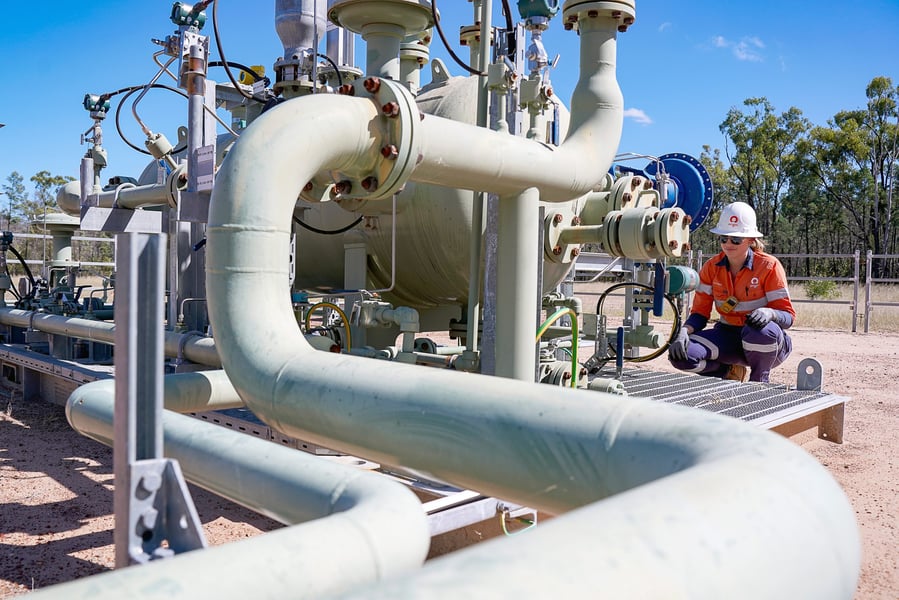
Long-term policy vision is often missing in the short-sighted 24-hour media and political cycles that too often dominate the national conversation. But something significant is occurring in public policy that shows the benefits of looking over the horizon, decades into the future. Australia’s gas industry is delivering growing benefits to the national economy through rising direct payments to state and federal governments through corporate income tax, Petroleum Resource Rent Tax (PRRT), state royalties and excise. These receipts help cash-strapped, debt-laden governments fund everything – from policies like the disability support to paid parental leave and the building of hospitals, schools and roads for a growing population. The Australian Petroleum Production & Exploration Association (APPEA) last week released new figures showing direct financial contributions from the industry will almost triple this financial year, rising to $16.2 billion from $6.2 billion previously. Indeed, the notion that gas companies extract resources for free continues to be unfounded. These companies are increasingly becoming some of Australia’s largest taxpayers and contributors to government budgets. The total for this single year is equivalent to building around 11 new hospitals or 160 new state-of-the-art schools, or providing annual public health care support for about 1.6 million Australians. The reason more money is flowing to the public is because the taxation profile of the gas industry is changing. This is an inconvenient development for a misleading minority who wilfully misrepresent the way Australia’s tax system works for their own political purposes. It is easy and simplistic to point to record profits from big business to demonise a major industry which, in reality, is critical to the national economy: enabling almost $500 billion of activity annually, supporting 80,000 jobs, powering millions of homes and businesses in key industries like manufacturing and facilitating economic growth, especially in regional Australia. For example, APPEA’s Financial Survey found the industry will spend $45 billion on Australian goods and services this financial year. This strong economic position has been developed over decades but the wave of extraordinary investment in gas export projects now delivering big returns for taxpayers began around 15 years ago. Commissioned by APPEA, independent consultancy firm Wood Mackenzie has found about $400 billion was invested by gas companies in LNG capital and operations since 2010. Consider that figure again – $400 billion – and all the business risk attached to it. What other industry has the ability to invest that much money in our economy in high-risk, capital-intensive projects that create so many jobs and other economic benefits years before actual production begins and revenue starts flowing? Different countries realise the risk involved as well as the public need for energy and apply different methods to encourage investment. While some countries offer up-front cash incentives and subsidies, the Australian tax system is designed to wait until much of the costs of investments are recovered before tax is paid. When tax payments flow for offshore projects, governments receive up to 58 per cent of taxable profits through corporate income tax, PRRT, excise and royalties. For onshore projects, it’s up to 63.25 per cent through state royalties, licence fees and corporate income tax. Recent economic conditions and higher than forecast prices have accelerated the making up of losses accumulated during construction, expediting tax payments. When there are bigger profits, there is also a bigger return to taxpayers as well as more money to reinvest in new supply. It’s also important to remember that commodities are cyclical. It wasn’t that long ago demand was weak and energy companies globally were posting losses. But the arc of the past 15 years shows the broad economic benefit to the Australian public of long-term taxation settings – both in direct government receipts and other factors like job creation and investment in regional communities. These benefits can continue to flow to Australians for the next 15 years – and beyond – but only if we can maintain our standing as a secure, stable destination for investment. This reputation and our international competitiveness is increasingly challenged by government interventions. We are already seeing investors pivoting away from Australia at time when this capital is needed to drive Australia’s energy transformation. It is important to remember that investors in new gas supply can also be investors in net zero technologies like low-carbon hydrogen and carbon capture utilisation and storage (CCUS). Indeed, there is a lot at stake in the transformation of our economy towards net zero by 2050. Through the ups and downs of cycles, Wood Mackenzie found export projects will deliver $100 billion in revenue for state and federal governments over the next 20 years. The tax system is working. The investment environment needs the stability that can extend the great relationship between Australia’s gas industry and the economy even further into the future. Samantha McCulloch is the Chief Executive of the Australian Petroleum Production & Exploration Association (APPEA) Share This
Read more

Safeguard deal will only fuel emissions and costs (The Australian)

The federal government’s safeguard mechanism reforms ignore the crucial role of natural gas in getting to net zero by 2050 and risk making Australia’s climate targets even harder to achieve. Australia’s gas industry shares the nation’s commitment to net zero and understands our growing responsibilities as part of a cleaner energy future: replacing coal, backing up renewables, producing low-carbon hydrogen and powering Australian industry and manufacturing as well as the processing of critical minerals necessary for net zero. But the changes announced on Monday fail to recognise this role and contradict the messages of everyone from the International Energy Agency to the Australian Energy Market Operator and even Anthony Albanese himself. The Prime Minister identified this crucial role for natural gas earlier this month when he spoke of how it could underpin the uptake of renewables while guaranteeing energy security, domestically and for our international partners. “Gas in particular has a key role to play as a flexible source of energy, providing peaking power today and continuing to provide firming and back-up power,” he said. The safeguard mechanism announcement is the latest example of government action not matching the rhetoric. Just see the trend of cascading interventions in the domestic gas market while the Australian Competition & Consumer Commission, AEMO and the government are all stressing the need for new gas supply. Now the safeguard mechanism reforms, aimed at achieving net zero, could actually push national and international climate targets further away and make the cost to get there even greater. At an energy security and cost-of-living level, new gas supply is needed because it can help avoid the forecast shortfalls identified by the ACCC and AEMO and put downward pressure on prices. More natural gas also will be needed across the region to help reduce emissions and get the world to net zero. Otherwise the recent trend of using more coal and producing higher emissions is likely to continue. In fact, the IEA forecast 2022 as the highest year ever for coal consumption. The safeguard changes place additional barriers on the gas projects essential to decarbonise Australia’s energy systems and those of our Asian trading partners. According to the government, our exports can lower emissions in liquefied natural gas importing countries by up to 166 million tonnes of carbon dioxide annually by replacing other higher-emissions energy sources. That’s about a third of Australia’s total greenhouse gas emissions. Impacting gas exports will not only affect emissions reductions in the region but also will place at risk the economic dividends for Australians that flow to government budgets from the nation’s world-leading LNG exports. Further, the announced safeguard mechanism changes strengthen the need for strong direction from Canberra on carbon capture, use and storage. While the US has put in place support for CCUS, and Britain announced a £20bn ($36.8bn) package for the technology earlier this month, Labor cut funding for CCUS by $250m in the budget last October. The Australian Petroleum Production & Exploration Association has been calling for a national CCUS road map to provide policy direction, to progress priority carbon management hubs and to promote Australia as a regional CO2 storage leader. This is not just rhetoric. The industry is already one of Australia’s biggest investors in decarbonisation, having already announced billions of dollars of emissions reduction and renewable investment across Australia. Given the scale and urgency of the challenge at hand, we need all the emissions reductions options we can get – including natural gas. Samantha McCulloch is chief executive of the Australian Petroleum Production & Exploration Association Share This
Read more

New gas supply strategy needed to ease pressure (The Australian)

Samantha McCulloch Australia’s east coast energy system alarm bells are getting louder. Is anyone listening? The latest independent verdict again puts governments on notice, highlighting the increasingly serious consequences looming for millions of homes and businesses relying on energy supplies. The Australian Energy Market Operator (AEMO) has warned of the risk of annual gas supply shortfalls every winter through to 2026 due to Victoria’s continuing strong demand for gas coupled with steep declines in gas production, leaving the state increasingly dependent on Queensland gas. Unfortunately, these warnings are nothing new, though the language is getting sharper and the challenges are mounting the longer they are ignored. Another independent observer, the Australian Competition and Consumer Commission (ACCC), warned as recently as January that gas shortfalls loom from 2027 while recommending new supply. “Avoiding long-term supply shortfalls will require development of new supply and infrastructure,” the ACCC Gas Inquiry Interim Report said. In fact, for over a decade New South Wales and Victoria governments have received warning after warning from independent authorities and industry stakeholders about the need for investment in new supply. But rather than focus on policies that enable new investment, these states have instead put energy security and affordability at risk and neglected to act in the public interest. There have been bans, regulatory uncertainty and, in some cases like last year’s Victoria Gas Substitution Road Map, illogical demonisation of one of this nation’s most important industries. AEMO highlights that the “current investment environment for projects is challenging and highly uncertain”, citing barriers like regulatory approval delays and the Commonwealth’s market interventions. At a hip pocket level, southern states have ignored the enduring principle that the cheapest gas is the gas closest to the customer – and there are millions of domestic and commercial gas customers in our two most populous states. At a time of cost-of-living pressures, this has left homes and businesses in Victoria and New South Wales paying an extra $2/GJ whenever gas is imported from Queensland. But this problem is not just about cost. It is also about energy security. The energy system crisis last winter exposed the long-term under investment in gas supply. Gas prices rose when there was a rapid and unprecedented demand for natural gas– up 55% in the National Electricity Market (NEM) in May – as coal and renewable problems left a void in power generation. Now another winter is coming, and the situation has only gone backwards. Canberra is currently imposing layer upon layer of interventions – advocating permanent price controls while injecting uncertainty into our world-leading export industry by increasing the risk of breaking export contracts. These interventions are compounding the situation, not alleviating it, and instead are taking our domestic energy market insecurity and exporting it to our valued international partners. None of this has reduced prices for homes and businesses or boosted energy security – in fact, it has had the opposite effect: freezing markets, spooking new east coast investment and worrying global investors and customers. AEMO last week made it clear that the root cause of market shortfalls is inadequate gas supply and infrastructure, not exports. Some anti-gas activists used the report to call for an end to new gas supply, willfully blind to the critical role gas is playing in our society and the analysis of expert authorities around the world. Black outs and higher prices are not the only consequence of less gas supply. Recent disruptions to the global gas market has led to higher emissions in as countries shift back to coal. In fact, the International Energy Agency (IEA) forecast 2022 as the highest year ever for coal consumption. Whether it’s authorities like the IEA or AEMO – or even Prime Minister Anthony Albanese’s strong backing earlier this month – natural gas is widely recognised as critical to our energy system and getting to net zero by 2050. It will have an increasingly important role in a cleaner energy future –backing up renewables and kick-starting new energy pathways like low-carbon hydrogen. As we still enjoy the warm weather of a lingering summer, it’s easy to forget the chill that hit the east coast and its energy systems last May. Within two months, those pressures could be resurfacing again, and every winter in coming years. AEMO makes it clear that breaking gas supply contracts with key trade partners in the regions is only a temporary solution – delaying shortfalls for only 12 months. Instead of risking Australia’s trade reputation in the region, we should be focusing on addressing the root cause of shortfalls and providing certainty to the sector. Victorian and NSW policies are still keeping their gas in the ground while they look elsewhere for solutions. And Canberra’s interventions are having the opposite effect of intended. Australia needs a new gas supply strategy from these governments to support a pipeline of projects and help end the uncertainty gripping the national energy system. Samantha McCulloch is the Chief Executive of the Australian Petroleum Production & Exploration Association (APPEA) Share This
Read more
Opinion Article: Australia must build on its advantages in carbon capture (Australian Financial Review)

Opinion Article: Australia must build on its advantages in carbon capture (Australian Financial Review)

Samantha McCulloch Shortly after arriving back in Australia last year, I visited a globally significant place many Australians may never have heard of. Barrow Island, off Western Australia’s North West Shelf, might not be as well-known as other places that have put Australia on the global map. But it is a glimpse into a new growth industry that is critical to Australia reaching net zero. The remote island is home to the world’s largest CO2 storage site, at Chevron Australia’s Gorgon LNG facility, which uses carbon capture, utilisation and storage (CCUS) technology to reduce emissions by permanently trapping CO2 in deep underground rock. I was perhaps more excited than other visitors to Gorgon given I had just finished seven years at the International Energy Agency leading their work on CCUS technology and policy development. There has been debate over the Gorgon CO2 injection project. The facts on the ground are that the project has stored over 7.5 million tonnes of CO2 since 2019 – more than one year’s worth of the total emissions reductions required from all 215 facilities under the proposed Safeguard Mechanism reforms. Over its 40+ years’ life, Gorgon is expected to store 100 million tonnes of emissions. CCUS is backed by authorities such as the CSIRO, the IEA and the Intergovernmental Panel on Climate Change (IPCC) as critical to getting to net zero by 2050 – reducing emissions from industrial facilities, kick-starting low carbon hydrogen and removing carbon directly from the atmosphere. CCUS also has huge potential economic benefits including creating new jobs and securing jobs in existing heavy industries. A growing number of countries have already realised the enormous potential of CCUS. According to Bloomberg, investment has doubled in the past year, and there are now around 300 commercial projects in development. Thirty projects are up and running. Australia can ride this new global momentum. The Australian Petroleum Production & Exploration Association (APPEA) has used its Federal Budget Submission to call for a national CCUS roadmap to provide policy direction, progress priority carbon management hubs and promote Australia as a regional CO2 storage leader. Countries in the region with limited CO2 storage potential, such as Japan and Korea, are looking for partners to establish hubs to meet net zero commitments. These countries are willing to invest in Australia – as seen by the recent announcement that the Japanese government will invest over $2 billion in low-carbon hydrogen production using carbon capture in Victoria. Others like Malaysia and Indonesia are developing their own CO2 storage hubs. To keep pace with our neighbours, Canberra needs to send a clear signal that Australia is “open for business”. Australia has world class geological formations ready for CO2 storage. Just look at the next chapter in the Australian CCUS story: Santos and Beach Energy joining forces in the South Australian outback where Santos has produced gas for over half a century. Their $220 million Moomba facility is expected to store 1.7 million tonnes of emissions annually. More CCUS projects are emerging. ExxonMobil’s Esso Australia is studying the potential for a South East Australia Carbon Capture Hub to store emissions from multiple industries in the Gippsland Basin. INPEX has joined with Woodside Energy and TotalEnergies to assess the Bonaparte storage area off Darwin. Today (SUBS: Mon) gas sector leaders will join Western Australia’s Chief Scientist, global policy experts and state and federal government officials at a Future Energy Exports gathering in Perth to advance CCUS discussions. The gas industry is well-placed to develop CCUS given our expertise in geological storage and large infrastructure projects. Yet the beneficiaries go beyond gas and include other industries like steel, cement and chemical production where CCUS is one of few options for deep emissions cuts. Natural gas with CCUS is by far the cheapest and most advanced pathway to low-carbon hydrogen today. Under the IEA’s Net Zero by 2050 scenario, over a quarter of low-carbon hydrogen production in 2050 will come from gas utilising CCUS. The investment environment will be critical. Almost two-thirds of planned investments globally are in the United States, Canada and Europe, where governments have fast-tracked CCUS with incentives. Over the weekend, the UK announced a £20 billion investment in CCUS – a very different message to the $250 million cut in Australia’s last Budget. Australia has one of the most comprehensive national CCUS legal and regulatory frameworks globally, but gaps and inconsistencies between states may slow investment. For example, WA and the Northern Territory don’t have frameworks in place, although WA recently released draft legislation. Furthermore, Australia still needs to join other nations in ratifying the London Protocol to facilitate the import and export of CO2. The race is on and Australia must seize its competitive advantage on the path to net zero. Samantha McCulloch is the Chief Executive of the Australian Petroleum Production & Exploration Association (APPEA) Share This
Read more

The year ahead for NT gas (Sunday Territorian)

The plan to develop the Northern Territory’s Beetaloo Basin into one of Australia’s great resources regions has started its most exciting year to date. In coming months, gas companies will start applying for production licences to develop onshore gas projects in the Beetaloo, a 28,000-square kilometre area south east of Katherine. With an estimated 180,000 petajoules of gas – more than 1000 times Australia’s current annual domestic consumption – the Basin is one of the world’s largest known opportunities to develop onshore gas reserves. This is an important step and comes amid strong progress by the Northern Territory Government to finalise the recommendations of the 2018 Pepper Inquiry, which found that hydraulic fracturing can be done safely with any potential risks managed. Last month, the NT Parliament passed new legislation that completes another 13 of the inquiry’s 135 recommendations, advancing efforts to unlock gas in the Beetaloo in an environmentally safe way and in consultation with stakeholders. The moves highlight the government’s ongoing commitment to growing the Territory’s gas industry, which already employs around 11,000 Territorians along the supply chain and enables $19 billion of economic activity annually. As highlighted by Deputy Chief Minister Nicole Manison’s recent comments about the critical role of gas supporting renewables, the government understands the fundamental challenges and opportunities of the energy transition, as recognised by national and international energy authorities. There is a strong appreciation of the huge economic and energy security benefits of the gas industry and its long-term role in delivering a cleaner energy future. This is shown in three key areas as we move forward. First, the Beetaloo Basin is an opportunity to develop a resources sector that, for the NT, can be as important to our economy as those great powerhouse regions just across our borders. Nearby, Western Australian has the Pilbara. And Queensland has the Bowen Basin. The Beetaloo could be that important for our economy, boosting the gas industry’s already intrinsic relationship with NT life. One in every 11 jobs in the NT is supported by the gas industry supply chain, from offshore rig workers to gas fitters in the suburbs of Darwin. But research has estimated that development of the Beetaloo could create up to 6,300 jobs and deliver $1 billion a year in revenue to the NT Government by 2040. This is on top of the tens of millions of dollars that are already supporting local businesses. New gas supply like that in the Beetaloo is critical to getting to net zero by 2050 because it can replace higher emitting fuels like coal, back up rising renewable generation for electricity, support major industries like manufacturing and be a feedstock to hydrogen. The second area of future focus is the planned Middle Arm Sustainable Development Precinct, a multi-purpose hub near Darwin, a key cog in bringing decarbonisation technologies to market while providing a home to the innovation required to achieve net zero commitments. The precinct is aimed at low-carbon fuels like hydrogen production and emissions reduction infrastructure alongside other critical commercial manufacturing and processing operations. We support this precinct because these are all areas where the gas industry can play a central part on top of its traditional roles given its established expertise and infrastructure. This includes a hub for carbon capture utilisation and storage (CCUS), creating local jobs and help a raft of industries reduce their emissions by capturing emissions and storing them to protect the environment. To understand that the NT may be at international forefront of CCUS implementation is extremely exciting. By 2040, at least 90 per cent of the precinct’s emissions would be captured, according to the NT Government. Finally, with all the excitement about onshore development potential, we must not forget the already established offshore operators in the NT including our exporters. This financial year, Darwin’s LNG cargoes being shipped around the world will help propel Australia to a record $90 billion worth of gas export earnings, according to the latest Australian Government Resources and Energy Quarterly report. With only the US and Qatar rivalling our export muscle globally, our LNG terminals like that in Darwin are delivering substantial economic benefits to Australians. More opportunities loom. Indonesia could move from being a net exporter of LNG to an importer from 2030. According to the International Enery Agency, Indonesia could be importing an estimated $10 billion worth of LNG by 2050 – a $10 billion market – a new market – sitting on the NT’s doorstep in coming decades. Importantly, this is in a pathway consistent with Indonesia meeting its net zero goals, underscoring the role of Australia’s exports in helping our Asian neighbours decarbonise. The Federal Government has estimated Australia’s LNG has the potential to lower emissions in LNG-importing countries by around 166 million tonnes of carbon dioxide each year, the equivalent of reducing Australia’s total annual greenhouse gas emissions by more than a third. This is achieved by replacing higher-emissions fuels like coal with the cleaner fuel of natural gas. This balance between energy and economic security while moving towards net zero is the challenge of our times. It is one the Northern Territory oil and gas industry has embraced as an opportunity and is working with stakeholders, investors, governments and community to realise in 2023 and beyond. David Slama is the Northern Territory Director of the Australian Petroleum Production & Exploration Association (APPEA) Share This
Read more

New gas supplies needed in WA (The West Australian)

By WA Director Claire Wilkinson As most people were focused on Canberra’s recent energy market interventions on the east coast, a new assessment of the Western Australian gas market emerged, showing how we must remain vigilant to maintain our strong position. The Australian Energy Market Operator (AEMO) found the state’s gas supply and demand over the next decade is for most years delicately balanced, highlighting that investment in new natural gas supplies is needed. AEMO’s Western Australia Gas Statement of Opportunities – an annual report known as the “GSOO” among energy afficionados – predicts rising demand for natural gas as coal-powered generation ceases and demand from the resources sector continues. The GSOO found gas demand in WA is forecast to rise from 1,099 terajoules a day (TJ/day) in 2023 to 1,278 TJ/day in 2032, an average annual increase of 1.7%. This may be uncomfortable for the anti-gas activists who think gas can be “turned off” without impacting our economy and living standards. But, contrary to concerns that increased gas use will lead to higher emissions, part of the reason for rising demand is WA’s transition to a cleaner energy economy. With Synergy retiring its coal-fired power generators in WA by 2030, renewable energy generation can only partially replace that of coal. As a result, gas demand in the state’s biggest electricity grid, the South West Interconnected System (SWIS), will increase almost 150% – from 127 TJ/day in 2023 to 304 TJ/day in 2032. Because gas-fired power generation emits half the emissions of coal, Synergy expects its emissions to fall 80 per cent by 2030 compared to 2020-21 levels. The increased gas use in the SWIS will also importantly provide firming power to the electricity grid when renewable generation from wind and solar is fluctuating, reducing the risk of power blackouts to WA homes and businesses. It underscores the central role that gas is playing in WA’s energy mix, supporting rising renewable energy by providing baseload power while enabling higher emitting fuels such as coal to be retired. The GSOO also revealed that newly committed resources projects are expected to add 43 TJ/day to gas demand by 2026. These projects include iron ore and gold, as well as mining and minerals processing projects that are vital to the energy transition such as lithium and nickel. In short, gas is part of enabling these critical minerals for the energy transition to come to market. But to meet the demand that the GSOO outlined, we need new and ongoing investment in supply to replace existing producing fields as they run low. Indeed, the GSOO noted that gas supply and demand in WA is finely balanced in the coming years, although there are options available to ensure the market is adequately supplied. This includes short term measures such as drawing from existing gas storage and increasing production from existing gas plants, as well as bringing on new gas supply over the longer term. From 2030 onwards, the gas market is forecast to move into a larger deficit, with shortfalls of over 200 TJ/day between 2030 to 2032. As highlighted by AEMO’s Kate Ryan, the outlook “…reiterates the importance of timely investment in new gas developments, firming technology and storage solutions to maintain a secure and reliable energy system”. WA is in a fortunate position, with a large amount of undeveloped resources and the lowest gas prices in the OECD. The State Government, too, understands the industry and the economic benefits of the sector, and how gas supports the pathway to net zero. Importantly, new gas supplies for WA’s use will not only come from dedicated domestic gas plants, but also from WA’s successful liquefied natural gas (LNG) industry, which provided 12 per cent of global LNG exports in 2021. Many of WA’s sizeable offshore gas reserves would not be developed if they were only quarantined for WA consumption, as the state’s gas demand alone is insufficient to warrant the multi-billion-dollar investments required. As the GSOO highlights, between 2027 and 2029, supply is forecast to slightly exceed demand as the offshore Scarborough gas field contributes an extra 180 TJ/day to domestic supplies as its gas starts being processed by Karratha’s Pluto LNG plant. If gas is going to be increasingly relied upon to decarbonise our energy mix and support renewables, we need to supercharge the positive investment environment to bring on new supply by ensuring we have an efficient regulatory system. As it currently stands, the regulatory system we have means prospective oil and gas developments can take literally years to receive approvals. The WA Government recently announced that green energy project approvals would be fast-tracked. This is welcome, and many APPEA members will benefit with their investments in hydrogen and renewables. But expedited approvals for gas developments should also be prioritised so that discovered resources can be responsibly developed and used to support the growth in renewables and our other critical industries. These are the kind of measures that can build capability in the state’s energy market as we confront the challenges and opportunities of a cleaner energy future. Claire Wilkinson is the WA Director of the Australian Petroleum Production & Exploration Association (APPEA) Share This
Read more

Reckless reforms will boost gas prices but not supply

This article originally appeared in The Australian on 16 December 2022. ‘Reckless reforms will boost gas prices but not supply’ by Samantha McCulloch, APPEA Chief Executive Two decades of policy reforms that enabled Australia’s standing as a global energy powerhouse were unwound on Thursday, ignoring warnings this will lead to gas shortages and ultimately higher prices for Australian households and businesses. The impact of this far-reaching and unprecedented intervention in Australia’s gas market is already evident. Previously agreed financing for new gas supply is being withdrawn and contract negotiations have stalled. The uncertainty created by these reforms and measures to introduce a permanent, regulated rate of return severely undermines the case for investment in what is a high-risk, capital-intensive industry. Some of the most credible and experienced global sources repeatedly have warned how this reckless decision to take a sledgehammer to Australia’s gas industry will reduce supply and increase demand. As MST Marquee energy analyst Mark Samter said: “This is the single worst piece of energy policy I have seen anywhere in the world in almost 20 years of looking at global energy markets, despite staunch competition from many other dreadful policies around the world.” David Maxwell, a member of the Australian Petroleum Production & Exploration Association board and chief executive of Cooper Energy, said: “In my 30-plus years in management roles in the gas industry I have never seen such destructive legislation.” The industry wants to see downward pressure on energy prices and targeted relief for households and businesses; however, price caps and ongoing price regulation will have the opposite effect to that intended. New independent modelling from economic advisory firm ACIL Allen to be released on Friday finds the impact of this market interference could see wholesale gas prices up to 40 per cent higher than if the market had been left to do its job. In the long term, households could pay up to an extra $175 a year on gas bills while businesses cop a 40 per cent increase relative to a scenario with no price caps and in which planned investment is able to proceed. The report also cautions that price caps will encourage additional consumption in the short term that could put significant strain on gas supplies. It warns of the potential for blackouts in Victoria as meeting peak day demand becomes more difficult due to delays in new supply coming online. According to the report, these higher prices and energy security concerns are a trade-off for short-term benefits that “may be nil or very minimal in the first instance”. It is this near-sighted, populist stance of the government that is at the heart of the industry’s concern. For the sake of a potential, if any, short-term fix, the government has dismantled a market that was working to deliver essential energy and that will play a critical role in transforming Australia’s energy systems towards net zero. It has undermined the confidence to invest in an industry central to building Australia’s story of economic success – one that has been looked on with worldwide envy. The gas industry has invested hundreds of billions of dollars that today support 165,000 jobs along the supply chain, powers millions of homes and businesses, supports economic growth and delivers cleaner energy to our Asian neighbours. Between 2010 and 2020 alone, the gas industry invested an estimated $473bn in Australia, an economy traditionally viewed globally as a safe and stable place to invest. But the government’s actions this week have severely threatened investment confidence. The permanent regulation of gas prices through a mandatory code of conduct was done without consultation and was rammed through parliament in a matter of hours. This should alarm Australia’s business community, which expects to operate in an open, market-based economy. As EnergyQuest found earlier this month, price regulation rocks investment confidence, reduces exploration, development and new supply, disrupts gas storage economics and makes liquefied natural gas imports to the east coast unviable. Since coming to office, the government has consistently recognised natural gas as a key part of Australia’s cleaner energy future, backing up renewables in electricity, supporting manufacturing and providing a pathway to a hydrogen industry. We saw this important role in the recent winter when coal and renewable generation faltered and there was unprecedented demand for gas in the electricity market – with demand increasing 55 per cent relative to the year before. The gas industry stepped up to ensure additional supply and keep the lights on and homes warm along the east coast. The package of gas market reforms passed on Thursday will only add to energy system pressures and limit the ability of the industry to respond to future calls to boost supply. The government now has unprecedented control over the Australian gas market, and with this must come accountability and responsibility. When investments in needed new supply are shelved and prices are higher, the government will have to explain why it ignored the warnings. Samantha McCulloch is chief executive of the Australian Petroleum Production & Exploration Association. Share This
Read more

Let the market, not caps, work to cut gas prices

This article was originally published in The Australian Financial Review on 7 December 2022. ‘Let the market, not caps, work to cut gas prices’ by Samantha McCulloch, APPEA Chief Executive Instead of letting the new mechanisms introduced only weeks ago do their job, the radical interventions now proposed will just undermine investment in new developments. Recent gas supply agreements (GSAs) securing competitively priced gas for manufacturers should inform deliberations when state energy ministers and national cabinet meet this week. At a time when there are calls for market intervention to cap gas prices, major manufacturers like Brickworks are securing future supply. The brickmaker has struck an 11-year gas supply deal with major energy producer Santos that will provide the gas to make around 500 million bricks annually. This newspaper reported the price was within the range cited by the competition watchdog as reasonable. The Brickworks-Santos deal is just one of several gas supply agreements announced in recent weeks, including Woodside and Qenos announcing a deal on Wednesday for the supply of 4.5 petajoules. There are many ideas being ventilated in the current public debate about energy prices and the pressures hitting the energy system. But one issue relating to the gas industry hasn’t been given enough consideration – we are not letting the market work, and we are not letting the new mechanisms introduced only weeks ago do their job. On September 29, the industry and the federal government announced a new heads of agreement (HoA) securing supply for the domestic gas market. The deal means that LNG exporters will first offer uncontracted gas on competitive market terms to the domestic market before it is offered internationally. Upward price pressures There has been upward pressure on prices – driven by international upheaval from the Russian invasion of Ukraine, domestic underinvestment in new gas supply, and increased reliance on gas during coal generation outages and as the back-up when renewable energy is unavailable. But the recent flow of GSAs shows the market is working. Competitively priced gas is being secured. We are also seeing evidence of a market working in the recent Australian Competition and Consumer Commission (ACCC) update on prices. It showed the actual prices being paid for gas supply contracts next year were well below what has been publicly claimed. Prices agreed for supply by producers under contract to customers in southern states for 2023 averaged $12.38 per gigajoule. The update showed that average gas prices paid to retailers have risen 95 per cent over the past 12 months, compared to an 11 per cent rise for producers. The September HoA was combined with a new Australian Gas Industry code of conduct, which was developed during two years of consultation with the government and market participants, including customers. It also was not given a chance to work. After only 27 days, the code was effectively sidelined in the federal budget and put under review, with a view to making it mandatory. Instead we have had a procession of voices calling for radical interventions that would dismantle the market and risk future energy security. Caps will do the opposite This threat was shown in a new report on the impact of gas price caps – demonstrating how caps would have the opposite impact to that intended. EnergyQuest’s A Review of Gas Cap Pricing found a cap would undermine the prospects for investment in future gas supply and damage the business case for gas storage and planned LNG import facilities. These LNG imports could provide around 50 per cent of annual gas supply to the east coast within the next decade, according to EnergyQuest. “Price caps do not address the cause of high domestic prices – lack of new gas supply and volatility in demand from the electricity market with the transition to renewables,” the report said. We are already seeing this broad impact play out in the real world, away from the spreadsheets and modelling. On Monday, ExxonMobil Australia’s Esso subsidiary said it was taking steps to “minimise the business risk of the current uncertain regulatory environment” and has opted to reduce its investment cycle from 12 to six months for the first time. “The annual investment cycle has been crucial to the success of the Gippsland Basin Joint Venture, which has invested in Australia and supplied natural gas domestically for more than 50 years, but the current uncertainty requires an unprecedented approach,” said Esso. As the company noted, new gas developments are not turned on at the flick of a switch – they require extensive planning, resources and capital, along with regulatory certainty. This is one of the factors behind the pricing pressures being experienced on the east coast, where 80 per cent of supply comes from Queensland despite the strongest demand coming from the southern, more populated states of New South Wales and Victoria. Illogical opposition to gas Illogically, these jurisdictions are the most ideologically opposed to gas development, stifling investment through exploration bans and regulatory uncertainty over the past decade, despite their large populations relying so heavily on gas. Ignoring the basic principle of the cheapest gas being the gas closest to the customer, these states pay at least an extra $2/GJ when they have to transport gas from Queensland. These long-term negative policy environments are in part behind Australian Bureau of Statistics data on petroleum exploration, which routinely shows diminishing investment, dropping from $1.1 billion in the final quarter of 2014 down to $230 million in this week’s update. The industry has shown its willingness to invest in exploration and supply for the nation, announcing $20 billion of investment in recent years. But some governments are not planning for the future. A positive policy environment is critical, and that does not include ad hoc interventions that will damage the market. The best way to put downward pressure on prices is to get more gas out of the ground and increase supply, which can deliver energy security, emissions reductions and substantial economic returns. When they meet this week, ministers must avoid the temptation of radical interventions that ultimately lead to larger problems and higher prices for Australian households and manufacturers. Samantha McCulloch is the Chief Executive of the Australian Petroleum Production & Exploration Association (APPEA). Read this article via the AFR website here. Share This
Read more

Op-ed: APPEA Chief Executive Samantha McCulloch on why price cap hype casts an investment cloud over gas

This article was originally published in The Australian. As the debate over energy prices roared across the media in the wake of the Federal Budget, new domestic gas price data from several major Australian gas companies went largely unnoticed. While commentators lined up to call for gas price caps – some even suggesting a limit of $10/GJ – several east coast gas producers reported results with average realised prices between $8.50/GJ and $13/GJ. For example, Beach Energy said its September quarter price was down 3% to $8.50/GJ. Cooper Energy reported $9.06/GJ while Australia Pacific LNG reported $12.44/GJ, lower than its LNG sales at $19.52/GJ. Earlier, Senex Energy, in its last report before delisting, reported a price of $7.60/GJ. The gas market is complex and these figures underscore the misinformation about energy and contract gas prices as well as proposals for intervention in the gas market. To get the best outcome for Australia, governments need to recognise that the energy system as a whole is under pressure. Effective solutions will need to be found across the energy supply chain, rather than targeting only one part of it. Focusing on gas prices in electricity generation is also misleading because coal – now rightly being identified as a major problem given its soaring price – and hydro more often set the price of power than any other energy source. For example, in the second quarter of 2022, in NSW hydro set the price 48% of the time, coal set the price 34% of the time, with gas only doing so 17% of the time. Along the east coast of Australia, gas is setting the power price less than 20% of the time. It also accounts for less than 7% of electricity generated in the national energy market. In terms of gas prices, most business users have supply locked in at lower prices because most of the gas sold to industry is on long-term contracts that cover about 90% per cent of the market. It is important to note that long-term contracts were still being offered to businesses at the start of this year for between $6.70/GJ and $9.40/GJ. This underscores the point that regulatory price intervention may have a much smaller impact for manufacturers than what some claim. But it will have a much bigger impact on the broad strength of the Australian economy than what those calling for caps have admitted. Price caps will undermine investor confidence in the new supply that is critical to putting downward pressure on prices – creating more problems down the road. It would also obviously mean less revenue, less profit and less economic contribution for cash-strapped federal and state governments. That means the industry’s strong government receipts – like recent forecasts from our gas exporters of delivering an extra $9 billion in Petroleum Resource Rent Tax, corporate income tax, state royalties and excise this financial year – will be negatively impacted. Are state governments like Queensland, where almost $6 billion of gas royalties are forecast in coming years, happy with a price cap to limit the revenues from the gas sales they rely on for revenue in order to build hospitals, roads and schools? A price cap is not the only intervention being discussed and each measure or change, even if only threatened, chips away at investment confidence. Whether it be suggested changes to the industry-led Code of Conduct; the recent announced changes to the Australian Domestic Gas Security Mechanism (ADGSM); the additional powers to the Australian Energy Market Operator (AEMO) to intervene in the market’s operation; the ongoing Australian Competition and Consumer Commission (ACCC) inquiry into the gas industry; or the Budget’s cuts to carbon capture and storage funding (despite the technology being crucial if Australia is to meet its net zero goals), each sends a message that rattles investment confidence. Ultimately, it comes down to simple maths when the numbers needed to make large multibillion dollar, capital-intensive investments stack up financially frequently change and the policy environment shifts again. And it doesn’t just risk new investment and supply – it risks the associated and substantial economic, emissions reduction and energy security benefits of that supply. It is ironic that the source of much of the debate around gas prices and intervention at the moment is Australia’s world-leading LNG export industry. Critics often try to paint our gas exports as the problem for pricing pressures but export levels have actually stayed flat or slightly down this year. And anyone who knows the fundamentals of business and encouraging investment would see the policy environment that fostered the global success of our LNG exports as an example of the kind of policy solution Australia needs now. In little more than a decade, the gas industry invested over $300 billion in seven new LNG projects which are now set to produce record-breaking export earnings of $90 billion this financial year. Critically, this investment was supported by positive investment policy environments from federal and state governments in Queensland, Western Australia and the Northern Territory that laid the foundations for the returns we see today. These governments and their constituents are now reaping the benefits – the projects are underpinning our domestic energy security, delivering billions of dollars in new revenues and supporting thousands of jobs. Consider the success of this collaboration between industry and government in the national interest against the current short-sighted debate we see today. We need new investment in new gas supply, not intervention, if we are to get the best outcome for Australia. Samantha McCulloch is the Chief Executive of the Australian Petroleum Production & Exploration Association (APPEA) Read the original publication via The Australian here. Share This
Read more

Address to SEAAOC in Darwin on the future role of oil and gas

Address from Chief Executive Samantha McCulloch at the South East Asia Australia Offshore & Onshore Conference (SEAAOC) Darwin 2022 The Role of Oil and Gas in the Cleaner Energy Future I’d like to begin by acknowledging the Larrakia people and thank you for the wonderful welcome to country this morning. It’s an exciting time for the oil and gas industry and I am proud to have recently taken up the role of APPEA Chief Executive – the voice of our members who are at the forefront of one of the great challenges of our time: rapidly reducing emissions to ushering in our cleaner energy future while continuing to ensure energy security, affordability and access. We as an industry are ready, willing and already addressing those challenges while remaining a pillar of the Australian economy. The industry enables almost $500 billion of economic activity annually. This is particularly the case here in the Northern Territory, where the total gas industry supply chain supports over 11,000 full time jobs and more than 3,000 businesses. That’s the drillers and explorers, the workers who build and maintain pipelines, the gas company employees who deliver reliable energy to customers, the gas fitters in our towns, and the gas bottle retailers in our suburbs selling our product for barbecues and camp stoves. To put this into perspective, about 11 jobs in every 100 are being supported by the gas industry supply chain in the Territory. That is the highest concentration of gas industry workers in Australia – even more than Western Australia. But given the interwoven relationship our sector has with the nation and its economy, the oil and gas industry is not just about what we are doing in our own businesses. Many people don’t realise it, but we unlock and support other major industries like transport, mining, manufacturing, and small businesses. We help them to make building products, keep our country moving and facilitate general economic growth by powering businesses and homes. Further, many of the everyday products we all use in our lives are made with oil or gas – from medical equipment in hospitals to tech equipment like cameras and cell phones. It is because of this intrinsic relationship with the nation that the oil and gas industry will be central to efforts to meet Australian and global climate goals. APPEA members have committed to net zero by 2050 and are investing in the projects and technologies needed to deliver substantial emissions reductions. The Northern Territory is already a big part of this push and will continue to play an important role in the future. Firstly, the liquefied natural gas export cargoes that leave Darwin Harbour show how this part of the world can play its part, delivering cleaner energy to our neighbours in Asia and providing a reliable alternative to higher emitting fuels like coal for electricity generation. This was acknowledged in a Federal goverment report highlighting that Australia’s LNG exports have the potential to contribute to a global reduction in emissions of up to 166 million tonnes every year by replacing higher emitting fuels. That’s one-third of Australia’s annual emissions, every year. In addition to the emissions reductions, the switch from coal to gas in these fast-growing Asian economies is helping boost air quality and lift the living standards of hundreds of millions of citizens. This reality should put paid to the argument that Australia can’t make a difference beyond symbolism when it comes to climate change. Darwin is playing a particularly important role given its proximity to Asia, as well as its existing energy infrastructure. There is a huge market and demand for gas on a doorstep – and for future fuels such as hydrogen – and we must seize this opportunity and the competitive advantage our proximity to Asia affords us. Secondly on the decarbonisation journey, natural gas is underpinning the transition to renewables by providing firming capacity to support intermittent renewable generation. In many ways, we saw this happen on the east coast of Australia during this past winter when renewable energy failed to input enough power amid coal-powered generation outages. Solar-powered generation was down sharply due to bad weather and it was gas that stepped up, firming the electricity grid and literally keeping the lights on for the east coast of Australia. During this time, the industry ramped up gas supply to the domestic market to meet demand that had increased by 55 percent relative to the same period last year. Although natural gas remains the primary source of the Northern Territory’s electricity generation, renewables will continue to be integrated as the government seeks to reach its target of 50% renewables for electricity generation by 2030. We support this renewables growth. Renewables will be a central pillar of meeting our energy and climate goals. As the gas industry, we believe it’s all shoulders to the wheel to get to net zero. Many of our members are already integrated energy companies, having invested billions in technologies like solar and wind power. The cleaner energy future will be a partnership of natural gas supporting and stabilising sources like wind, solar and hydro energy. As the Federal Resources Minister Madeleine King said recently, gas is the “natural ally” of renewables. This is not just a political conclusion. It has been repeatedly confirmed by energy authorities like the International Energy Agency and, closer to home, the Australian Energy Market Operator in its recent Integrated System Plan. Citing the mid-2040s as a time when gas would back up electricity largely powered by renewable generation after the retirement of coal-fired power, AEMO said gas would still be required during periods of high renewable output at times of peak demand, just after sunset and during the night to cover wind variability. The ability to use natural gas when there is insufficient renewable energy available will be crucial to ensuring Territorians maintain reliable and secure energy. There is no absence of scientific – and practical – evidence to support this critical role. From the former Chief Scientist to the IEA to the South Australian experience, it is undeniable that our industry can – and is– the key to more effective renewable uptake. Russia’s invasion of Ukraine has highlighted just how important this is, with countries resorting to coal because they don’t have a secure gas supply. The industry has a long and enduring commitment to Australia and to continuing to deliver energy security domestically and in our region. We have announced over $20 billion of new investments in supply nationally in the past two years. We stand ready to invest more but we need certainty and the investment policy settings must be right. It is timely to reinforce that while the world confronts a global energy crisis, our members remain committed to their domestic obligations. Importantly, we can do both – we can meet our local commitments as we have also done, we can responsibly develop new supply and we can maintain the confidence and support of international investors who have underpinned our extraordinary efforts for so many decades. The third way the oil and gas industry is decarbonising is by investing billions in emissions reduction technologies and cleaner fuels – from carbon capture and storage to hydrogen, as well as renewable energy projects. This is another area where we have a global competitive advantage. We have this head start in a new cleaner energy sector because of our technical expertise and knowledge, established trade pathways, ability to work at scale, understanding of geology, and access to existing pipeline and storage infrastructure. The Territory, in particular, has an opportunity to play a big part in this and to become a world-leader in low emissions energy – an opportunity that was reinforced by Minister King’s announcement today awarding the INPEX-led Bonaparte CCS Assessment Joint Venture acreage in the Petrel Sub-Basin. The growing and important role that CCS is playing in decarbonisation is well-recognised by the international energy community, and one that I am particularly familiar with. Just a few weeks ago, I concluded my role in Paris with the International Energy Agency as the Head of Carbon Capture Utilisation and Storage (CCUS). The IEA is just one of the many institutions that recognises tools like CCUS are crucial to reaching net zero greenhouse gas emissions by 2050. CCUS is a proven technology that the oil and gas industry has been using for 50 years; over the next decade there will be many more CCUS projects in Australia; and the oil and gas industry will play a central role given our expertise in geological storage and large infrastructure projects. We have the subsurface expertise, the geologists and reservoir engineers that can support the safe development of these storage sites. Here in the Territory, plans for the CCS Hub at the Middle Arm precinct near Darwin will supercharge the local economy and position the Territory as a world-leader in manufacturing and low emissions energy. We look forward to collaborating as an industry with governments on this exciting project which is set to create local jobs and help a raft of industries decarbonise. It brings together all the unique elements that only our industry can deliver – reliability, technology and a commitment to regional benefits. CCUS is not only an opportunity to reduce emissions during gas production but will be critical for some industry sectors including steel, cement and chemicals. It can also facilitate our hydrogen industry, through leveraging our industry’s existing skills, expertise and commercial relationships, as well as existing technology and infrastructure. Under the International Energy Agency’s Net Zero by 2050 scenario, almost 40 per cent of hydrogen in 2050 will come from natural gas utilising CCUS. In fact, our trading partners who purchase our LNG today are likely to be the same partners who will buy our hydrogen tomorrow. All this underscores the point that, contrary to some perceptions, the transition to net zero will expand the role for national gas while creating new opportunities for the industry. One exciting new opportunity for the Northern Territory to develop its natural gas industry is the development of the Beetaloo Basin. Research from Deloitte Access Economics found that developing the Territory’s substantial shale gas resources could create up to 6,300 long-term jobs and generate up to $1 billion in additional revenue for the Northern Territory Government over the next 20 years. In fact, there are already local contractors and workers benefiting from the economic activity generated through exploration in the Beetaloo Basin. Tens of millions of dollars of contracts have already been flowing into the NT courtesy of Beetaloo exploration as our members collaborate with local communities and traditional owners to manage this phase. Critically, they are also ensuring this region’s important environmental assets are protected, fulfilling the verdicts of over a dozen inquiries, reviews and studies that have found any potential risks can be managed safely. There is a lot of noise and wild claims about this issue but we must follow the science and I back the recent comments of the NT Deputy Chief Minister when she warned that misinformation about the Beetaloo was a risk to getting the best outcome for Territorians. One of our members, Origin Energy, spent $9.6 million with NT businesses out of a $39 million exploration program between March 2021 and February this year. Fellow member Santos spent $60 million with NT-based contractors and companies during last year to support operations across the Top End, spending with 45 separate organisations in areas including rental services, accommodation, civil contractors, engineering and supply services, haulage, environmental and cultural heritage. Empire Energy has invested $46.5 million in the NT, including $3.4 million in taxes. Just look at the small businesses spanning the NT already benefiting from this investment in the Beetaloo. There’s Silver City Drilling in Alice Springs, Darwin-based Rusca Brothers, Arnhem Earthmoving and Mechanical, and KD Machinery Hire at Broadmere Station. These companies – and many others – are benefiting from one of the biggest economic opportunities the Northern Territory has seen. It’s this sort of stimulus into communities across the NT that shows again how important the industry is to NT way of life, even before the Beetaloo ramps up into production in coming years. The Beetaloo Basin has the potential to be as important economically to the NT as the great resource development regions of Queensland and Western Australia – delivering billions in public funding to build schools and hospitals; providing energy security to households and businesses; feeding existing export facilities; and potentially driving a manufacturing hub in this region. And, as I have explained, it will also help natural gas decarbonise the world in the cleaner energy future. It is a bright future, and one in which we are focused on leading the way. Thank you for your attention. Share This
Read more

Opinion editorial: Let's work together to achieve net zero

Note: This article originally appeared in The Advertiser on Monday 25 October 2021. Let’s be clear. The Australian oil and gas industry wants a future that has cleaner energy. And we want to help Australia get there. We support the science of climate change and are committed to practical actions to reduce greenhouse gas emissions in line with the Paris Agreement. We also stand with about 200 countries that have joined the Paris climate agreement and have adopted emissions reduction targets. Of those, more than 130 have committed to net-zero emissions by 2050. We believe we have a key role to play in a cleaner-energy future, both in Australia and globally. And it starts with gas. Natural gas supplies more than 25 per cent of Australia’s energy. It is providing half of Australians’ household energy but is only responsible for 13 per cent of household emissions. It is also playing an important role in providing lower emissions and cleaner-burning fuel in the industrialisation of Asian economies. The federal government estimates Australia’s liquefied natural gas has the potential to lower emissions in LNG-importing countries by offering an alternative to higher-emissions fuels. The Australian Petroleum Production and Exploration Association also has an action plan, including exciting technology developments. The CSIRO has found climate benefits are possible where natural gas has replaced coal, particularly in developing countries. Australia’s substantial resources in natural gas, and its proximity to Asia, enable it to continue to deliver cleaner energy to the Asia-Pacific region. The Australian oil and gas industry works here and around the world developing low-emission technologies, while natural gas is working alongside renewables for cleaner energy. Two examples are carbon capture and storage, and hydrogen. Globally, the International Energy Agency believe about 40 per cent of the world’s hydrogen needs could come from gas by 2050. Australia, with its natural gas, existing infrastructure and technical expertise, has a competitive advantage. Australia’s oil-and-gas infrastructure can be used to help in hydrogen production and transportation. Hydrogen exports can become a reality. Courtesy of Australia’s LNG export success, we have the technology, expertise, commercial and trade relationships to make it happen. By developing a local hydrogen industry, we can lower emissions both in Australia and internationally, reduce energy costs and deliver energy security. It can also provide job and manufacturing opportunities. That’s why we think, when it comes to climate change policy, we should all work together with policies including energy, international trade, taxation, economic growth, population, and environmental and social responsibility. Australia should always be willing to engage with the international community so we can achieve environmentally effective and economically efficient climate change policies that benefit all Australians. Share This
Read more

Let’s consider all facts in the emissions debate: APPEA in the media

Note: This article was originally published in The Australian on Friday 19 March 2021. It’s not surprising that a combination of complex science, highly complicated markets, fast-moving international economic conditions and vocal interest groups has seen a polarised, binary and, at times, illogical debate about the role of gas in our future energy mix. Sadly, in this binary debate we may fail to understand that what is completely factual, is not always factually complete. The factually complete argument would, in Australia, tell us that reliable energy is immediately available to us because we have a range of energy sources available. We can access renewables as easily as installing solar panels on our home, and turn on our gas heater or our gas cooktop in seconds. We can smelt steel and aluminium and ensure the provision of base-load power with fuels like natural gas that make the uptake of renewable energy possible. Technology is a real option with established projects, a well-capitalised industry, strong policy frameworks, skilled labour, and existing infrastructure. The factually complete argument would also recognise that we are part of a global community in which different nations are at different points in their energy journey. More than 2.6 billion people live without adequate energy security, where cooking with dung or wood is the norm and there is inadequate access to clean cooking fuel or reliable electricity. Without reliable electricity it is very difficult to keep lights on so children can study, or keep refrigerators running to preserve food or medicines. For each advancement we make in reducing emissions through technology here, equally as important is every home and town in our neighbouring countries that we can shift away from dangerous and high emissions fuels and to whom we can bring energy security, which in turn brings economic security and geopolitical stability. The Australian government estimates that our exports of liquefied natural gas help reduce emissions in importing countries by about 170 million tonnes each year — the equivalent of almost one-third of Australia’s total annual emissions. In Vietnam 46 gigawatts of new coal-fired electricity is either planned or under construction. But what if Vietnam could have greater access to natural gas in the form of LNG imports? Coal to gas switching globally could result in 5 gigatonnes of emissions reduction. Offset against 2.1 gigatonnes of emissions from LNG production and the overall net benefit globally would be 2.9 gigatonnes of emissions reduction within the next five years or so. It is completely factual that under a net zero by 2050 scenario there could be up to 1.2 billion electric vehicles on the road. Recognising there is the equivalent of about 7000 lithium-ion batteries in each Tesla Model S, this means we will need 8.4 trillion batteries. The factually complete analysis should recognise that less than 5 per cent of these batteries are currently recycled and the key ingredients in every lithium-ion battery are mined from the earth, with the energy for that mining sourced almost universally from oil and natural gas because of the energy efficiency it provides. When Tesla built (what was then) the world’s largest battery in South Australia in 2017 it created capacity to deliver 100 megawatts of stored electricity into the grid. The battery proposed for Yallourn will deliver about 360 megawatts. Both are crucial in helping to provide grid stability and security. But we need to also understand the Tesla battery can provide about six minutes of electricity to the state, while the Yallourn battery will provide about four hours of capacity. This is absolutely crucial and technology will continue to see further improvements, but let’s not forget that blackouts in SA, Texas, or many other places have on occasion run for days, not hours. We risk our own wellbeing if we close our minds and our logic to ensuring we have access to the full range of energy sources available to us. The factually complete approach is therefore to recognise that reducing emissions from the energy we consume is the end game — it is neither practical nor emotionally or economically responsible to eliminate fuels such as natural gas or oil. We should be focused on cleaning up energy, not getting rid of it. The lack of sophistication and understanding in arguments surrounding emissions reduction and energy security risk are undermining the speed of the transition already well under way. We have a responsibility — economically, environmentally and morally — to move away from the single, ethical binary arguments which, while passionately argued, do little to actually take us forward. We should not and do not need to make a choice between industry development and emissions reduction. Policy makers must recognise that Australian industry is innovative and responsive, supporting industry to develop its own solutions, and not forcing solutions upon us that will increase risk, decrease investment, actually slow emissions reduction and impact energy security. Share This
Read more